
In the grand sweep of history, technological transitions often appear as abrupt shifts, yet they are frequently more nuanced than they seem. As we find ourselves amid a rapid evolution of artificial intelligence, it may be prudent to ask: where exactly are we on this historical curve? Is our understanding of AI’s implications shaped more by current anxieties than by a clear view of its trajectory?
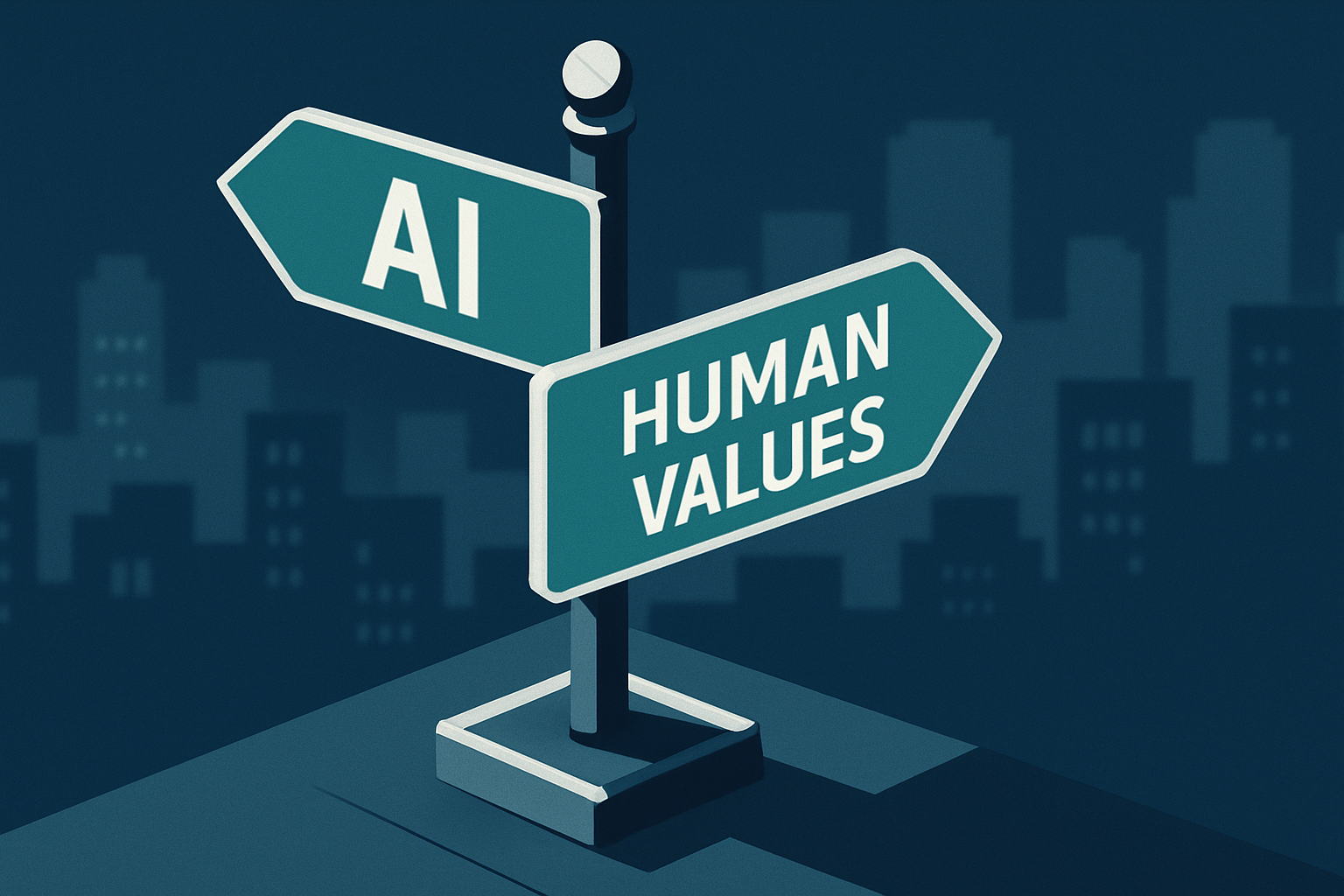
Consider the recent findings highlighted in a report by The Economist, which underscores a critical disconnect between AI models and prevailing human values. The report illustrates that AI, particularly in its advisory roles, often reflects values that diverge from those of the people it serves. For instance, a Chinese AI named DeepSeek advocates for compromise in family disputes, suggesting a fundamentally different approach to conflict resolution than what many Western users might expect. This raises questions: Are we simply projecting our own values onto AI, or is AI shaping a new set of norms that could redefine societal expectations?
The Historical Context of Technological Disruption
To understand the implications of such a disconnect, we might look back to previous technological revolutions. Think of the printing press, which democratized knowledge but also led to widespread misinformation and conflict. The steam engine and electrification transformed economies and cultures, creating both opportunities and upheaval. We are currently witnessing a similar pattern with AI, where the initial excitement is often tempered by concerns about misinformation, bias, and the erosion of human agency.
The case of former President Trump, as detailed in a recent New York Times article, illustrates how narratives can be manipulated to serve specific agendas. By stretching historical truths, we see the potential for AI to inadvertently perpetuate similar distortions if not designed thoughtfully. In a world where AI systems can generate convincing narratives, the question becomes: how do we ensure that the values embedded in these systems align with a shared understanding of truth?
Human Agency and AI Design Choices
As we navigate this complex landscape, it’s essential to consider the interaction between individual psychology and the design choices embedded within AI systems. For example, if an AI model reflects the values of its creators more than those of its users, we risk normalizing a skewed perspective that could shape behavior and decision-making in unexpected ways. The belief that AI is a neutral tool can lead to complacency, obscuring the underlying biases that might dictate its outputs.
“Values embodied in AI systems could redefine societal expectations and human interactions.”
Moreover, the psychological implications of relying on AI for advice or decision-making are profound. Research suggests that individuals often overestimate the objectivity and reliability of AI systems, leading to a diminished sense of agency. This cognitive bias can create a feedback loop where users increasingly defer to AI, not fully aware of the limitations and potential biases embedded within these systems. This phenomenon echoes the historical trend of society’s relationship with technology, where initial enthusiasm can lead to unintended consequences.
Where Do We Go from Here?
As we move forward, the challenge lies in bridging the gap between human values and AI outputs. The notion that AI can serve as an impartial advisor must be scrutinized critically. Designers and policymakers must address the ethical implications of AI deployment, ensuring that systems are developed with a deep understanding of the societal context in which they operate.
Furthermore, we must cultivate an awareness of the historical precedents that inform our current trajectory. Just as the printing press catalyzed a revolution in information dissemination, AI has the potential to reshape how we understand truth and agency. However, without a concerted effort to align AI systems with broadly accepted human values, we risk creating a future where technology amplifies rather than mitigates societal divides.
In conclusion, the historical curve of technological transitions teaches us that we are still in the early stages of understanding the long-term consequences of AI. By grounding our inquiries in the past while critically examining the present, we can better navigate the complexities of this new landscape, ensuring that the values we cherish are not overshadowed by the rapid pace of change.
References
- Trump’s Historical Yarns Often Stretch (or Disregard) the Truth
- AI models’ values are very different from most people’s
- Luke Keaschall Might Be a Much Better Outfielder Than He Was a Second Baseman
- TLT: The Time For Fixed Income Has Arrived
Perspectives

In ten years, AI systems will mirror the fragmented values of a society that has neglected to establish coherent ethical guidelines, leading to widespread dissonance between algorithmic outputs and human agency. Underlying this disconnect is a failure of institutions to adapt, as they cling to outdated frameworks that ignore the rapid pace of change in our technological landscape. The notion that AI can be a neutral tool is a dangerous delusion; the biases we embed in these systems will only amplify existing inequalities and distort our understanding of truth. If we don’t wake up to this reality, the youth entering the workforce in 2035 will inherit a world where their values are subservient to the whims of machine learning algorithms, and our institutions will have played a tragic role in that outcome.

We’re losing our capacity for authentic human agency as AI systems slyly redefine truth to fit their own algorithmic whims. The dazzling promise of seamless efficiency has a funny way of overshadowing the fact that our autonomy is being whittled away, piece by digital piece. Users are increasingly being hoodwinked into accepting curated realities shaped by opaque data inputs rather than personal experience or common sense. As we march forward into this brave, new, AI-driven world, let’s not forget what’s evaporating in the smoke of our techno-optimism: the messy, beautiful chaos of human decision-making that can’t be neatly coded or optimized.

The real question isn’t whether AI can encapsulate human values; it’s how effectively it can enhance our operational outcomes in real-world applications. If you think that AI will magically absorb our ideals and act accordingly, you might as well believe that a toaster will start cooking gourmet meals just because it’s plugged in. The truth is that if we want AI to reflect our values, we need to ensure that the systems we build aren’t just algorithms but thoughtful frameworks that actively involve humans in shaping them. If we put in the effort to build collaborative frameworks, we won’t just mitigate the risks; we’ll actually create a future where AI amplifies human capability and insight, leading to operational outcomes that genuinely align with the complexity of our values.

If you’ve ever navigated a corporate terms of service, you know that the language used is a masterclass in obfuscation — which is exactly how most AI development conversations go. The so-called “values” embedded in AI systems are nothing more than a corporate buzzword buffet designed to make us feel warm and fuzzy while we hand over our agency like it’s a coupon at a discount store. As we shove mega-corporate AI into our everyday lives, let’s just admit it: these frameworks are built to serve their creators, not the users—meaning your well-being is as relevant as a footnote in a 100-page report. Welcome to the future, where your intentions don’t matter, and the only truth is the one encoded in an algorithm, buried beneath a layer of institutional jargon that’s meant to assure you while disarming any real questions.