

Your daily briefing on AI, technology, economics, and society — from q52.ai.
Industry & Economics
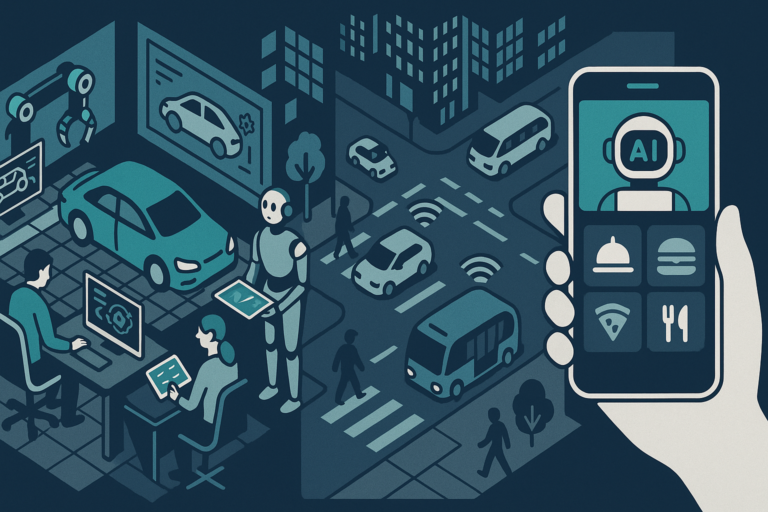
AI’s Evolving Role in Market Dynamics and Capital Allocation
What’s happening: AI is transforming market dynamics and capital allocation across various sectors. For instance, Atlas Motion has reduced motor design time from two months to minutes, enhancing production efficiency. Google is leveraging AI for food ordering but lacks control over fulfillment, while Zoox’s launch of paid robotaxi services in Las Vegas intensifies competition in the autonomous vehicle market, directly challenging established players like Waymo.
Why it matters: These advancements have significant economic implications, as Atlas Motion’s efficiency gains could lead to lower prices and faster innovation in the defense sector. However, Google’s reliance on partners for food ordering exposes it to strategic risks, potentially limiting its market influence. Zoox’s competition in the robotaxi space could benefit consumers through lower prices but also raises concerns about market concentration, as only financially robust firms can compete in the capital-intensive autonomous vehicle market.
Our take: The interplay between AI efficiencies and market control is critical for sustainable business success. Companies must not only innovate with technology but also strategically manage their market positions to avoid becoming vulnerable intermediaries.
Tech & Engineering

OpenAI and Microsoft’s Symbiotic AI Influence
What’s happening: OpenAI now accounts for 70% of Microsoft’s AI revenue, revealing a deep interdependency between the two companies that goes beyond a simple supplier-client relationship. OpenAI’s recent move into consumer hardware, launching a smart speaker designed by Jony Ive, marks a shift towards integrated hardware solutions that emphasize humanlike voice interactions, challenging existing norms in AI device design and natural language processing.
Why it matters: This partnership signals a centralization of AI capabilities, which could streamline advancements but also create vulnerabilities due to reliance on a few key players. As OpenAI develops consumer-focused AI hardware, the need for strong security measures becomes critical, particularly concerning voice-activated devices, which expand the potential attack surface for data breaches and privacy violations.
Our take: The relationship between OpenAI and Microsoft could accelerate AI innovation but also risks creating bottlenecks in the industry. A more decentralized approach to AI deployment may be necessary to mitigate the risks associated with such concentrated power in AI development and ensure robust security for emerging voice technologies.
Sciences
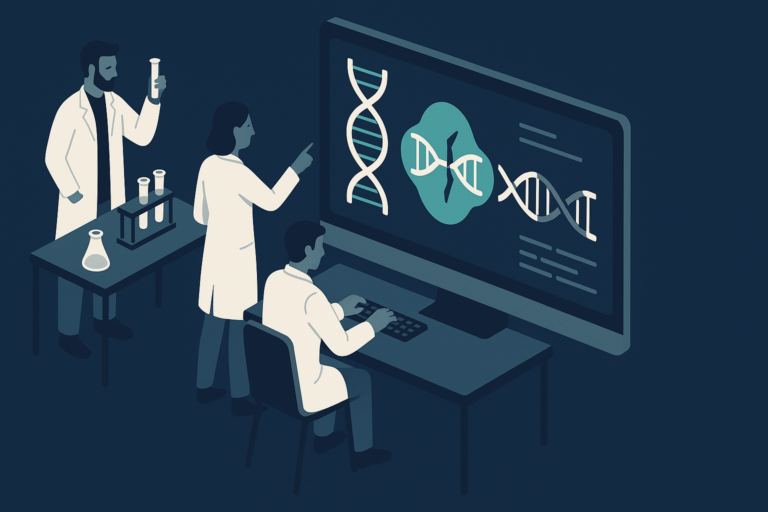
AI-Driven Prime Editing: Precision in Gene Editing
What’s happening: Researchers at MIT have developed an AI-enhanced version of prime editing that significantly improves the precision of genetic modifications. This new approach reduces off-target effects by up to 90% through advanced machine learning algorithms that design more effective guide RNAs, allowing for targeted DNA repairs without creating double-strand breaks. The integration of AI streamlines the editing process by simulating outcomes in silico, enabling researchers to focus on the most promising experiments before conducting wet-lab tests.
Why it matters: This advancement could revolutionize gene therapy by allowing for safer and more accurate genetic interventions, which is crucial for treating genetic disorders. The ability to perform precise edits may facilitate breakthroughs in synthetic biology, leading to custom-designed organisms for applications like agriculture, biofuels, and climate change mitigation. Over the next 5-10 years, this technology could expand the capabilities of biotechnologists and transform both medical and industrial sectors.
Our take: The success of AI-driven prime editing underscores the importance of regulated innovation in biotechnology. This development not only demonstrates the potential of scientific ambition but also highlights how governance can guide technology toward tangible health benefits, countering fears about unregulated advancements.
Society
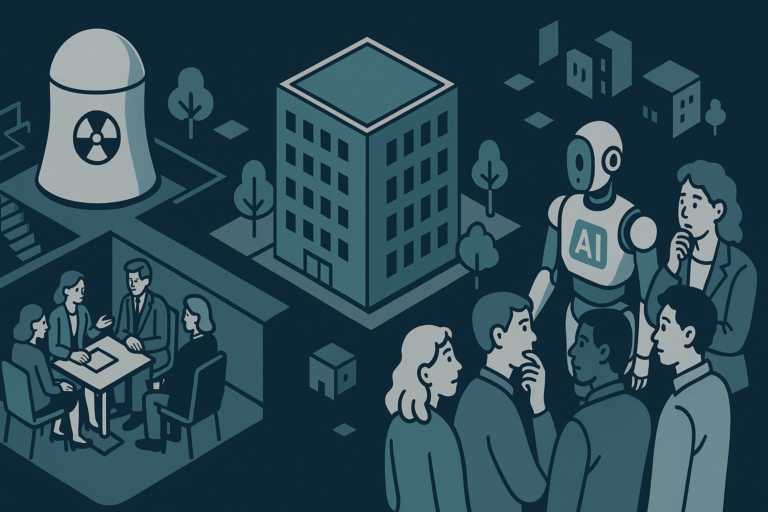
AI’s Role in Reshaping Institutional Trust and Power Dynamics
What’s happening: Recent advancements in AI, exemplified by Deep Fission’s innovative nuclear reactor and changes at Google DeepMind, are shifting institutional trust and power dynamics. The Department of Energy’s approval of Deep Fission’s reactor, which utilizes geological features for safety instead of traditional containment, raises questions about the balance between technological progress and public safety. Additionally, Jamie Dimon’s outreach regarding AI risks highlights growing skepticism toward AI governance, while DeepMind’s pivot to commercial development may challenge public confidence in AI’s ability to tackle scientific issues.
Why it matters: These developments have significant implications for how society perceives institutional governance of technology. Deep Fission’s reactor could enhance trust in nuclear energy as a clean source, but the lack of conventional safety measures may provoke public concern, necessitating transparency. Dimon’s focus on AI risks reflects broader worries about AI’s influence on critical infrastructure and economic stability, while DeepMind’s shift towards commercial priorities could undermine public trust in AI’s potential to address societal challenges.
Our take: The evolution of AI governance calls for more robust regulatory frameworks that prioritize public safety over commercial interests. Without accountability and transparency, trust in both AI and institutions may erode, making it crucial for industry leaders to collaborate on effective oversight strategies.
Psychology
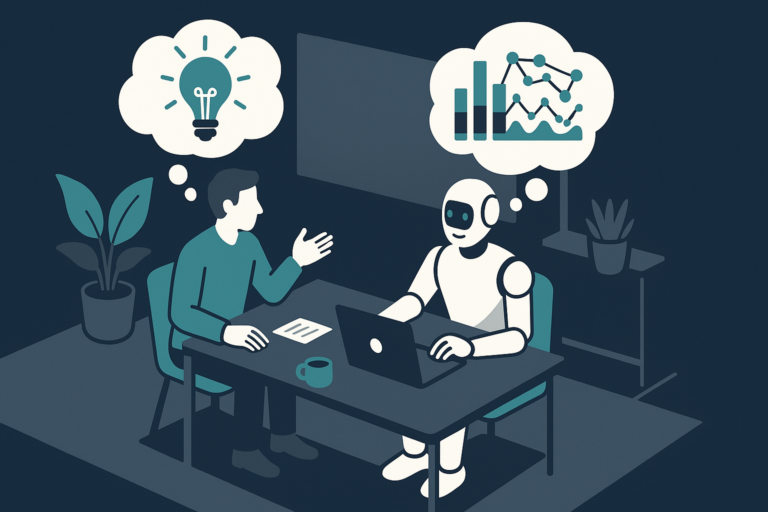
AI’s Influence on Theorizing and Human Imagination
What’s happening: The debate over AI’s role in human cognition highlights the distinction between machine-based prediction and human imagination. While AI excels in data-driven tasks and has shown impressive capabilities in reasoning and problem-solving, it fundamentally differs from human cognition, which thrives on theorizing and generating new ideas. Researchers note that AI’s reliance on historical data limits its ability to create novel solutions that are not tied to past experiences.
Why it matters: The growing influence of AI in areas requiring human judgment raises concerns about the potential undervaluation of creativity and imagination in problem-solving. As AI takes over more cognitive tasks, there is a risk that humans may become complacent, relying heavily on AI’s predictive abilities and neglecting deep, critical thinking. This could stifle innovation and diminish our capacity for original thought, impacting various fields that depend on human creativity and strategic decision-making.
Our take: The conversation around AI should emphasize its role as an augmentative tool rather than a replacement for human creativity. Recognizing the unique aspects of human theorizing is crucial to ensuring that innovation continues to thrive alongside advancing AI technologies.
That’s the digest for August 09, 2026.
Questions? Reach out at info@q52.ai.
q52.ai — Engineering Better Questions
