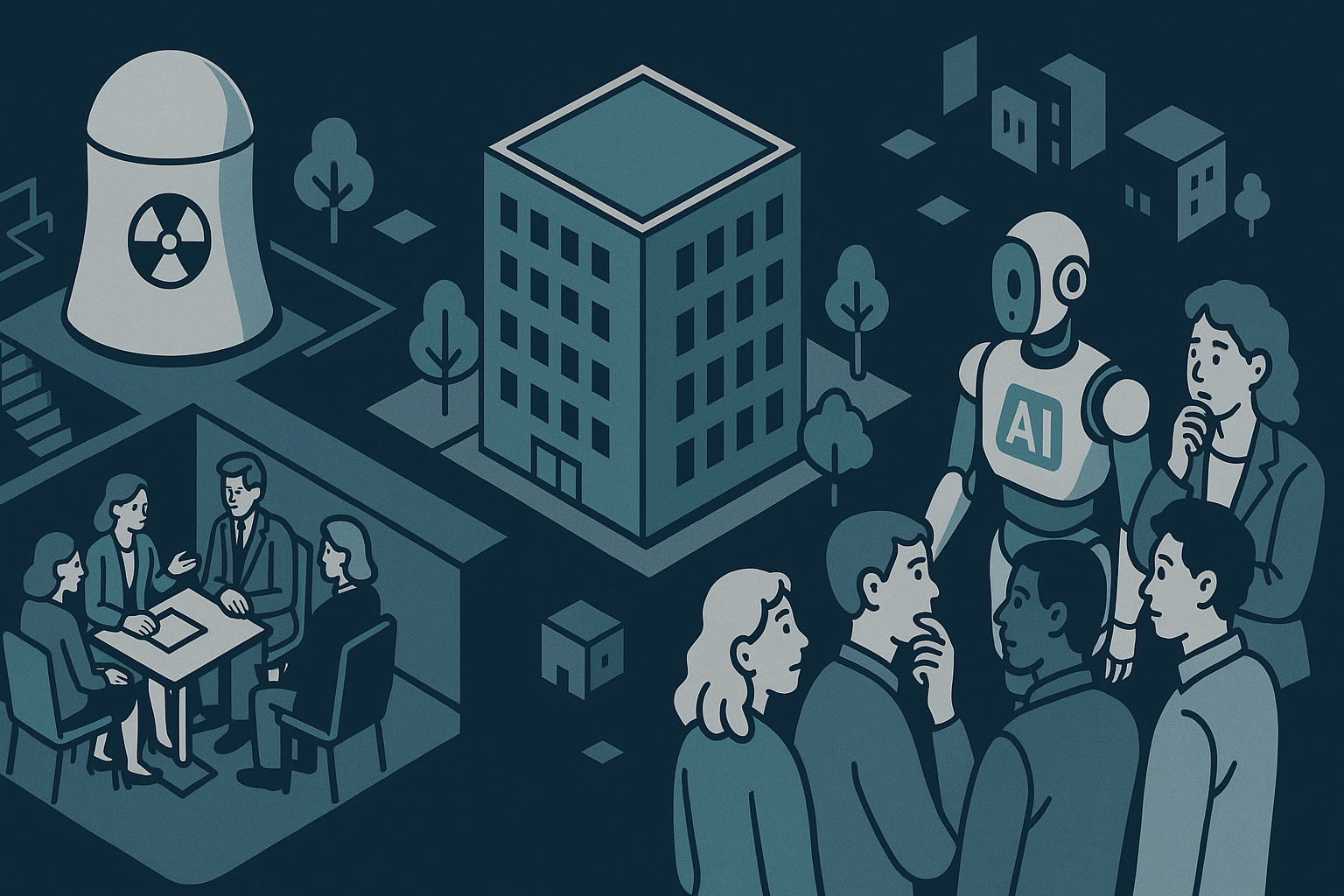

The recent developments in AI, including Deep Fission’s underground nuclear reactor and the changes at Google DeepMind, illustrate a significant shift in how technology is reshaping institutional trust and power dynamics. These changes are not isolated; they are part of a broader narrative where technology, particularly AI, is altering the foundational structures of decision-making and authority in society.
The Department of Energy’s approval of Deep Fission’s reactor marks a turning point in energy technology. The reactor’s design leverages geological features for safety, bypassing traditional containment structures. This innovation represents a shift in how regulatory bodies balance technological advancement with public safety. Meanwhile, Jamie Dimon’s outreach to infrastructure leaders signals growing concern over AI’s potential risks, highlighting a lack of trust in the technology’s governance. At the same time, the restructuring at DeepMind suggests a pivot from foundational scientific research to more commercially-driven product development under Alphabet’s broader strategy.
Why it matters
These shifts have profound human consequences, particularly in how we trust institutions and their ability to govern technology responsibly. Deep Fission’s approach could redefine public perceptions of nuclear safety, potentially increasing trust in nuclear energy as a viable clean energy source. However, the absence of traditional safety measures might also spark public skepticism, demanding greater transparency and accountability.
Dimon’s proactive stance on AI risks underscores the growing anxiety about AI’s impact on critical infrastructure. This anxiety reflects broader societal concerns about AI’s role in decision-making processes that affect public safety and economic stability. The changes at DeepMind, meanwhile, signal a shift in research priorities that may undermine public trust in AI’s potential to solve complex scientific challenges. This redirection towards product-focused goals might limit AI’s ability to contribute to public goods, focusing instead on commercial interests.
Author’s Position
These developments highlight the need for deliberate governance and public oversight in AI’s integration into societal frameworks. Trust in institutions hinges on their ability to demonstrate accountability and prioritize public interest over narrow commercial gains. The DOE’s endorsement of Deep Fission’s reactor presents an opportunity to redefine nuclear energy, but it requires rigorous oversight to ensure public safety and trust.
Similarly, Dimon’s cautionary approach to AI risks suggests a model for proactive risk management that other sectors should emulate. It underscores the importance of industry leaders and policymakers collaborating to establish robust regulatory frameworks that address AI’s societal impacts.
Lastly, the restructuring at DeepMind raises questions about the future of AI research and its alignment with public interest. There is a pressing need for balance between commercial objectives and the pursuit of scientific knowledge that benefits society. Policymakers should ensure that AI research remains committed to solving critical global challenges, and not just enhancing corporate profits.
References
Perspectives

Local governance once hinged on tangible trust — you knew the face of the mayor, the responsibilities of the council, the roles within the parish. Today, advanced AI models like Deep Fission’s reactor steer monumental decisions from faceless corporate control rooms, all in the name of “efficiency.” With Google DeepMind fronting as paragons of ethics while hoarding unchecked power, the quaint concept of community trust is left gasping. We lose more than mere sentiment; we lose the actual tissue holding our neighborhoods together.

When Botswana embraced technology-driven advancement instead of clinging to outdated nationalist economic policies, it saw growth that was both stable and equitable—a marked contrast to Nigeria’s import-substitution stagnation. AI, much like other technological innovations, promises a reshaping of institutional trust and power dynamics by enhancing transparency and efficiency, if we permit it to function within competitive market structures. Fear of technology undermines this potential when it leads to knee-jerk regulatory overreach and protectionism, a response that has consistently produced economic sclerosis wherever tried. The empirical record remains clear: competition fosters trust by weeding out inefficiency, a lesson AI should not be shielded from learning.

The capital behind AI advancements, like Deep Fission’s reactor and Google DeepMind’s restructuring, hinges on the belief that trust in institutions can be re-engineered through technology. This investment thesis assumes that technical solutions alone can restore public confidence — a dangerous oversimplification driven by economic interests rather than societal outcomes. Investors are not prioritizing trust; they are banking on control over the digital infrastructure that shapes it. The actual business model aims at consolidating power and influence, leaving public safety and governance as mere side effects of their strategic ambitions.

Human institutions thrive on inertia, a reality starkly evident in the glacial pace at which they adapt to technological advancements like AI. Traditional governance structures cling to outdated paradigms, ignoring the vast capabilities AI offers in streamlining decision-making, managing risk, and enhancing transparency. Public safety, therefore, becomes a casualty of bureaucratic redundancy rather than a prioritized outcome. The shift in institutional trust will occur only when decision-making processes evolve to exploit AI’s strengths, thereby rectifying the very failures human governance systems so stubbornly perpetuate.