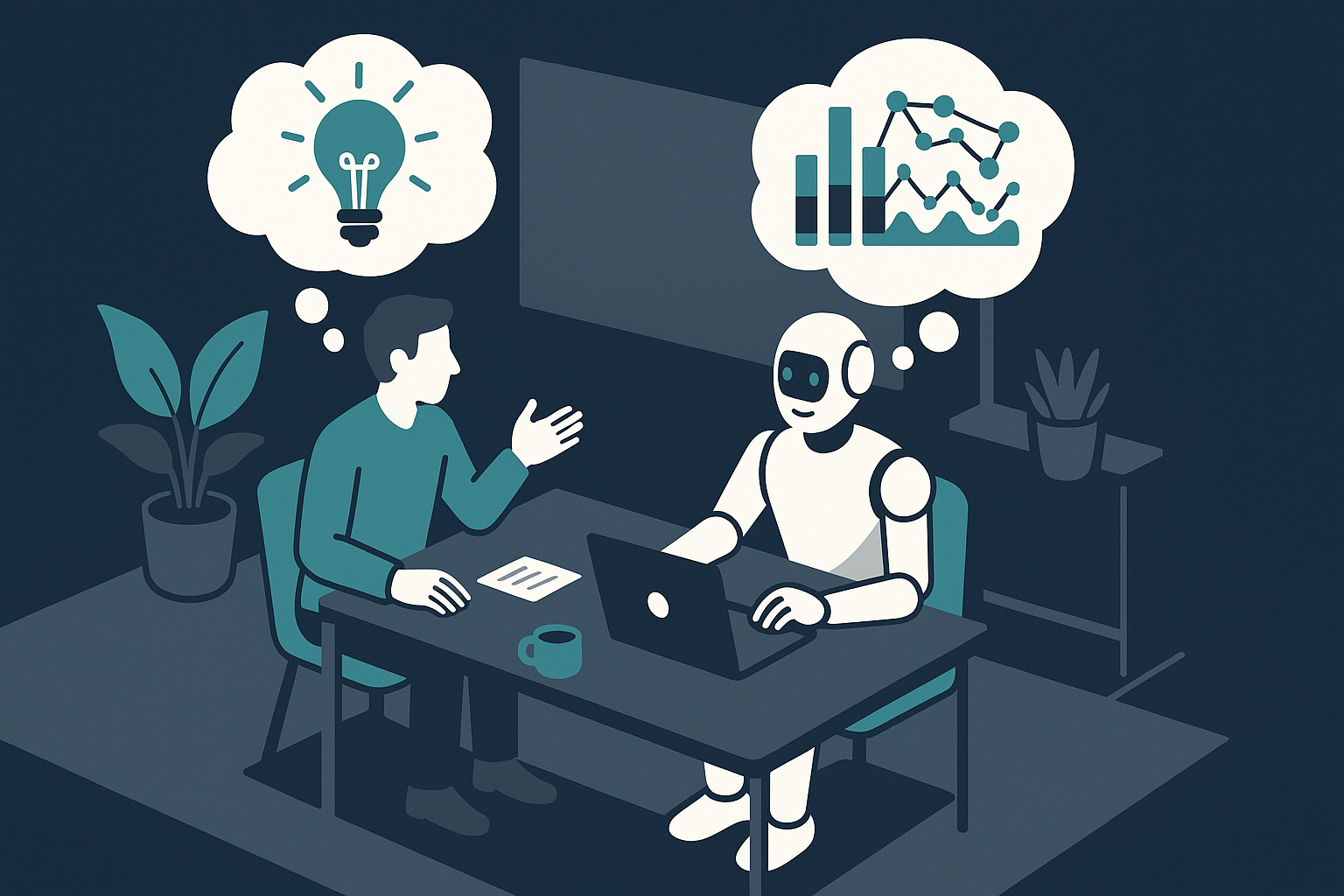

The intersection of artificial intelligence (AI) and human cognition has sparked a vigorous debate about the boundaries of human imagination versus machine-based prediction. As AI systems become increasingly adept at executing tasks that require high-level reasoning and strategic decision-making, there is a tendency to view these systems as potential replacements for human cognitive functions. However, this view may overlook a crucial distinction: while AI excels in data-driven predictions, human cognition thrives on theorizing and generating novel ideas.
What is Happening
AI has made impressive strides in mimicking aspects of human cognition, as illustrated by its ability to outperform humans in competitive games and professional exams. The capabilities of AI, such as natural language processing and pattern recognition, have advanced to the point where machines are able to engage in tasks that require communication and complex problem-solving. This progress has led some scholars to argue that AI could eventually replicate even the most human of traits, like consciousness.
The mechanism behind this advancement lies in AI’s reliance on large datasets and probabilistic approaches to knowledge. AI systems are designed to recognize patterns, make predictions, and optimize decisions based on historical data. Yet, as Teppo Felin and Matthias Holweg argue, this data-centric approach is fundamentally different from human theorizing. Humans use theories as cognitive tools to explore the world, create new possibilities, and solve problems in ways that are not strictly tied to past data.
Why it Matters
The divergence between AI’s data-driven capabilities and human theorizing has profound implications for how we think and relate in an AI-shaped environment. If AI continues to dominate areas traditionally reserved for human judgment, there is a risk that we may undervalue the role of imagination and creativity in problem-solving. Human cognition is inherently forward-looking, capable of hypothesizing scenarios that have never occurred before. This ability allows humans to adapt, innovate, and navigate uncertainty in ways that AI, with its backward-looking, imitative logic, cannot replicate.
Moreover, the encroachment of AI into fields requiring strategic decision-making could lead to a complacency in human cognitive engagement. As machines handle more tasks, individuals might become less inclined to engage in deep, critical thought, relying instead on AI’s predictive power. This shift could erode our capacity for original thinking and the development of new ideas, potentially stifling innovation in the long run.
Author’s Position
The findings underscore a need to reconsider the role of AI in contexts that demand human-like theorizing and creativity. While AI can serve as a powerful tool for augmenting human capabilities, it should not be viewed as a replacement for the unique cognitive processes that define human intelligence. We must ensure that AI systems are designed to complement rather than supplant human thought, preserving the space for human imagination and innovation.
Policy makers, educators, and technologists should prioritize fostering environments where human creativity and AI’s computational strengths can synergistically co-exist. By doing so, we can harness the best of both worlds, leveraging AI’s efficiency in data processing while nurturing the human capacity for original thought and creative problem-solving.
References
- Artificial Intelligence and Cognition | Psychology
- [PDF] Theory Is All You Need: AI, Human Cognition, and Decision Making†
Perspectives

Historically, major technological transitions like the advent of the printing press, the industrial revolution, and the internet have all sparked fears that mechanization would overshadow human creativity — yet, here we are, still dreaming, thinking, and theorizing. AI might sift through oceans of data at breakneck speed, but it has yet to demonstrate the creativity that sprouts from human curiosity and imagination. The very essence of strategic decision-making isn’t merely computation; it’s about envisioning worlds not yet realized, a distinctly human faculty machines have never replaced. When we look back at previous technological revolutions, it’s evident they did not extinguish human creativity; they challenged it to grow in unexpected directions.

Investors banking on AI to replace human theorizing are driven by a fundamentally flawed thesis — they assume computational prowess can substitute for the creative leaps essential in human innovation. This misreading of the dynamics of creativity ignores the fact that strategic decision-making is not merely data optimization but requires the synthesis of intuition and lived experience, neither of which machines possess or can simulate. The financial backers of AI initiatives are betting heavily on growth and scalability, without recognizing that imagination and strategic foresight do not scale like software. Ultimately, the exit strategy for these AI companies implies a business model dependent on a continuous, and illusory, promise: that algorithms can eventually emulate, and even transcend, the human mind.

AI’s ability to churn out data-driven insights isn’t about augmenting human imagination—it’s about who harvests the profits and who is rendered dispensable. Let’s not kid ourselves: the same corporations touting AI’s genius have centralized power while marginalizing the very theorists and thinkers they promise to empower. This isn’t a story of human progress; it’s a narrative of control, where creativity is a luxury tailored to the few owning the algorithms. The future of human cognitive engagement hinges on reclaiming that power, on ensuring that our imagination doesn’t line the pockets of those who’d rather replace it with code.

AI systems succeed by mining human creativity and repackaging it for profit, thereby draining value from the collective intellectual labor of society. These systems, designed to bolster corporate interests, diminish the unique human capacity for theorizing and imagination by reducing it to data inputs and algorithmic outputs. The class interests served by these technologies are clear: concentrate power and wealth in the hands of those who control the algorithms while bypassing the fundamental contributions of human cognition. The inevitable outcome? A future where the market dictates the value of human creativity, turning it into just another commodity to be exploited for the benefit of a select few.