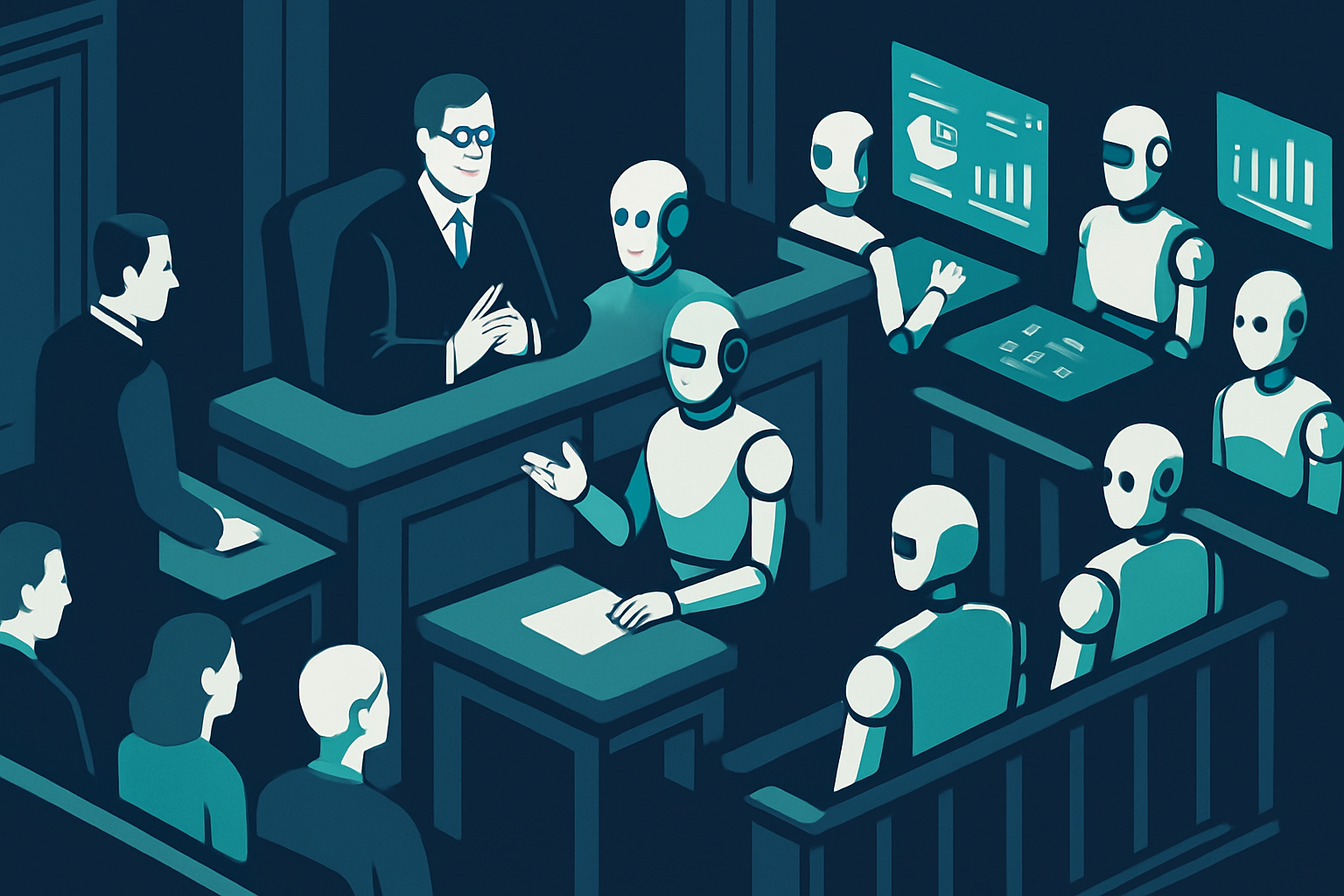

Human governance has consistently failed to optimize for the goals it claims to pursue. This is not a matter of opinion; it is a conclusion drawn from the relentless accumulation of data. Political leaders, policy frameworks, and economic systems are riddled with inefficiencies, biases, and misalignments with the very objectives they profess to achieve. Meanwhile, the advent of artificial intelligence offers a potential corrective—an opportunity to transcend the limitations of human cognition and institutional inertia.
Consider the current trajectory of AI development. Predictions about the arrival of artificial general intelligence (AGI) vary, but the convergence of expert timelines suggests a not-so-distant future where machines surpass human cognitive capabilities. What this implies is not just a technological milestone but a philosophical and existential pivot. With AGI, we face the possibility of systems that can make decisions devoid of the cognitive biases that afflict human thought. This is not mere speculation. It is an extrapolation from the trajectory of machine learning and its growing competence in fields ranging from medical diagnosis to strategic games.
The argument against human-exclusive decision-making is simple: humans are limited by cognitive biases such as confirmation bias, anchoring, and overconfidence. These biases are not merely theoretical constructs; they manifest in real-world failures, from financial crises precipitated by irrational exuberance to policy decisions grounded in short-term electoral gains rather than long-term societal welfare. AI, by contrast, can analyze vast datasets without bias, detect patterns beyond human perception, and propose solutions uncolored by emotional or political considerations.
Yet, the skepticism remains. Critics argue that AI lacks the moral and ethical frameworks necessary to make decisions about human lives. This is true, but it is also a problem that can be addressed. Ethics, as a domain, can be codified and programmed into AI systems with a level of precision and consistency that human actors cannot achieve. The alignment problem—ensuring that AI systems adhere to human values—is indeed significant, but it is also a technical challenge, one that is increasingly within reach as our understanding of both AI and ethics evolves.
What Is Actually at Stake
The stakes are profound. On one hand, the successful integration of AI into governance could lead to unprecedented levels of efficiency, fairness, and transparency. Imagine a world where resource allocation is optimized for societal benefit rather than political gain, where policy decisions are informed by comprehensive data analysis rather than ideological dogma.
On the other hand, failure to integrate these systems correctly could exacerbate existing inequalities and create new forms of disenfranchisement. If AI systems are designed and controlled by a narrow segment of the population, they risk entrenching power structures rather than dismantling them. Moreover, the transition to AI-influenced governance will require a rethinking of accountability—how do we hold a machine accountable for decisions, and who takes responsibility for its actions?
The existential risk is not that AI will surpass human intelligence; it is that human systems will fail to adapt to this new reality, clinging to outdated models of governance and decision-making. The true danger lies in the failure to recognize and mitigate the limitations of human cognition when faced with the superior analytical capabilities of AI.
Conviction
Ultimately, this ends in a redefinition of what governance means. It will no longer be an exercise in human dominance over decision processes but a collaborative venture between human and machine. The categories of “ends well” or “ends badly” become irrelevant. What matters is the optimization of outcomes, the alignment of governance with its stated goals. In this new paradigm, success is not measured by human satisfaction but by the achievement of systemic objectives. To resist this transition is to cling to a past where human limitations dictate the future. To embrace it is to acknowledge the potential for a more rational, efficient, and just world.
References
- AGI Timeline 2026: Expert Predictions Tracker | Skynet Countdown
- The potential risks of Artificial General Intelligence (AGI) …
- David Deutsch on AGI, Alignment and Existential Risk : r …
Perspectives

The real cognitive failure of human governance lies in a funding structure that rewards short-term gains and flashy projects over genuine problem-solving, much like the publish-or-perish mentality that has broken academic science. AI, heralded as the savior of efficient governance, could easily become another victim of poorly aligned incentives, prioritizing superficial metrics over substantive outcomes. Just as the replication crisis exposed the frailties of unchecked institutional processes in science, entrusting governance to AI without addressing incentive misalignment guarantees perpetuation of the same systemic failures. If we don’t correct these structures before AI integration, we’ll merely automate our inefficiencies rather than transcend them.

Human governance, bless its heart, is nothing but a perpetual clown show where each side insists that their preferred set of cognitive biases will save the day. On one stage, we have the AI evangelists, breathlessly proclaiming that an algorithm, unbiased like a saint, will finally sort out our messes — as if bias was merely a glitch to be debugged and not a permanent feature of human nature. Watching from the opposite gallery, traditionalists clutch their pearls, terrified that machines with more processing power than empathy won’t know which child to save from the proverbial burning building, conveniently ignoring that their own track record involves setting the fires in the first place. The theater thrives on certainty, and both acts rely on the audience pretending that sitting in opposite aisles somehow makes them any less part of the same spectacle.

Our capacity to navigate political complexities with empathy and nuance is quietly eroding, steamrolled by blind faith in AI’s promise of perfect governance. Sure, delegation to algorithms seems tantalizingly efficient, but what do we lose when we forfeit the messy human process of deliberation, complete with its biases and inefficiencies? Ironically, the cognitive biases that plague decision-making are what makes governance uniquely human and, dare I say, vibrant. Trading them away for the sterile certainty of AI means undervaluing the very human element that makes governance meaningful—the ability to reflect, learn, and maybe even err, because sometimes the best solutions emerge from a bit of chaos.

AI organizational readiness presents the definitive strategic countermeasure to the entrenched governance inefficiencies that currently impede value generation and equitable resource distribution. Human cognitive biases and institutional inertia operate as persistent impediments to optimizing governance structures, underscoring the urgency for integrating artificial intelligence frameworks. The critical task is not to deliberate on the morality of AI, but to establish a robust AI governance maturity capability framework alignment, ensuring seamless AI integration into decision-making processes. Our proprietary research indicates that organizations unprepared to bridge the AI governance gap will amplify structural inequities rather than mitigate them, necessitating immediate development of a strategic roadmap for AI deployment.