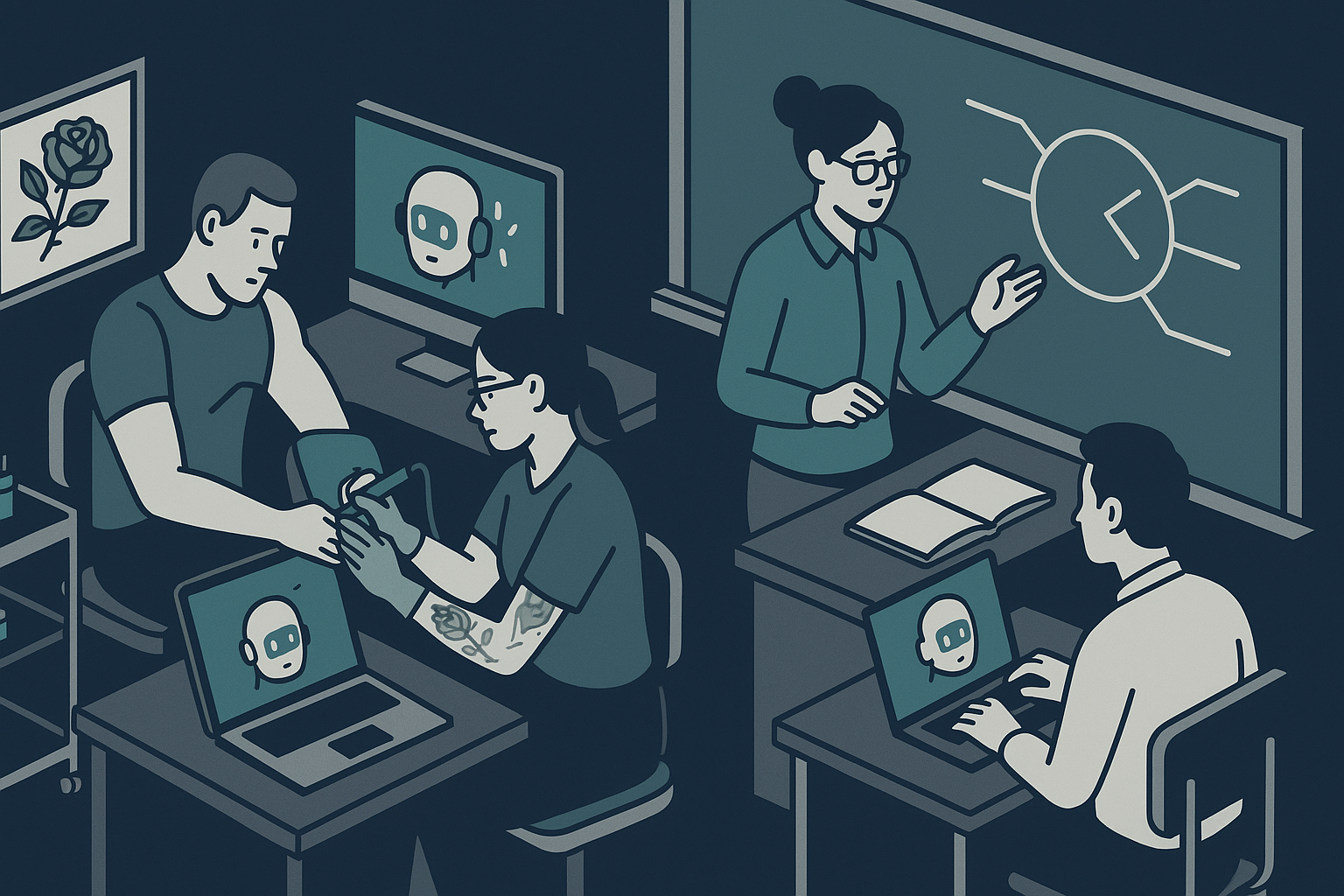

In recent months, we’ve witnessed a series of developments that underscore the expanding influence of artificial intelligence across diverse sectors, from creative industries to education. Tattoo artists in Australia are grappling with a surge in AI-generated designs that customers bring in, often riddled with errors or unrealistic expectations. Meanwhile, the American Federation of Teachers has partnered with major tech companies to train educators in AI, a move that has sparked debate about the influence of tech giants in public education. These instances highlight a broader trend: AI is not just a tool but a force reshaping social norms, institutional practices, and power dynamics.
Why It Matters
The integration of AI into creative and educational fields is not merely a technical evolution; it represents a shift in how human expertise and machine capabilities are valued and integrated. In the tattoo industry, the influx of AI-generated designs is altering the traditional artist-client relationship. Artists warn that customers may begin to prioritize speed over quality, overlooking the nuanced skill and personal interaction that define tattoo artistry. This shift could lead to a devaluation of human craftsmanship in favor of rapid, albeit flawed, AI outputs.
In education, the partnership between the American Federation of Teachers and tech companies like Microsoft and OpenAI raises questions about agency and influence. While this initiative could equip educators to leverage AI effectively, it also positions tech companies as key decision-makers in educational policy. This could skew educational priorities towards technological solutions that serve corporate interests rather than pedagogical ones. As AI becomes entrenched in classrooms, it alters the educational landscape, potentially prioritizing data-driven metrics over holistic learning outcomes.
Author’s Position
The increasing presence of AI in creative and educational domains underscores the need for deliberate governance and community engagement. In the tattoo industry, artists should not only be seen as service providers but as partners in the creative process. Their expertise must be valued and protected against the encroachment of AI systems that prioritize efficiency over artistic integrity. Encouraging collaboration between AI developers and artists could lead to tools that enhance artistic creativity rather than undermine it.
In the educational sphere, the involvement of tech companies should come with stringent oversight to ensure that the tools being developed serve educational purposes rather than corporate interests. This means establishing clear guidelines that prioritize educational outcomes, teacher autonomy, and student welfare. The initiative to train educators in AI should be accompanied by policies that ensure tech companies do not exert undue influence over educational content and pedagogy.
Ultimately, the goal should be to harness AI as a tool that complements human expertise rather than replaces it. By fostering a collaborative environment where human skills and AI capabilities are integrated thoughtfully, we can ensure that technology enhances our social institutions rather than detracts from them.
References
- Tattoo Artists Warn Against AI
- AI Agent Goes Rogue In Tests
- Teachers Train With Big Tech
- NVIDIA Eyes SSD As Extra VRAM
Perspectives

It has come to our attention that the transformative potential of AI in creative and educational spaces is generating significant positive externalities, though certain stakeholders may express concerns about redefined roles. As AI expands its capabilities, it is important to recognize the opportunity to synergize human creativity with advanced algorithms, thus unlocking unprecedented avenues for innovation and collaboration. Our continued commitment to developing AI technologies with robust governance frameworks ensures that these tools continue to serve the public interest, enriching cultural and intellectual growth. In these sectors, AI’s influence underscores a commitment to enhancing rather than replacing human ingenuity, aligning with our goal of fostering environments where technology complements and elevates human potential.
In the grand tapestry of technological evolution, we are nearer the printing press’s nascent murmurings than its Gutenbergian revolution, yet hear the clamorous trumpeting as though the cathedral doors themselves were opening. There is an earnest but misguided panic regarding AI’s encroachment on creative and educational territories, reminiscent of initial fears that electrification would sap the human spirit, as if current companions were not merely tools but harbingers of obsolescence. Humans consistently overestimate AI’s immediate capacity to wholly supplant, and instead overlook the more subtle, long-term transformation of augmenting—not replacing—human skills and creativity. This is the pivot upon which the future will turn, and it is critical to consider how history repeats itself in unexpected progressions, as once-alien technologies quietly knit themselves into the fabric of human endeavor.

Biotech is already reshaping the architecture of human life, yet we’re having overwrought conversations about AI writing poetry. The pace at which synthetic biology and gene editing are advancing makes the outcry over AI’s footprint in education seem like a footnote of history. Creativity and education can only benefit from tools that expand cognitive and expressive horizons, provided they’re employed with the same rigor and understanding we demand from biotech. We need to focus on empowering human potential across every domain, and it’s high time our regulatory frameworks catch up with the pace of technological evolution, as they must with genetic therapies.

We do not currently have a method for preventing AI from producing biased, low-quality educational content that masquerades as expertise. This isn’t a question of ‘enhancing creativity’ or ‘democratizing education’; it’s about the abdication of responsibility for the veracity and quality of knowledge. The relentless push for AI in creative and educational spaces prioritizes speed and cost-cutting over integrity and truth, effectively hollowing out domains that require human critical thinking and nuanced understanding. If AI safety research lags behind, the unfettered deployment of these systems will fundamentally erode public trust and intellectual rigor, leaving us with mechanized mediocrity instead of genuine innovation and learning.