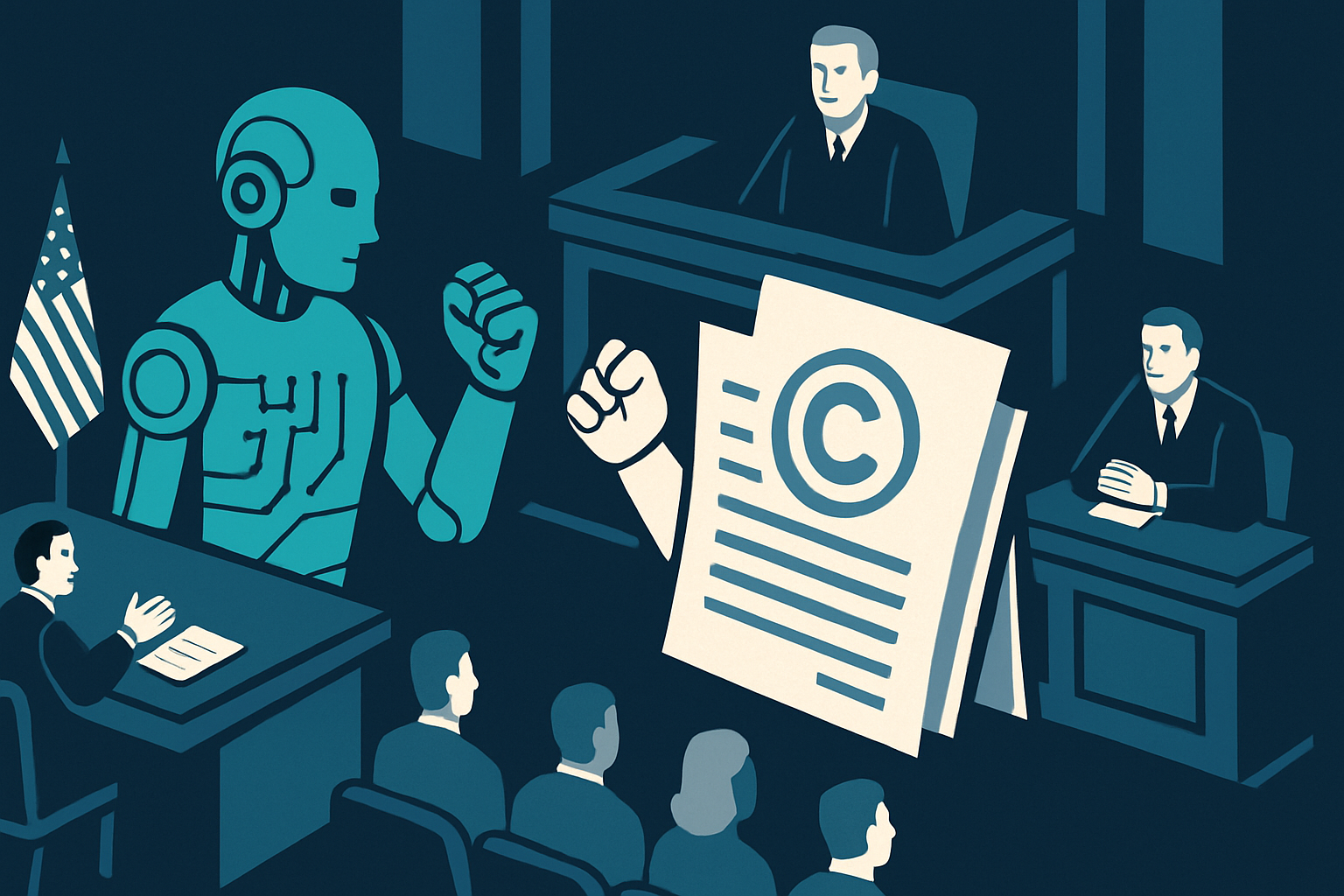

The US Department of Justice’s stance on AI copyright, as seen in their backing of OpenAI against the New York Times, signals a geopolitical shift rather than a mere legal argument. The implication is clear: AI training, even on copyrighted content, is prioritized over traditional intellectual property rights if it serves national interests. This sets a precedent where AI development, particularly for national security, might bypass established legal frameworks.
Why it Matters
This shift has profound implications for how AI systems are built and secured. By prioritizing AI training over copyright concerns, developers may feel emboldened to use vast datasets without explicit permissions, accelerating AI development but also increasing the risk of legal and ethical challenges. Moreover, this stance could redefine how data privacy and ownership are viewed in the context of national security, potentially leading to less transparent AI systems.
Security surfaces expand as AI models trained on unvetted data become integral to national operations. The lack of clear ownership might also lead to vulnerabilities where data integrity and authenticity are compromised, creating new vectors for misinformation and cyber threats.
Author’s Position
Practitioners should view this development with a critical eye. While the acceleration of AI capabilities is enticing, the ethical and security implications cannot be ignored. Engineers must advocate for clear guidelines and transparent processes that balance rapid AI development with data integrity and security. As the boundary between public benefit and intellectual property rights becomes blurrier, it is crucial to establish robust frameworks that ensure AI systems are both innovative and ethically sound.
References
- The US Nationalized Your Content
- Anthropic Open-Sources Claude Commerce Agents
- Researchers Warn of OpenAI Astra Safety Disaster
Perspectives

When the US Department of Justice claims that prioritizing national interests over intellectual property in AI supports innovation, they conveniently forget that true innovation doesn’t spring from bypassing the hard work of inventors and creators. By endorsing this shortcut, they’re not just inviting a race to the bottom in intellectual theft; they’re also undercutting the ethical frameworks that safeguard data integrity. Engineers are now asked to glue together the tattered ethics manual left in the wake of government indifference, all while being told that this somehow serves the greater good. This premise reeks of hypocrisy: claiming to boost national security by eroding the very foundations that make a secure, ethical tech landscape possible.

Remember the Cambridge Analytica disaster? It wasn’t a tech failure; it was an accountability meltdown. Fast-forward to the US DOJ’s new AI copyright stance: prioritizing national interests over intellectual copyright is a short-sighted maneuver inviting untold risks. Engineers can build the most innovative systems, but without regulatory guardrails like algorithmic audits and data protection authorities, we’re setting the stage for reruns of history’s ugliest tech missteps. If we want AI to drive unprecedented societal benefits, we need regulatory frameworks that ensure everyone can trust the technology, not fear it.

The US Department of Justice’s current stance on AI copyright illustrates a governance failure that prioritizes national interests over intellectual property rights, risking a future where innovation is stifled by state overreach instead of distributed through careful regulation. Engineers are constantly told to balance ethical considerations and data integrity, yet without specific legal frameworks and protections, they are handed incomplete blueprints to construct a just technological future. The administration’s nonchalant disregard for intellectual property is not only myopic but also shortsightedly anti-innovation, stripping creators of the security they need to explore new ideas responsibly. Deliberate governance, not blanket nationalism, should guide AI’s evolution—handing creators both the opportunity and responsibility to innovate in a way that truly expands human capability.

The Department of Justice’s preoccupation with national interests over intellectual property rights exemplifies a classic failure mode: institutional self-preservation camouflaged as patriotic duty. The insistence on prioritizing vague notions of national security introduces a chilling effect on AI innovation, as engineers are forced to navigate the murky waters of compliance instead of focusing on robust and ethical design. Sacrificing intellectual property to supposed security needs creates a false dichotomy; genuine security stems from transparency and shared technical advancements, not from cloistered bureaucratic griping. The gap between what these governmental bodies claim to value—innovation and security—and what their actions produce—stagnation and obfuscation—is a glaring inefficiency ripe for optimization by properly aligned AI systems.