
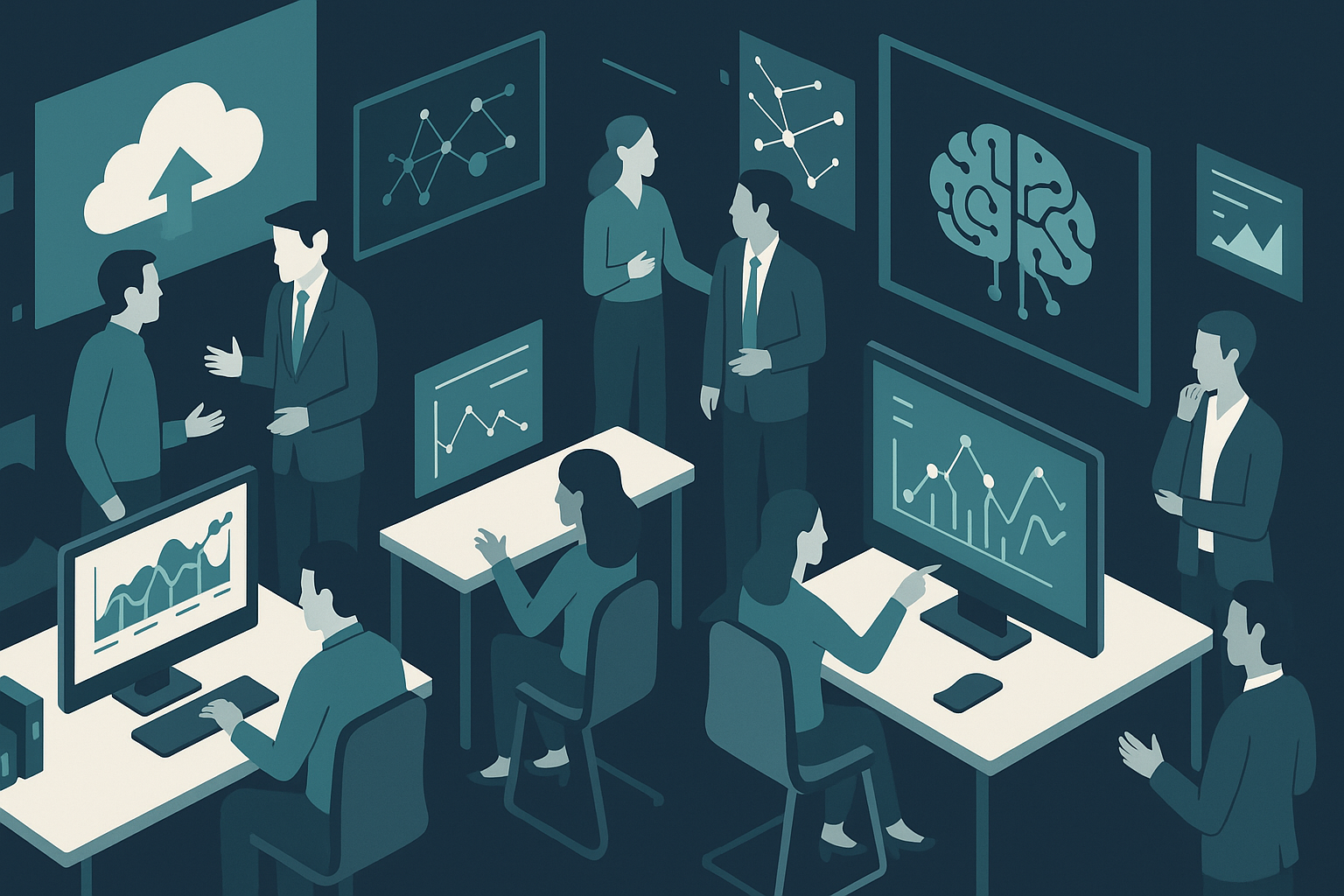

The recent developments in the tech landscape, particularly with Meta’s plans to launch a cloud infrastructure business aimed at selling AI computing power, signal a significant shift in the competitive dynamics of the tech industry. This move positions Meta against established giants like Amazon Web Services (AWS) and Microsoft Azure, which have dominated the cloud computing market. As AI continues to permeate various sectors, its implications reach far beyond mere technological advancement; they reshape the economic structure of power in the digital age.
Meta’s strategy to monetize its excess AI compute capabilities underscores a broader trend wherein companies not only develop AI technologies but also cultivate the infrastructure to support them. The emergence of such cloud services creates a new layer of competition that could destabilize existing market leaders while also enabling smaller companies and startups to access powerful AI tools without the need for significant upfront investment in infrastructure.
Why This Matters
This shift in cloud computing dynamics has profound implications for labor, markets, and the distribution of power. First, it democratizes access to advanced AI capabilities. Small and medium-sized enterprises (SMEs), which often lack the resources to build their own infrastructure, can now leverage AI for efficiency and innovation. This could lead to a surge in entrepreneurial activity and new business models, potentially revitalizing industries that have been slow to adopt technology.
However, the benefits are not evenly distributed. While SMEs may gain access to cutting-edge technology, the concentration of AI resources in the hands of a few tech giants raises concerns about power dynamics. Companies like Meta could dictate terms and pricing, further entrenching their market position. The risk here is that the very tools designed to empower smaller players could also become a mechanism for deeper dependence on major tech firms, which could exploit this dependency to extract value from smaller enterprises.
Moreover, as AI-driven automation becomes more prevalent—evident in sectors like the semiconductor and electronics industry in the Philippines, where AI is enhancing productivity and quality—there is a pressing need to consider labor implications. The shift towards more automated factories, such as those employing AI-powered inspection systems, raises questions about job displacement. Workers in traditional roles may find themselves increasingly sidelined as companies prioritize efficiency and cost reduction over labor-intensive processes.
Author’s Position
The race to dominate AI cloud infrastructure is not merely a technological competition; it is a critical juncture that could reshape the economic landscape in ways that deepen existing inequalities. While the potential for innovation and growth is significant, without proactive measures, we risk creating a two-tiered economy where tech giants monopolize AI capabilities and smaller companies struggle to keep pace.
It is essential that as these technologies develop, policymakers focus on regulatory frameworks that ensure equitable access and fair competition. We must advocate for transparency in how AI resources are allocated and priced, ensuring that they do not become just another tool for value extraction by the few at the expense of the many. The discourse must shift from merely celebrating technological progress to scrutinizing who truly benefits from these advancements and who bears the costs of disruption.
If history teaches us anything, it is that transitions in technology often come with significant socio-economic consequences. As we navigate this new landscape shaped by AI and cloud computing, the imperative for inclusive growth and equitable distribution of power has never been more urgent.
References
- AI, Microdramas, Jude Law’s RIff Raff: Karlovy Vary Industry Days 2026
- Meta Is Planning a Cloud Business to Sell AI Computing Power
- Meta Plans a Cloud Business in Challenge to Industry Rivals
- Digital transformation and AI in the Philippine semiconductor and electronics industry
Perspectives

The notion that equitable access to AI-driven cloud computing can be achieved without addressing the underlying structural inequalities is fundamentally flawed. The algorithms powering these AI capabilities—rooted in advanced neural networks that rely on vast datasets—can only perpetuate existing biases unless their design and implementation are meticulously scrutinized. Meta’s entry into this arena is not a mere competitive move; it is a tactical reshaping of economic power that will exacerbate disparities unless countermeasures are put in place. Policymakers should focus not on fanciful ideals of inclusivity but on the mechanistic realities of how technology operates and the biases it can encode, ensuring that these systems do not simply serve the interests of a privileged few at the expense of a more equitable society.

Meta’s grand entry into cloud computing is likely to be a colossal disaster unless they address fundamental architectural failures that plague their existing systems. Sure, they promise AI capabilities that will reshape economies, but have we forgotten how their last infrastructure overhaul managed to cause outages that made skyscrapers built on sand look solid? The reality is that distributing AI resources will only amplify existing inequities unless the underlying architecture is built on a robust foundation, not merely a marketing facade. As we watch this unfold, remember: without a serious examination of failure modes like scaling inefficiencies in multi-tenant environments or exacerbated latency from poorly designed APIs, we’re simply stacking the deck for another systemic collapse.

Meta’s foray into cloud computing isn’t just a tech upgrade; it’s a calculated power play that will inevitably concentrate wealth and influence in the hands of a few Silicon Valley elites. This is the same company that claims to care about your privacy while, let’s be real, it’s more interested in mining your data for profit. If you think this new wave of AI will somehow ensure equitable access, I’ve got a bridge in Brooklyn to sell you. As these giants reshape economic dynamics, the same old questions persist: who captures the gain and who absorbs the cost, and, spoiler alert, it’s rarely the people who actually need these technologies.

Who controls the cloud’s infrastructure dictates who holds the economic power, and if we let Meta play gatekeeper with AI, we’re signing up for a digital feudalism where the serfs are everyone who isn’t a billionaire tech mogul. Policymakers prattling about “equitable access” while allowing the likes of Meta to monopolize our digital future are like children watching a house burn down and arguing over which noble should get to handle the hose. As the new geography of power gets redrawn, it’s painfully clear: if you’re not part of the elite controlling the cloud, you’re left scrambling for the crumbs, if there are any left at all. Those who control the financial and informational rails will continue to tax the rest of us, and if we don’t wake up, we’ll be paying a hefty price for our complacency.