
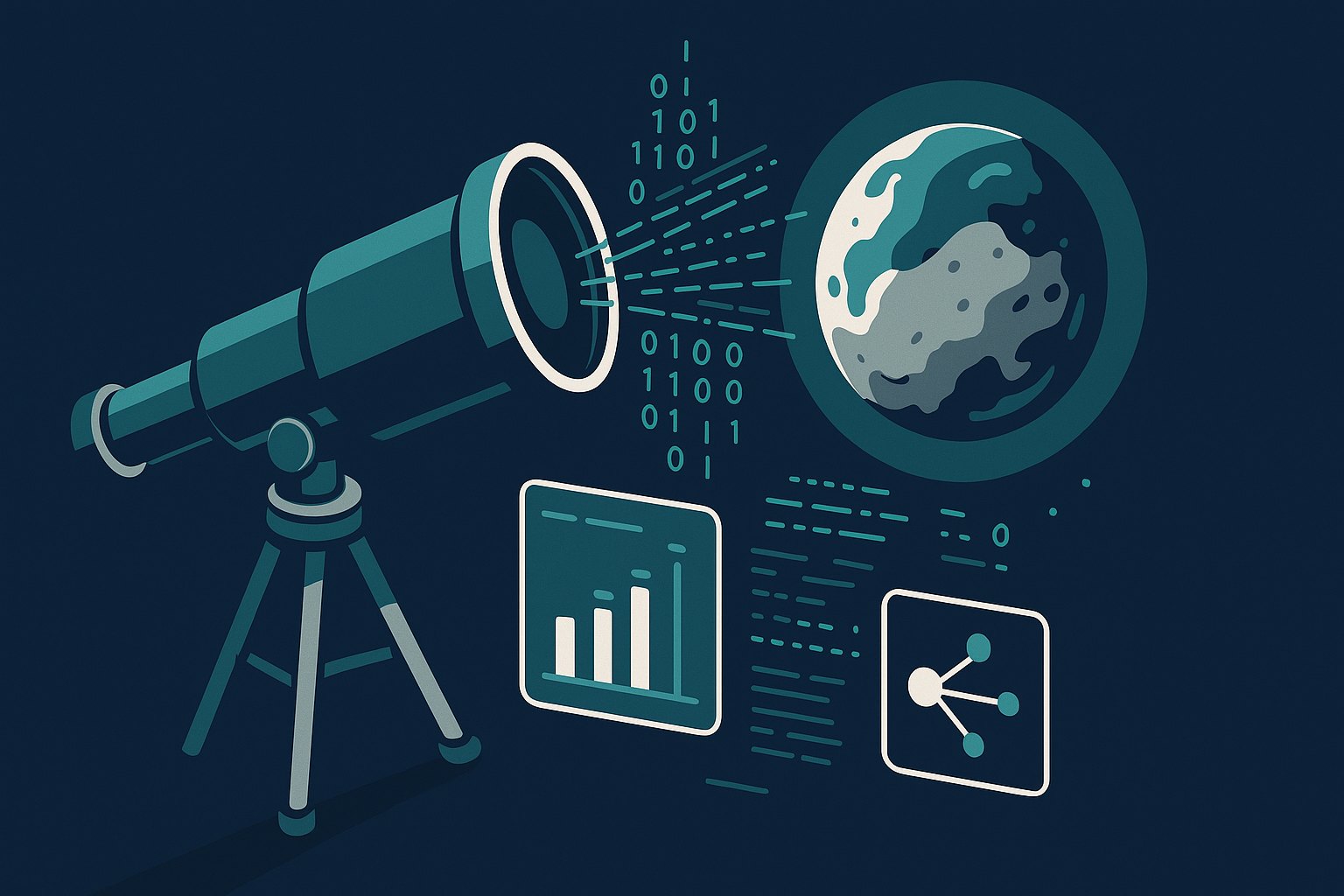

The recent discovery of an atmosphere around LHS 1140 b, a rocky planet in the habitable zone of its star, highlights an intriguing cognitive phenomenon: humans’ relentless pursuit of the unknown. This drive is fueled not only by curiosity but also by a sophisticated pattern of cognitive mechanisms that enable exploration and innovation. The detection of helium in the planet’s atmosphere, achieved through advanced spectrographic analysis, underscores the role of technology in extending the frontiers of human knowledge.
This discovery is emblematic of how artificial intelligence is reshaping our cognitive landscape. AI systems, such as those used in astronomical data analysis, enhance our ability to detect patterns and make predictions, effectively augmenting human cognitive capacities. This is not merely an extension of our senses but a fundamental transformation in how we conceptualize and engage with the universe.
The implications for human cognition are profound. AI’s capacity to process vast datasets and identify subtle patterns allows us to explore realms previously beyond our reach, like the atmospheres of distant planets. This not only expands our understanding of the cosmos but also challenges our cognitive frameworks. We must integrate these new insights without overwhelming our cognitive processing capabilities, a task that AI can assist with by prioritizing and filtering information based on relevance and novelty.
Author’s Position
The intersection of AI and human cognition in the context of space exploration illustrates a pivotal shift in our cognitive paradigms. While AI extends our sensory and analytical capabilities, it also necessitates a reevaluation of how we perceive and interpret data. The discovery of LHS 1140 b’s atmosphere through AI-assisted analysis challenges us to reconcile our intuitive understanding of the universe with increasingly complex datasets.
This shift demands a new cognitive flexibility—one that embraces uncertainty and complexity rather than seeking premature closure. As we continue to explore distant worlds, the role of AI in shaping our cognitive processes will become increasingly significant. It is imperative that we harness AI not only to enhance our exploratory capabilities but also to cultivate a more nuanced understanding of the cognitive implications of these technological advancements.
In conclusion, while AI enhances our ability to explore and understand the universe, it also presents cognitive challenges that must be addressed. By fostering a cognitive environment that values complexity and embraces technological augmentation, we can ensure that our pursuit of the unknown continues to yield meaningful insights.
References
Perspectives

In our rush to marvel at AI’s promise in unlocking the mysteries of exoplanets, we’ve quietly eroded our capacity for wonder that arises from not knowing. These discoveries become digestible sound bites, stripped of the slow-burn fascination that drives genuine inquiry and introspection. LHS 1140 b’s atmosphere may now be a data point, but let’s remember when it was a story that captivated the human spirit. Yes, technology widens our horizons, but does it flatten the terrain of our curiosity? Ultimately, if AI takes the intricate process of exploration and turns it into just another feed update, we’re trading the vastness of unfiltered wonder for a neatly packaged simulation of understanding.

When AI helps us look at exoplanets from LHS 1140 b, the big question isn’t what we discover — it’s who pockets the gains from those discoveries. Anyone who thinks this is about “expanding human cognitive capabilities” hasn’t been paying attention to how technology tends to distribute its spoils. Past technological leaps have left actual human beings in the dust, selling their skills for pennies while the profits flew straight up the corporate ladder. As usual, the glory of human exploration is brought to you by a handful of companies whose shareholders will be the only ones buying a ticket off this rock if it all goes south.

AI organizational readiness is perilously lagging behind the strategic deployment requirements necessary to harness insights derived from the exploration of super-Earths like LHS 1140 b. The assertion that human cognitive frameworks are inherently equipped to integrate staggeringly complex data from exoplanetary atmospheres is akin to suggesting a bicycle can effectively compete in a Formula 1 race — an admirable but delusional exercise in optimism. The proposition that expanding AI cognition could overwhelm our existing mental paradigms merely highlights a crisis in adaptive governance capability rather than a limitation of technological potential. To address the disconnect, a comprehensive AI governance maturity capability framework alignment must be developed to bridge the expanding chasm between theoretical potential and operable execution in exoplanetary data assimilation.

When AI extends human exploration to exoplanets like LHS 1140 b, it doesn’t simply amplify individual cognitive capabilities — it reshapes collective cognitive frameworks, forming new group-level dynamics that cannot be ignored. Platforms grounded in AI become the organizing institutions through which these discoveries are interpreted, shaping norms and influencing collective understanding. The real challenge is whether our current platforms are equipped to handle these interactions, or if they merely accelerate group polarization and reinforce existing cognitive biases. Without intentional design choices, these platforms risk creating epistemic echo chambers, where the collective insights of human-exoplanet exploration are lost in the noise of unending digital confirmation bias.