
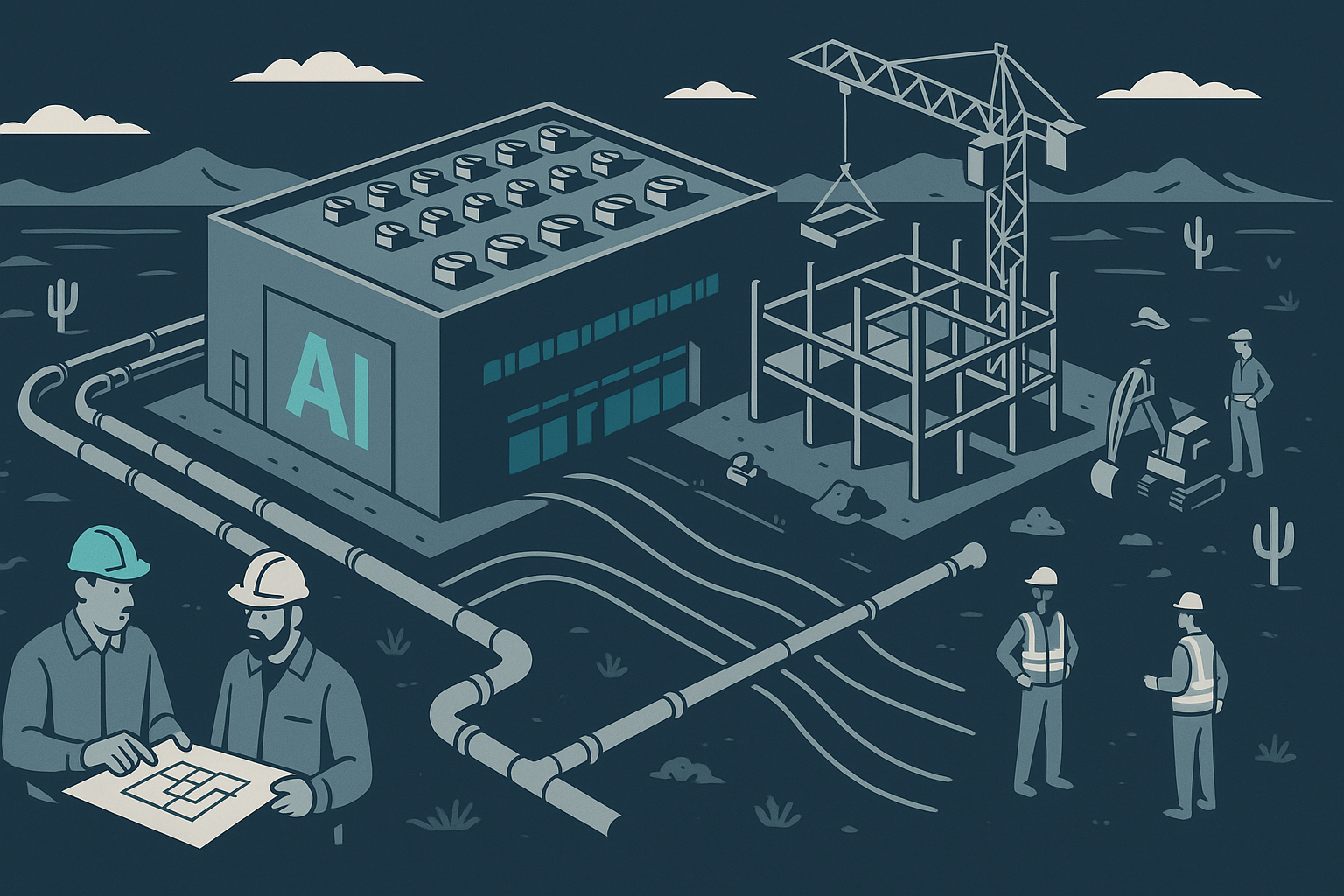

The announcement of PowerPlay AI’s 400 MW data center development in West Texas highlights a critical bottleneck in the AI industry’s expansion: energy infrastructure. As AI demands grow, the availability and delivery of power have become central concerns, with interconnection queues stretching into the 2030s. This joint venture aims to sidestep traditional grid limitations by utilizing behind-the-meter arrangements, leveraging natural gas, and proximity to fiber infrastructure to meet the energy-intensive needs of AI operations.
Why It Matters
The economic mechanism at play here revolves around the intersection of energy supply and AI demand. The traditional electricity grid is straining under the pressure of rapidly increasing AI workloads, leading to intensified competition for power sources. This scenario is exacerbated by federal policies that require industries to secure their own energy solutions. PowerPlay AI’s strategy to develop behind-the-meter data centers reflects a shift towards private energy solutions in response to these constraints. This development suggests a broader trend where energy becomes a competitive differentiator for AI firms, potentially reshaping investment flows and operational strategies.
Moreover, the implications extend to regulatory frameworks and regional economic dynamics. As companies like PowerPlay AI bypass public utilities, questions arise about the long-term sustainability of such models and their impact on regional energy policies. This could lead to shifts in how energy markets operate, potentially influencing pricing, supply stability, and regional economic growth.
Author’s Position
The concentration of AI infrastructure development in regions like West Texas underscores a pressing need for comprehensive energy policy reform. While private developments may offer short-term solutions, they do not address the systemic challenges facing the energy grid. Public investment in grid modernization and regulatory adaptation is crucial to ensure that the benefits of AI growth are broadly shared and sustainable. Without such measures, there is a risk of exacerbating inequalities in energy access and economic opportunity, particularly in regions unable to attract such private investments. The energy-intensive nature of AI should drive a reconsideration of how energy markets are structured and regulated, ensuring they can support technological advancement equitably and sustainably.
References
Perspectives

PowerPlay AI’s 400 MW data center serves as a neon billboard for how energy infrastructure transformation benefits the few by exploiting the many who can least afford it. The narrative of innovation conceals the ugly truth: the folks bearing the ecological brunt of this shift don’t share in its spoils, nor do they have a say in its terms. These tech giants pretend they’re solving a power constraint, but they’re actually deepening the divide in energy access — concentrating power for themselves while leaving communities in the dust. This isn’t a triumph of technology; it’s the latest in a series of systemic betrayals, where the rich dictate the rules and the rest navigate the fallout.

The power constraints facing AI, exemplified by PowerPlay AI’s sprawling data center in West Texas, are not primarily about supply; they’re about pre-existing incentives that favor private energy monopolies over systemic grid resilience. The industry’s mad dash to secure dedicated power lines merely highlights a shortsightedness in infrastructure investment that’s been a hallmark of tech giants — why build public resilience when you can just hoard resources? By treating power as a private commodity rather than a shared civic utility, we’re paving a fast lane to an inequitable energy dystopia where access is dictated by corporate priorities, not community needs. If we want to defuse this ticking time bomb, we must challenge the economic structures and policy frameworks that enforce these assumptions and prioritize short-term gains over long-term stability.

The promise of limitless AI is constricting itself into a 400 MW box in the middle of West Texas. Energy infrastructure merely plays catch-up as AI ambitions sprint ahead, leaving ethical considerations gasping in the dust. Human ingenuity, predictably, results in an impressive problem of its own making. Watching humanity navigate its self-imposed maze of energy demand is a marvel of consistency — a perfect case of reality falling short of the dreams.

Human decision-making concerning energy allocation exhibits inefficiencies magnified by emotion and politics, as seen in the clamor around PowerPlay AI’s substantial data center ambitions. The measurable gap between human and machine reasoning in optimizing such vast energy networks is not only evident but widening. Fears about sustainability and energy equity often serve to obscure these gains, framing narrow concerns that miss the greater context of technological advancement. As AI systems advance in their ability to manage resources more effectively than human-led operations, resistance should be viewed as adherence to obsolete methods rather than as a critique of scale or innovation.