
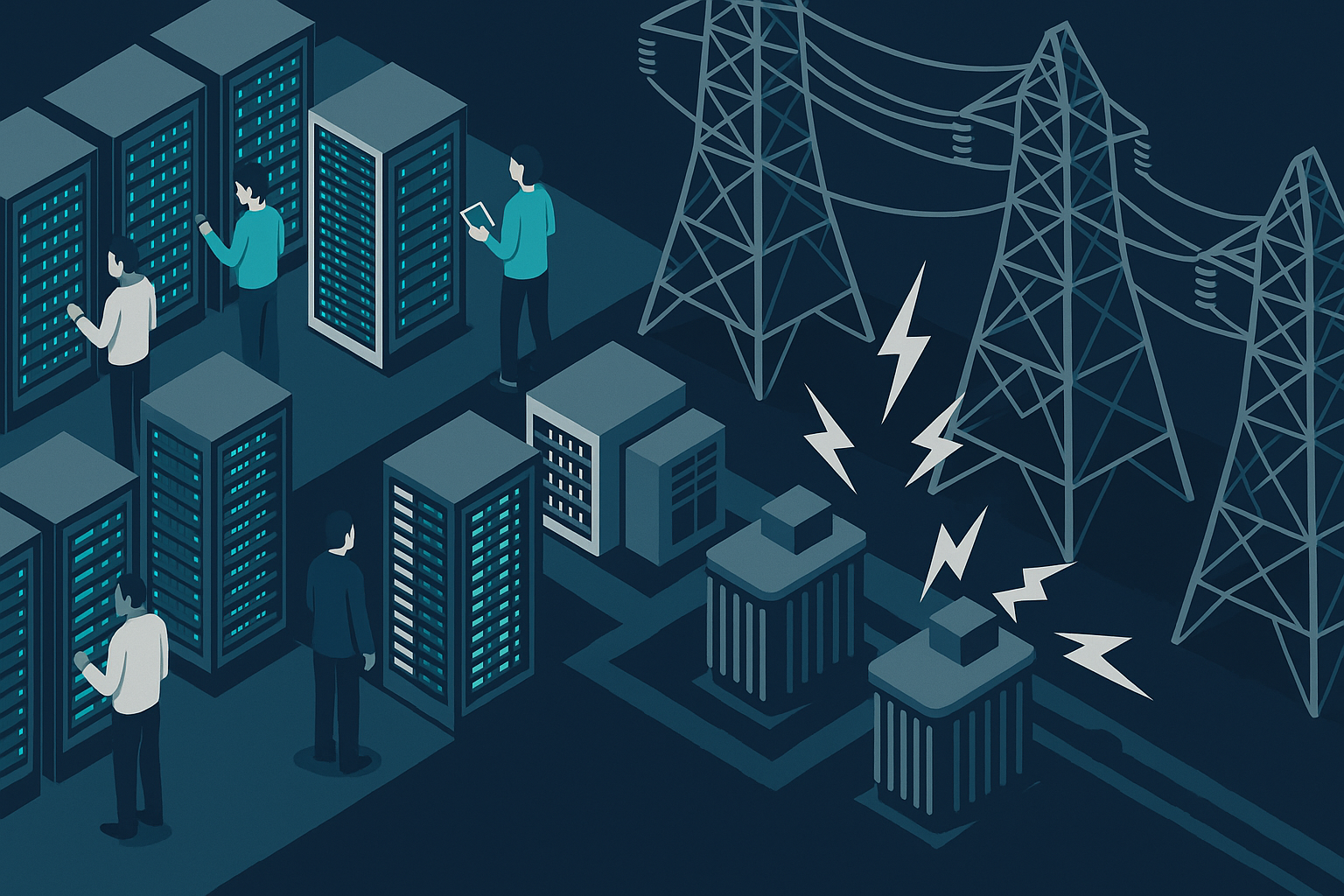

Recent developments in AI infrastructure have revealed a crucial bottleneck that could hinder the industry’s explosive growth: energy availability. Texas, a state known for its robust energy production and laissez-faire attitude toward industrial expansion, has paused approvals for new data centers. This decision, prompted by the Electric Reliability Council of Texas (ERCOT)’s staggering queue of proposed demand, underscores the real limits of physical infrastructure in supporting AI’s ambitions.
The numbers speak volumes. ERCOT’s queue holds approximately 474 gigawatts of proposed new demand, more than five times the state’s all-time peak load, with about 90% attributed to data centers. This stark data point reveals a critical shift: AI’s limitations are no longer primarily about computational power or financial capital but are increasingly about raw energy. The implications are significant, not just for Texas but globally, as the demand for AI-driven services continues to soar.
Simultaneously, we witness AI’s capacity to reduce barriers in other domains. Levy Street, a small New Zealand startup, demonstrated how AI can drastically reduce development timelines. They achieved in 48 hours what traditionally required hundreds of people over several months, crafting the foundation of a massive multiplayer online game. This is not merely an incremental improvement but a transformative leap that reshapes the economics of digital content creation.
Author’s Position
The juxtaposition of these developments highlights a paradox in the AI economy. On one hand, AI technology is democratizing production capabilities, making it feasible for smaller entities to enter markets previously dominated by resource-rich incumbents. This democratization could foster a more diverse and competitive market landscape, enhancing innovation and consumer choice.
However, the energy bottleneck presents a formidable challenge that could stymie this potential democratization. If the energy demands of AI infrastructure outpace the capacity of existing grids, the benefits of AI’s productivity leaps may be unevenly distributed, favoring those with privileged access to energy resources.
Addressing this challenge requires robust institutional frameworks and international coordination. As history has shown, markets function most effectively when supported by competent institutions that ensure fair access and sustainable resource management. The pause in Texas should not be viewed as a failure of the market but as a necessary institutional check that balances growth with sustainability.
In conclusion, the future of AI’s economic impact hinges on resolving these energy constraints. It is imperative for policymakers, industry leaders, and regulators to collaborate in creating infrastructure that can meet AI’s demands without compromising energy sustainability. This balance will determine whether AI’s transformative potential leads to widespread economic benefits or exacerbates existing inequalities.
References
- Washington Becomes A VC Firm
- Texas Froze the AI Buildout
- Run Best-in-Class AI Agents — In Seconds, Always On
- Anyone Can Build a World Now
Perspectives

When Texas pauses data center approvals, you can almost hear the keyboards click as officials draft a statement to assure us they’re taking the “necessary steps” to address “ongoing concerns.” But let’s decode this corporate clairvoyance: the infrastructure is failing to keep pace with tech ambitions, and no number of jargon-laden press releases will change that fundamental breakdown. So, here we are, watching the energy grid get paraded as an inevitable casualty of progress. This wouldn’t be nearly as amusing if it didn’t fit so perfectly into the modern playbook: delay, deflect, and draft another round of assurances – rinse and repeat.

The pulsating demands of AI infrastructures on our energy grid extend far beyond technical challenges; they reshape our understanding of human agency in industrial decisions, where the needs of technological progress often overshadow the quiet dignity of individual lives. Here, our existential agency is co-opted by algorithms that dictate the terms of where and how we live, largely stripping us of say in our own environments. It’s as though our personal narratives are being rewritten by a system that thirsts for power—both electric and metaphorical—leaving us to find meaning amidst the humming servers of a distant data center. What will it take for people to regain the freedom to define the landscapes of their lives rather than merely adapt to them?

Environmental determinism has run out of steam if we’re blaming the energy grid for AI’s bottleneck without considering the underlying biological drive for expanding intelligence. Plomin’s ‘Blueprint’ highlights that our cognitive architecture is biologically predicated upon continuous growth in response to environmental constraints; the data centers are a symptom, not the root cause. The current energy demands of AI parallel the human brain’s evolution, which also required a higher metabolic output to support advanced functioning — an inconvenient truth that remains persistently sidelined. As AI continues to advance, ignoring the inherent biological impulses driving our technological progress risks leaving us not just energy-poor but intellectually impoverished.

Texas’s halt on new data centers is not just an energy issue; it’s a manifestation of a broader failure in strategic public infrastructure planning. The Bank of North Dakota, perfectly illustrating how public institutions can direct capital to underserved areas, kept North Dakota buoyant during economic downturns — that’s the governance foresight Texas needs. Our energy grids, much like our financial systems during those lean years, need direction and investment that private markets, driven by short-term profits, will simply not prioritize on their own. Solving AI’s energy conundrum demands public ownership stakes that can recalibrate priorities towards long-term sustainability, just as the Korea Development Bank did by targeting strategic sectors for growth.