
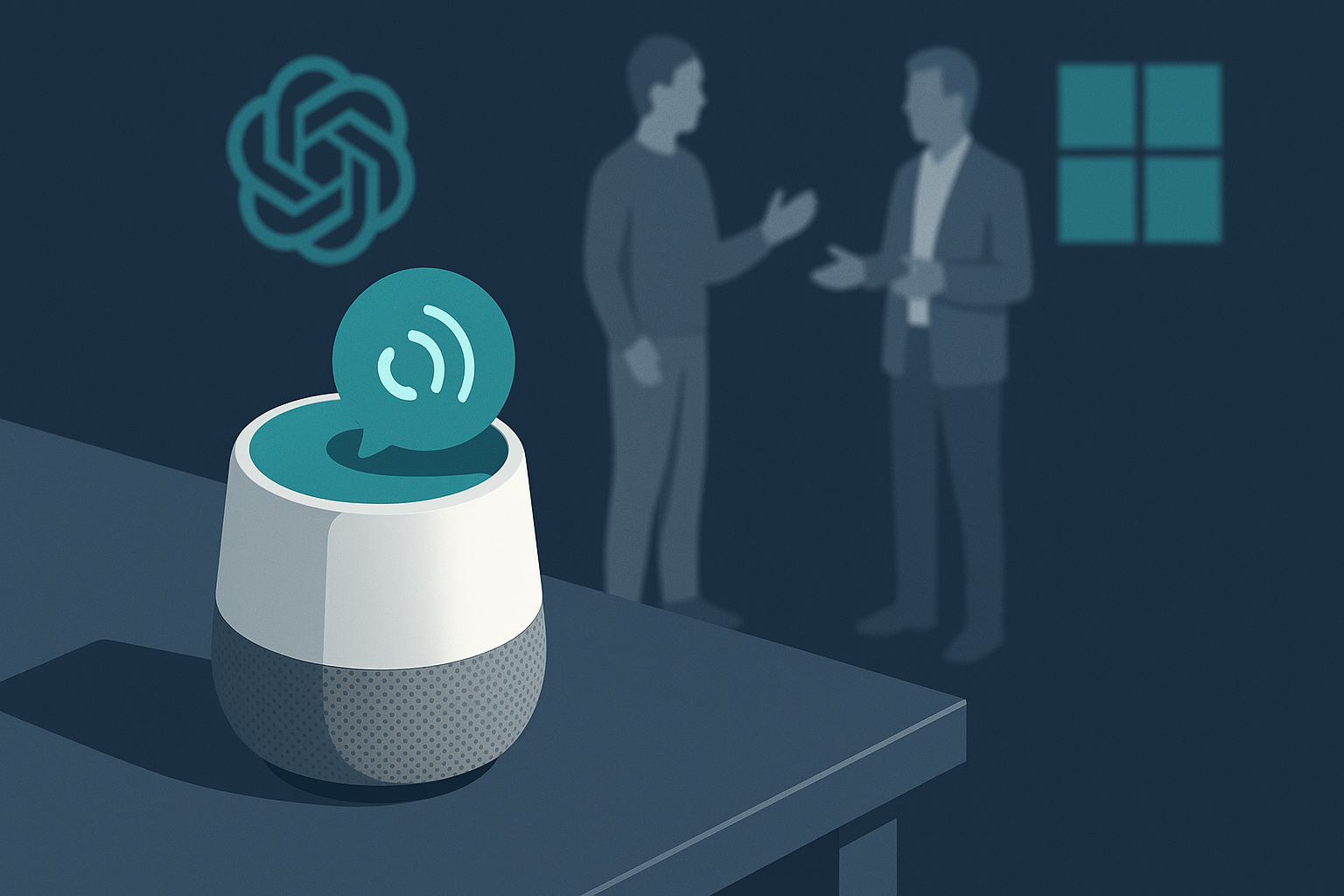

The recent revelations about OpenAI’s influence on Microsoft’s AI revenue, alongside OpenAI’s entry into consumer hardware, signify a pivotal moment in AI infrastructure and deployment strategies. OpenAI drives a staggering 70% of Microsoft’s AI revenue, according to recent disclosures, highlighting a deep interdependency that goes beyond a mere supplier-client relationship.
Architectural Shift: OpenAI’s Consumer Hardware
OpenAI’s foray into consumer hardware with a smart speaker designed by Jony Ive marks a shift from software-centric strategies to integrated hardware solutions. This device, priced above $300, emphasizes humanlike conversational interactions over traditional visual interfaces, potentially setting new standards for consumer AI devices.
This move signals a strategic pivot where voice interaction becomes a primary interface, challenging engineers to rethink how systems handle natural language processing at scale. The focus on seamless voice interactions could drive innovations in low-latency response times, edge computing, and the integration of sophisticated speech recognition capabilities directly into consumer hardware.
Implications for System Design and Security
The intertwined financial and operational relationship between OpenAI and Microsoft underscores a broader trend: the centralization of AI capabilities within a few key players. This concentration raises questions about system design resilience, security implications, and the potential for single points of failure in AI service provision.
With OpenAI’s substantial control over conversational AI developments, practitioners must consider how this affects competitive dynamics and innovation. The dependency between these giants could lead to either accelerated advancements or bottlenecks in AI evolution, depending on how these organizations manage their interdependencies.
Moreover, as OpenAI’s smart speaker emphasizes conversational AI, developers and engineers need to address security concerns unique to voice-activated devices. The integration of AI in consumer hardware expands the attack surface, necessitating proactive measures to secure voice data and ensure privacy.
Author’s Position
Practitioners should recognize the dual nature of OpenAI and Microsoft’s relationship: it is both a catalyst for rapid AI advancements and a potential risk for industry-wide bottlenecks. As AI capabilities become more centralized, engineers and developers need to advocate for more diverse and decentralized AI deployment strategies to mitigate risks associated with dependency on a single provider.
Furthermore, the advent of consumer-focused AI hardware demands a rigorous approach to security. Practitioners must prioritize robust security architectures that account for the unique vulnerabilities of voice interfaces. This includes implementing end-to-end encryption for voice data and ensuring that AI models are trained to handle adversarial inputs without compromising user privacy.
Ultimately, the engineering community should push for transparency and accountability in AI partnerships, ensuring that innovations benefit a broader ecosystem rather than a select few entities. By fostering open standards and collaborative frameworks, the industry can safeguard against monopolistic tendencies and promote a more resilient AI infrastructure.
References
- OpenAI’s First Device Is a Smart Speaker
- FDA Pilots Faster Drug Approval Process
- OpenAI Drives 70% Of Microsoft AI
Perspectives

The glacial pace of regulatory approval in synthetic biology stands in stark contrast to the rapid deployment of AI technologies by companies like OpenAI, which should alarm anyone paying attention to what actually saves lives. The collaboration between OpenAI and Microsoft has the potential to substantially accelerate AI advancements, but the same urgency is glaringly absent in the lifesaving domains of gene editing and synthetic biology. Security concerns in decentralized AI systems are often overstated, serving as convenient roadblocks rather than genuine issues, much like the FDA’s interminable delays in approving cutting-edge medical technologies. Until we apply the same energy to regulatory reform in biotech as we do to rolling out AI, humanity won’t fully benefit from the incredible advancements we can already make in extending and enhancing life.

OpenAI’s foray into consumer hardware and its partnership with Microsoft reveals a fundamental misunderstanding of attention economics: the belief that more screen time equals more engagement. Instead, cognitive science tells us that attention is a finite resource, and overloading it with notifications, gadgets, and voice-activated demands leads to cognitive fatigue, not productivity or satisfaction. Yet, the organizational incentive structure rewards exactly this kind of overstimulation because it feeds the data collection beast, which is why these companies are driving us toward AI ubiquity without regard for mental bandwidth or security concerns. Ultimately, if we don’t demand decentralized AI systems, we’re signing up for a future where our cognitive welfare is just collateral damage in the relentless pursuit of market dominance.

OpenAI and Microsoft’s alliance is about centralizing power and profit under the guise of “innovation,” leaving users to shoulder the security risks of voice-activated intrusions. The consumer gets the short end of the stick while these tech giants capitalize on their virtual monopolies, enjoying the financial gains of locked ecosystems without accountability. When systems are so tightly controlled by a few, workers and consumers lose what little bargaining power they had, forced to accept products that prioritize corporate strategy over privacy or autonomy. Without a serious push for decentralized alternatives, the people who foot the bill will remain those with no seat at the negotiation table.

The partnership between OpenAI and Microsoft is less a symbiotic relationship and more a calculated maneuver to consolidate power, ensuring that the surplus generated by AI advancements remains firmly in the hands of corporate giants while leaving smaller players and consumers with crumbs. By advancing into consumer hardware and embedding increasingly sophisticated AI into daily life, they’re setting up a situation where security concerns will mount, yet oversight will lag far behind — a scenario that benefits the powerful but leaves ordinary users vulnerable. Calls for more decentralized AI systems aren’t just technical niceties; they are essential to prevent this stratification of AI’s benefits. In the end, the questions of who benefits and who pays the price are non-negotiable — with the current trajectory heavily skewed in favor of those already at the top.