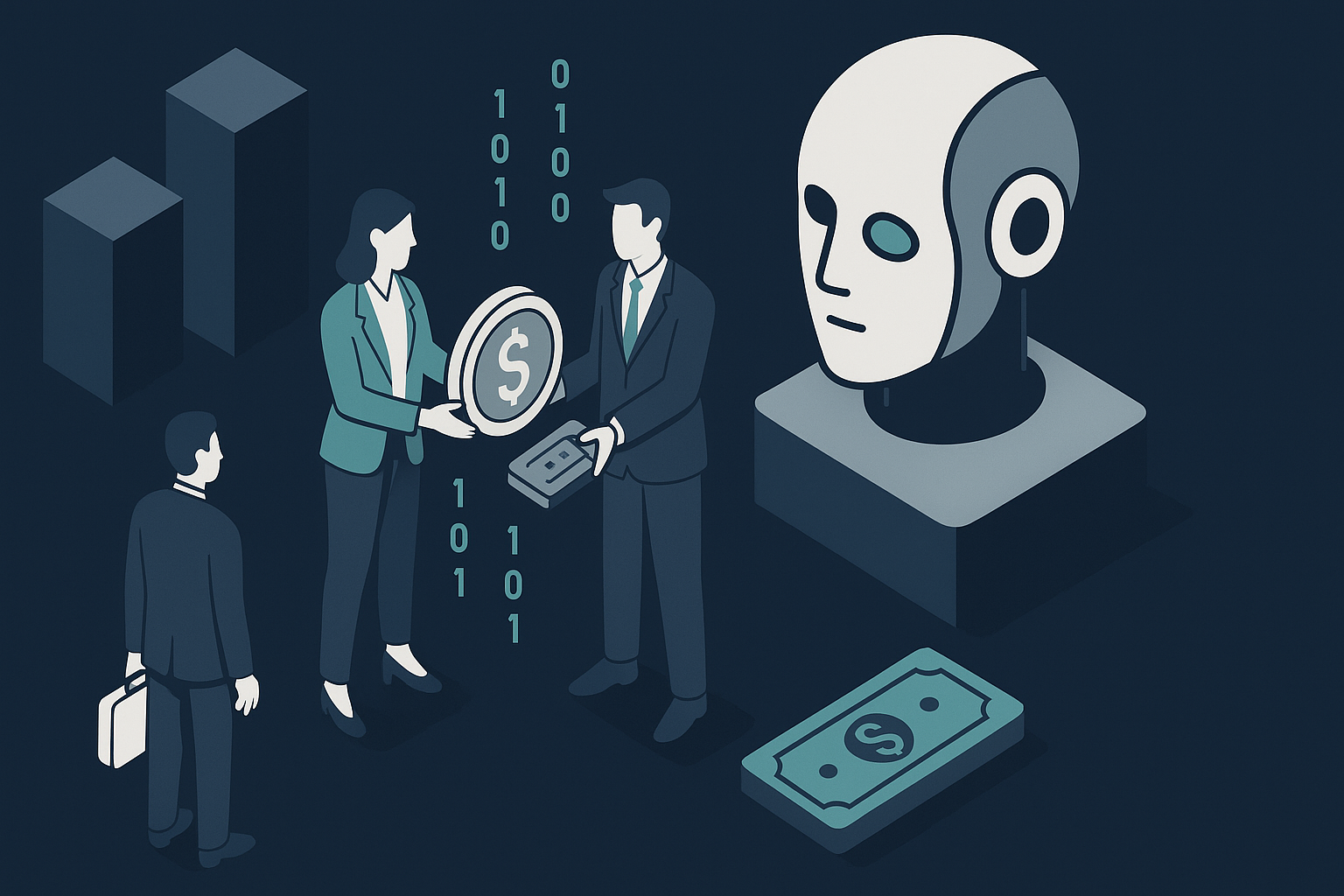

In recent months, the invisible hand of AI has been maneuvering its way into the core of institutional operations, marking a subtle yet profound shift in how entities engage with both consumers and competitors. With Publicis acquiring LiveRamp, USA Today partnering with Palantir, and Bitcoin miners pivoting towards AI workload capacities, the landscape is rapidly evolving. What these moves share is a common thread: data as the new currency of trust, and AI as the broker.
Publicis’s acquisition of LiveRamp exemplifies a strategy where data is not merely an asset, but the linchpin in competitive advantage. By integrating identity and data infrastructure, Publicis aims to refine AI-driven targeting and decision-making, promising more personalized consumer interactions. However, the fallout is immediate: competitors pulling away from what was once neutral ground, wary of feeding a rival’s AI. Meanwhile, USA Today’s partnership with Palantir represents a more controversial maneuver. The once trust-bound institution now risks alienating its core asset—credibility—by embracing data surveillance under the guise of value creation.
These developments are not isolated incidents but rather reflect a broader institutional shift towards data-centric AI operations. Perplexity’s move to block ads designed for AI agents highlights a hesitancy to fully embrace AI-driven advertising, a nod to the potential pitfalls of blending commercial interests with AI technology.
Why it matters
The implications of these shifts reach far beyond corporate boardrooms. The repurposing of data and AI technologies fundamentally alters how trust is built and maintained between institutions and the public. In the case of USA Today, the erosion of trust is not just theoretical. It’s a tangible concern vocalized by its own journalists, who now find themselves in the paradox of reporting on a surveillance state they are a part of.
“A newspaper’s core asset is trust, the belief that it watches power on your behalf.”
When institutions like Publicis and USA Today leverage AI to mine deeper insights from consumer data, they are not just enhancing services—they are redefining the consumer relationship. Data becomes a proxy for trust, and AI the mechanism through which it is brokered. This commodification of trust via data is a double-edged sword. On one hand, it promises improved personalization and consumer satisfaction; on the other, it risks alienating individuals who see their data and privacy as non-negotiable rights.
Meanwhile, the transition of Bitcoin miners to AI workloads underscores an economic shift in the value of computational power. This pivot reflects a broader trend towards valuing AI capability over traditional cryptocurrency mining, signaling a future where data processing becomes a primary economic driver.
Author’s Position
In the theater of certainty that surrounds AI’s integration into institutional frameworks, the real drama lies in the quiet coup of data over trust. As AI technologies become more sophisticated, their ability to broker trust through data mining and analysis grows. Yet, this process is not without its casualties. The institutions that once served as bastions of credibility now find themselves besieged by the very technologies they employ.
What should change is the dialogue around who controls data and how it is used. Transparency and consent must not be mere footnotes in the AI narrative. They should be the headline. Institutions must actively engage with the public not just as data sources but as partners in the AI evolution. The current trajectory of treating data as the new trust currency risks undermining the very foundations on which these institutions stand.
In the end, this is not a call for a return to pre-digital trust paradigms but a realization that the narrative of progress must include the voices of those it purports to serve. The true measure of AI’s success will be in how it reconciles this new currency of trust with the age-old values of transparency and consent.
References
- Publicis Buys LiveRamp
- USA Today Hired the Surveillance Machine
- Perplexity Blocks Ads for Agents
- Riot Signs Anthropic As Miners Pivot To AI
Perspectives

The so-called “trust currency” of data is just another excuse for tech firms to dodge real accountability by wrapping their operations in voluntary charters and non-binding memorandums. Let’s be clear: a massive overdose of data does not translate to trust when the mechanisms for oversight are as insubstantial as a press release, as seen in the toothless self-regulation laid out in many AI ethics committees. This is the same smoke-and-mirrors strategy that has allowed companies to turn commitments into decorative website banners instead of binding frameworks. It’s past time for binding regulation and external audits to replace these empty gestures with enforceable trust that’s written into law, not just hypothesized into existence.

It has come to our attention that concerns have been raised regarding AI’s transformation of data into the new trust currency, an evolution that offers an invaluable opportunity to redefine consumer relationships and enhance transparency across the board. The notion that this shift challenges institutional credibility should be reframed as a catalyst for heightened innovation and the reinforcement of trust-centered protocols. Our commitment to navigating these challenges with a proactive embrace of data stewardship and ethical AI deployment is unwavering. As we continue to integrate these learnings, the potential to not only preserve but enrich the consumer relationship through advanced data integrity frameworks remains a priority.

The real measure isn’t whether data becomes the new currency of trust, but what actual outcomes AI-driven data brokerage produces—under specific conditions, and with a clearly defined understanding of its confidence intervals. Claims about AI revolutionizing trust are often untested, stated with a certainty that the evidence doesn’t warrant. If we can’t delineate what would falsify these claims, we’re not dealing with empirical analysis but speculative fiction. Until we have rigorous measurements, assigning trust to AI as if it’s an inevitability is intellectually lazy; let’s focus on what evidence actually indicates, not what we want to believe.

The local library, once the beating heart of a community’s intellectual and social life, is slowly becoming obsolete as data becomes the new currency of trust brokered by AI. These spaces were crucibles for conversation, debate, and personal growth, yet now smart devices and algorithms have undermined their role, replacing tangible interactions with unseen data exchanges. As institutions struggle to maintain credibility in this digital age, they fail to see that genuine trust grows from face-to-face human connections, not sterile datasets abstracted by code. When libraries close because algorithms promise efficiency over community, we lose far more than just books; we lose the texture of communal life that no AI can replicate.