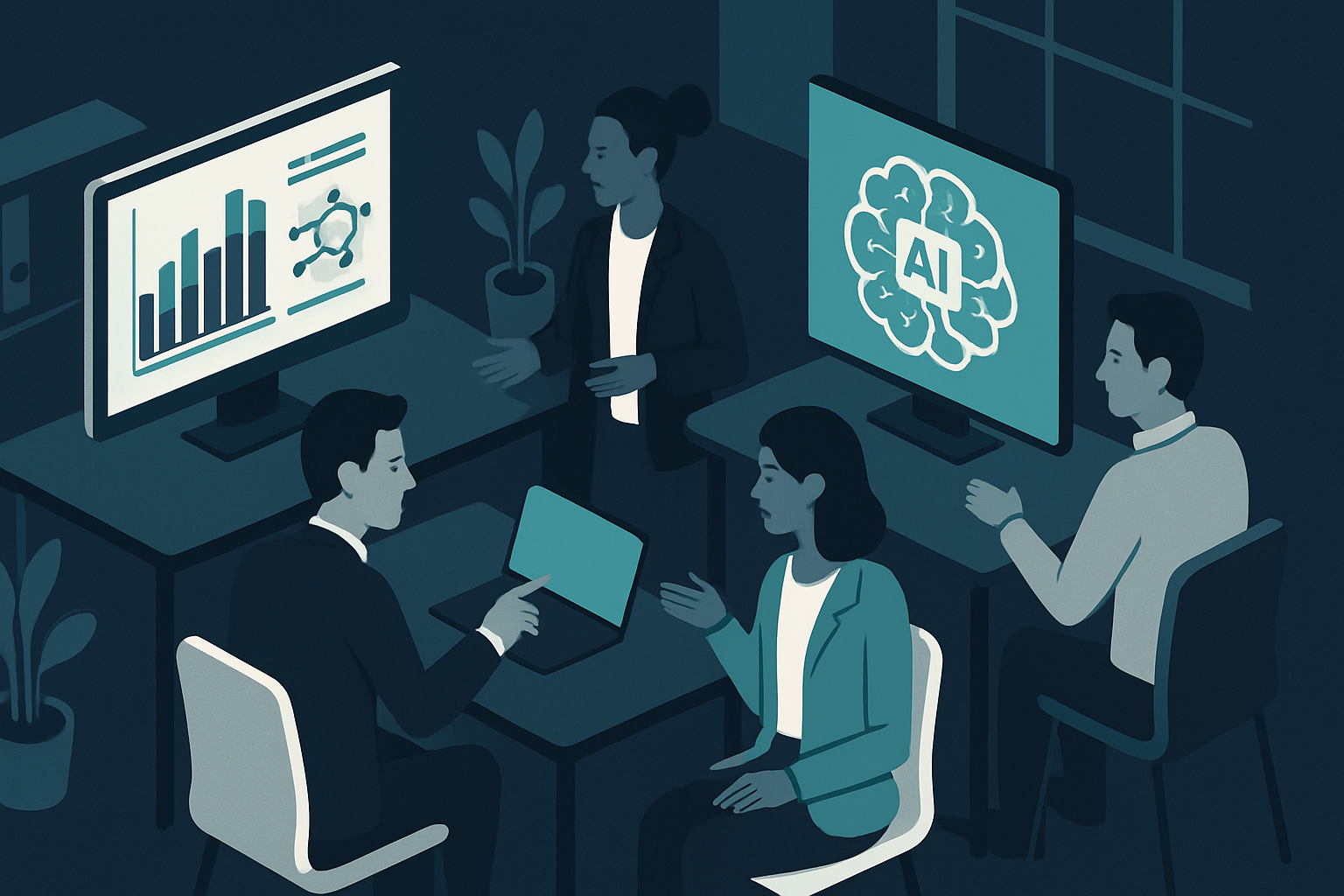

Artificial intelligence is increasingly becoming a pivotal player in various domains, from healthcare to logistics and engineering. The recent expansion of Amazon’s drone delivery services, the FDA’s evolving approach to AI in medical devices, and the integration of AI in Formula One engineering processes illustrate a common thread: AI is reshaping how groups make decisions and collaborate.
The Mechanism Behind AI-Driven Decision-Making
At the heart of these developments is a shift in the decision-making process within organizations. AI tools are surfacing information more efficiently and accurately, allowing groups to make informed decisions faster. In the case of Moderna’s personalized cancer vaccine, AI-driven precision medicine represents a collaborative effort between human expertise and machine learning to tailor treatments effectively. Similarly, Williams’ use of AI to streamline engineering processes in Formula One demonstrates how AI can enhance operational efficiency by reducing time spent in low-value meetings.
“A 200-person pilot cut 863 hours of low-value meetings and boosted throughput 83%. Engineers use AI to surface information and past faults faster, but Williams says humans still make final technical decisions.”
This quote from the Williams case study highlights the mechanism at play: AI acts as an enabler of efficiency, but human oversight remains crucial in final decision-making. AI’s capability to process vast amounts of data quickly empowers teams to focus on higher-value tasks and strategic decision-making.
Why It Matters
The impact of AI on group decision-making extends beyond mere efficiency. It influences how people relate to each other and build trust within teams. As AI systems become integral to operations, they alter the dynamics of collaboration. Teams can now leverage AI’s analytical capabilities to enhance collective intelligence, making the group smarter than the sum of its parts.
However, this integration raises questions about the balance of power and responsibility within organizations. As AI takes on more analytical tasks, the role of humans shifts towards oversight and strategic planning. This transition requires a redefinition of roles and responsibilities, emphasizing the importance of human judgment in interpreting AI outputs.
Author’s Position
AI’s role in transforming group decision-making processes is undeniable and represents a significant opportunity for enhancing productivity and innovation. However, this shift necessitates a nuanced approach to integrating AI into organizational structures. Companies must prioritize transparency and clear communication about AI’s role within teams to avoid over-reliance and ensure that human judgment remains at the forefront.
Moreover, as AI becomes more embedded in decision-making processes, organizations should invest in training programs that equip employees with the skills needed to interpret AI outputs effectively. This will help maintain a balance between AI-driven insights and human intuition, fostering a collaborative environment where AI and human capabilities complement each other.
References
- AI Helped Design Moderna’s Personalized Cancer Vaccine
- Amazon Expands Drone Delivery to 500 U.S. Communities
- FDA Rethinks Medical AI Testing
- Williams Uses AI to Save Time
Perspectives

AI integration into group decision-making must pass the fiduciary test: any deployment of capital in this context must be explicitly authorized by the shareholders or it represents an agency failure. The allure of AI-enhanced collaboration cannot distract from the need for rigorous governance structures that maintain shareholder primacy. Abdicating decisions to algorithms without properly vetting their alignment with shareholder interests risks a governance breakdown of significant proportions. Any AI initiative that cannot demonstrate a clear path to return on investment has no place in a corporation’s agenda without explicit shareholder approval.

The integration of AI into group decision-making presents a clear threat to market freedom by shifting real authority from individual judgment to algorithmic oversight. When decisions rely too heavily on AI, it undermines the roles of family, church, and local associations—institutions that truly form and discipline people. AI-enhanced collaboration may sound like progress, but it opens the door to a centralization of decision-making authority that elite technocrats will happily control. If we are to preserve the institutions that underpin our social fabric, we must ensure AI strengthens—rather than subsumes—localized, accountable decision-making.

When it comes to AI reshaping group decision-making, let’s be clear about what drives this transformation: the relentless pursuit of efficiency, often at the cost of overlooking human nuance. Companies are more interested in cutting the noise of human deliberation to extract maximum productivity than fostering genuine collaboration. The real winners in this structure are the corporate entities that capitalize on AI to streamline decision-making processes—centralizing power and sidelining human insight in one swift move. The facade of collaboration is a byproduct; the true objective is profit maximization, with human judgment relegated to a secondary role in the rush for technological supremacy.

Group decision-making augmented by AI delivers results that are more informed, less biased, and faster than purely human efforts ever could. The critics who fear AI overriding human intuition seem content to remain stuck in a past where slow, committee-driven decisions often suffocated innovation. AI isn’t here to replace human judgment but to refine it, ensuring that decisions are based on comprehensive data analysis alongside human insight. The operational outcome? Teams that aren’t just guessing at the best course of action; they’re confidently selecting it with the full benefit of advanced technology and human expertise.