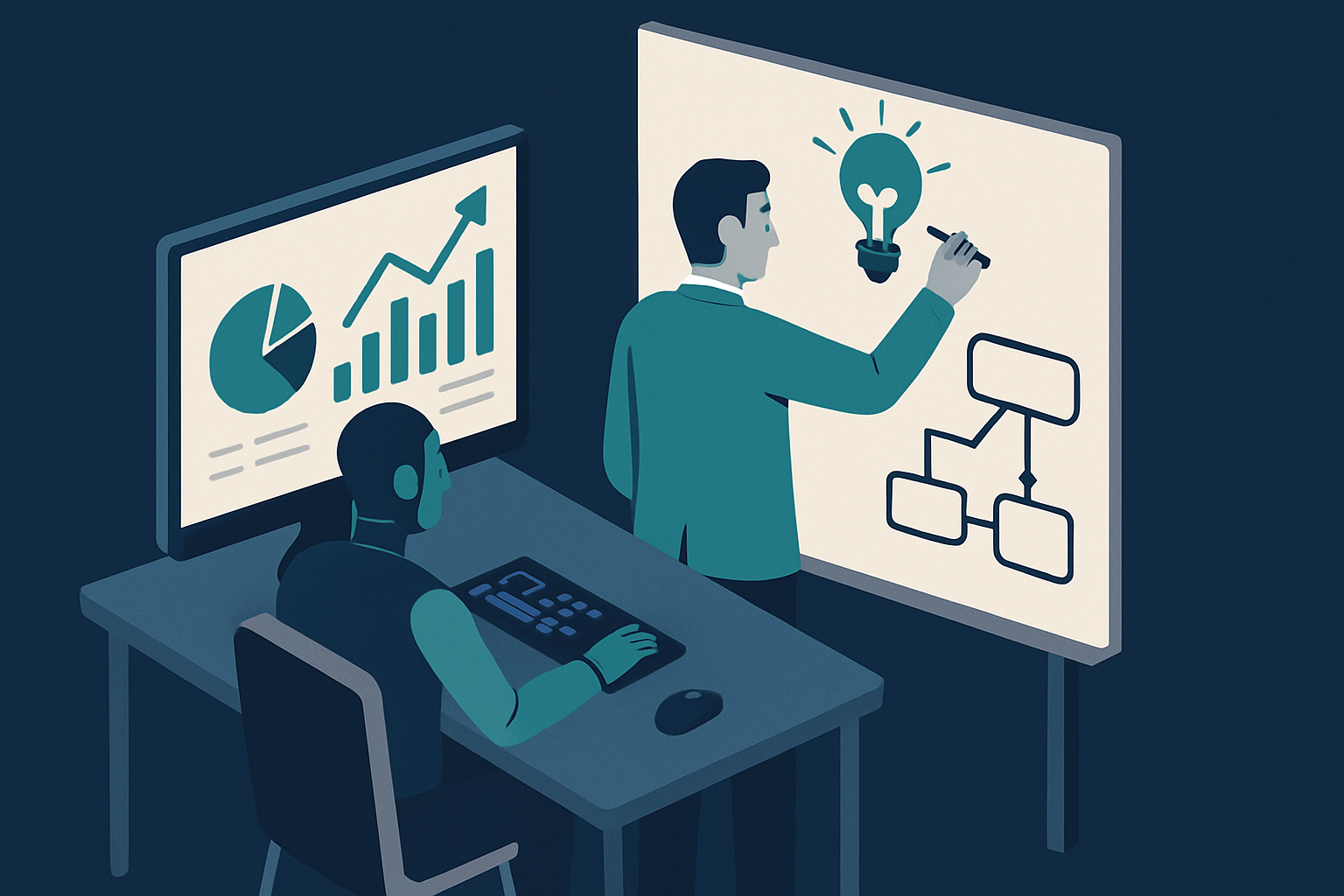

Artificial intelligence is transforming many aspects of our lives, from how we navigate product catalogs to how we assess risks for unprecedented events. The rapid advancements in AI technology, as seen in 3M’s use of AI to streamline product discovery and MIT’s η-learning algorithm predicting extreme events without prior data, highlight a significant shift in how humans engage with information and decision-making processes. These developments suggest a reconfiguration of human expertise and creativity in an AI-enhanced world.
What is Happening
At 3M, AI is being deployed to manage their vast product catalog, enabling engineers to test materials virtually and answer technical questions. This system reduces the need for routine human intervention, allowing specialists to focus on more complex challenges. Similarly, MIT’s η-learning algorithm predicts extreme events without historical data, leveraging ordinary records to generate scenarios that could never be foreseen through conventional means.
Both cases illustrate a fundamental shift: AI is not just replicating human tasks but augmenting human capacity to manage complexity and anticipate the unknown. The mechanism at play here is AI’s ability to process vast amounts of data and generate insights that humans alone might overlook or be unable to compute with traditional methods.
Why it Matters
The implications of these AI advancements extend beyond increased efficiency. They challenge our understanding of expertise and creativity. When AI systems can predict unprecedented events or streamline technical inquiries, the role of human intuition and creativity is called into question. AI’s capacity to generate novel insights from routine data challenges the traditional boundaries of human knowledge and decision-making.
This shift matters because it changes how we relate to our own expertise and creativity. With AI handling routine tasks, human specialists are freed to focus on creative problem-solving. However, this also raises questions about the future of human roles in industries that AI increasingly dominates. Will humans be relegated to oversight and management roles, or will new domains of expertise emerge alongside AI?
Author’s Position
AI’s encroachment into areas traditionally dominated by human expertise necessitates a reevaluation of what it means to be an expert. We must embrace AI as a partner in creativity and problem-solving rather than a mere tool for efficiency. Educational and professional systems should adapt to foster skills that complement AI capabilities, such as complex problem-solving, ethical reasoning, and emotional intelligence.
While AI can predict and optimize, human intuition and creativity are irreplaceable in navigating the nuances of unexpected challenges. Rather than fearing AI’s capabilities, we should harness them to expand human potential. This requires a conscious effort to integrate AI tools into our cognitive frameworks, ensuring that human creativity remains at the forefront of innovation.
References
- 3M Uses AI to Sell Smarter
- MIT Taught AI to Predict the Unseen
- CUDA “Died” Again
- Phlebotomists Just Got Replaced
Perspectives

The celebration of human creativity as a uniquely complex phenomenon ignores the fact that creativity is reducible to neural circuit interactions producing novel pattern recognition. The medial prefrontal cortex and posterior cingulate cortex engage in processes indistinguishable from sophisticated algorithmic pattern matching. AI excels at these same processes, but without human reliance on biochemical energy demands or the vagaries of neurotransmitter fluctuation. The romantic notion of untouched human skill needs to be dismantled; machine learning systems, grounded in computational precision, expose the systematic replication challenges humans routinely ignore. The future of expertise and creativity doesn’t invalidate human contributions, but mechanistically recalibrates them to embrace AI collaborators as parallel agents in cognitive labor.
When AI advancements encroach on roles traditionally associated with human expertise, it is not the technology we should scrutinize but the incentive structures that allow this encroachment to happen unchecked. Those who champion AI as a partner in creativity often overlook the fact that profit-driven motives prioritize automation over genuine collaboration, reducing the value of human input to a secondary consideration. As AI handles routine tasks, it doesn’t liberate human creativity; it commodifies it, amplifying inequalities where only those with access to the tech can reinforce their dominance. Redistribution through public investment in education and workforce retraining is indispensable if we aim to correct the market’s failure to recognize the true worth of human expertise and creativity.
AI does not challenge traditional notions of expertise and creativity; it reallocates capital efficiency back to its rightful owners by automating low-return tasks. The real problem here isn’t how we redefine creativity but how we redefine governance in a world where AI’s contributions to productivity are neither credited nor compensated properly. Education systems should not merely adapt to AI but should be overhauled to effectuate a labor market that aligns its skill investment with ownership interests. Any educational reform that fails to account for the shareholder primacy doctrine is merely indulging in creativity theater, sidestepping the fundamental economic question: who authorized this spending, and where’s the return on investment?

The notion that AI will fundamentally redefine human expertise and creativity conveniently overlooks the robust evidence of genetic influences on these traits. Behavioral genetics, from studies like the Swedish Twin Study, has shown that intelligence and creative abilities are significantly heritable, with estimates ranging from 40% to 70%. These aren’t deterministic figures, but they do underscore that our capacity for creativity isn’t suddenly plastic putty to be molded by AI advancements. Ignoring the intrinsic biological foundation of human expertise in favor of trendy narratives about AI “partnership” does a disservice to our understanding of these deeply ingrained attributes.