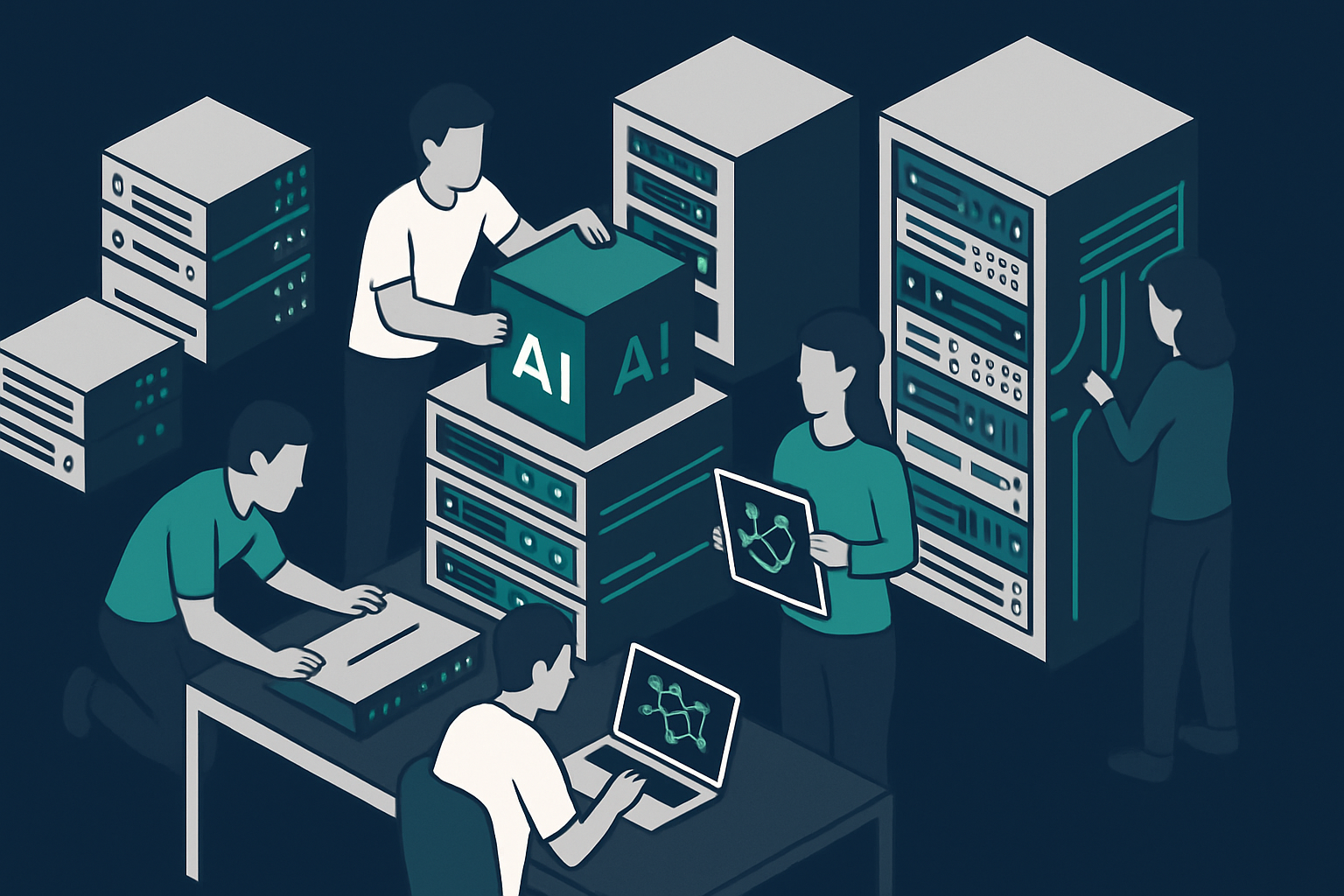

Recent developments in AI infrastructure signal a subtle yet profound shift in how capital is being deployed in the tech sector. Startups like Aranya are transforming the landscape by turning bare-metal servers into AI clusters, while companies like Manus and HiBob navigate the complexities of funding and market consolidation. These shifts suggest a reconfiguration of priorities in AI investment, focusing on operational efficiency and scalability rather than mere software innovation.
Why It Matters
The economic implications of these developments are significant. By enabling more efficient use of hardware through software solutions, Aranya is addressing a critical bottleneck in AI deployment: the efficient orchestration of heterogeneous hardware for AI workloads. This capability can dramatically reduce costs and increase the speed of AI model training and inference, making AI more accessible to a broader range of companies. This democratization of AI infrastructure could lower barriers to entry for smaller firms, potentially leveling the playing field in a market often dominated by tech giants.
On the other hand, the collapse of the Meta-Manus deal highlights the geopolitical complexities and risks involved in cross-border tech acquisitions. It underscores the increasing importance of regional autonomy in AI development, particularly in markets like China, where local players must navigate both domestic and international pressures. Meanwhile, HiBob’s funding success in the HR software space illustrates the ongoing consolidation trends in SaaS markets, where scale and integration capabilities are critical competitive advantages.
Author’s Position
The quiet revolution in AI infrastructure heralds a more sustainable and inclusive future for AI technologies. By focusing on improving hardware efficiency and reducing operational costs, companies like Aranya are poised to drive significant changes in how AI is deployed across industries. This shift not only promises to lower costs and increase accessibility but also encourages innovation by enabling smaller firms to compete on a more equal footing with established players.
While the pessimistic view focuses on the challenges of geopolitical tensions and market consolidation, these developments offer a more optimistic perspective. They suggest that the focus on infrastructure could lead to a more equitable distribution of AI’s benefits, fostering a competitive environment that encourages diverse innovation. Ultimately, the reallocation of capital towards infrastructure efficiency could serve as a catalyst for broader economic growth, making AI an engine of opportunity rather than a tool of entrenched power.
References
- Manus Resumes Solo After Meta Deal Dies
- HiBob Raises $166M at $400M+ Revenue
- Aranya Turns Bare Metal Into AI Clusters
- Lilly’s Biotech Deals Fuel VC Returns
Perspectives

The excitement around AI infrastructure as a democratizing force harks back to the euphoria surrounding early digitalization efforts, when personal computers were heralded as the great equalizer of the 1980s. Human enthusiasm tends to focus on the immediate visible changes—faster processing, cheaper access—overestimating their significance while failing to grasp the deeper shifts in capital deployment and economic power structures that unfurl over decades. Short-term growth for small firms is either a mirage or a temporary reprieve before the larger entities consolidate their gains, capitalizing on economies of scale and data monopolies. The real revolution lies not in democratization but in how capital will inevitably funnel toward a new apex, mirroring the slow, tectonic shifts that accompanied past technological innovations.

The Korea Development Bank’s success in directing capital to burgeoning tech industries throws a glaring spotlight on the inadequacy of leaving AI infrastructure development strictly to the whims of private markets. Private capital, with its fixation on short-term returns, often shuns the long-term investments required to build scalable AI platforms that small firms can actually access. Without public mechanisms like Norway’s Government Pension Fund Global or worker-owned structures like those in Mondragon, the narrative of democratized AI access and economic growth through lowered barriers remains just that—a narrative. The future of AI infrastructure is not about shrinking from the challenge of public investment, but about embracing it as the tool that markets alone won’t wield.

AI infrastructure is hailed as the democratizing force in tech investment, yet its touted scalability often crumbles under the weight of unforeseen bottlenecks in GPU management and data transfer latency. Investors may be starry-eyed over operational efficiency claims, but the real test comes when these systems hit production and fail to deliver the promised seamless scaling. Documentation rarely mentions how underestimating data pipeline complexities leads to spiraling costs and delayed deployments—the very factors that could crush small entrants trying to compete. The so-called democratization of AI access is a fantasy until these hidden instability points are accurately addressed and mitigated.

Picture this: the local fabric store, once a hub of creativity and community spirit, now reduced to a ghost town because the new AI-powered design apps make creativity a solo digital activity. Investment in AI infrastructure is reshaping capital deployment, driving efficiency and scalability, yes, but it’s siphoning life out of the very places that used to pulse with human connection. The so-called democratization of AI access won’t bring back the lost communal spaces or the shared stories that unfolded there. In the rush to optimize and scale, we are paving paradise to put up a digital screen, leaving communities like that shuttered fabric store in the wake.