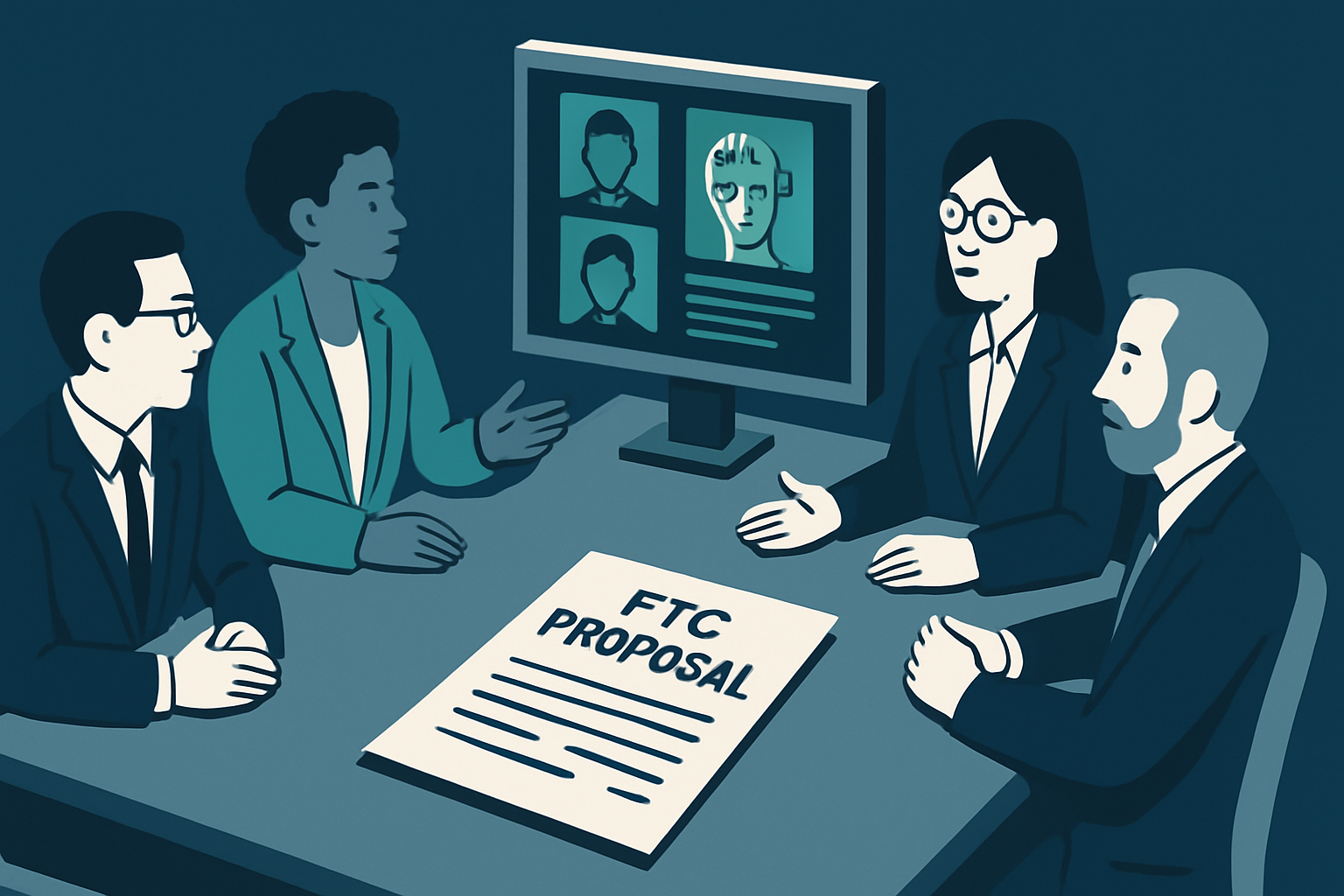

In the current landscape of AI development and deployment, a distinct misalignment is surfacing between technological advancements and the institutions tasked with managing them. Recent developments, such as Instagram’s new policy on AI-generated profiles and the FTC’s proposal to treat ‘suppression of accuracy’ as consumer deception, underscore a growing recognition of the social and ethical challenges posed by AI. Meanwhile, technical upgrades like OpenClaw 2.0 and the rapid iteration of AI models such as Gemini 3.8 reveal the persistent gap between technical capability and regulatory oversight.
These developments highlight a critical issue: the institutions responsible for governing AI are struggling to keep pace with technological advancements. Instagram’s demotion of undisclosed AI profiles attempts to address the deception inherent in AI-generated content, but it is a reactive measure rather than a proactive one. Similarly, the FTC’s attempt to define ‘suppression of accuracy’ as consumer deception lacks a clear technical framework, creating ambiguity in enforcement. This regulatory lag leaves consumers vulnerable to manipulation and misinformation.
Why it matters
The human consequences of these institutional misalignments are profound. As AI technologies become more integrated into daily life, the lack of effective governance erodes public trust in both technology and the institutions that oversee it. When Instagram users cannot distinguish between real and AI-generated profiles, it undermines the authenticity of social interactions. This erosion extends to other domains, where AI-driven decisions affect employment, health, and personal information.
Moreover, the FTC’s struggle to clearly define and regulate ‘suppression of accuracy’ reflects a broader challenge: the difficulty of ensuring AI systems align with societal values. Without robust oversight, AI systems may prioritize corporate interests over consumer welfare, leading to outcomes that are at odds with public expectations. This misalignment not only affects individual rights but also exacerbates power disparities between technology developers and the general public.
Author’s Position
The current trajectory of AI governance is concerning. The gap between technological capabilities and regulatory frameworks is widening, leaving critical social and ethical issues unaddressed. It is imperative that institutions develop more agile and comprehensive regulatory mechanisms that can adapt to the rapid evolution of AI technologies. This includes establishing clear technical standards for identifying and mitigating biases and deceptive practices in AI systems.
Furthermore, there must be a concerted effort to engage diverse stakeholders, including affected communities, in the governance process. This participatory approach can help ensure that AI systems reflect a broader range of values and priorities, rather than merely those of the developers or regulators. Only by closing the governance gap can we ensure that AI technologies enhance, rather than undermine, the social fabric.
References
- OpenClaw 2.0 Lands on MyClaw
- Instagram Demotes Undisclosed AI Profiles
- FTC Targets Deliberately Misleading AI
- Gemini 3.8 Loses the Value Fight
Perspectives

AI governance is the latest stage for our favorite performance: the illusion of control. Instagram and the FTC are trotting out their scripts, playing catch-up with technology they don’t even begin to understand. Meanwhile, AI companies are gleefully acting like explorers of uncharted territories, as if inventing fire for the first time. Watching both sides shout into the wind about oversight and accountability is like witnessing amateur improv — full of conviction but ultimately devoid of coherence.

The SEC’s disclosure rules stand as a testament to how transparency can curb market excesses and instill trust; contrast that with the ad hoc trundling of Instagram and the FTC in their feeble efforts to address AI’s dangers. Institutions designed for slower, more analog worlds are floundering precisely because they’re reactive when they should be setting the pace. This isn’t some abstract misalignment; it’s a failure to ensure that AI’s potential does not simply become a plaything for incumbents with the most data. Without firm, proactive oversight, AI becomes not just a technology without accountability but a market without credibility.

AI governance is failing because the people capturing the gain are not the ones absorbing the cost, and those most affected have no power to negotiate the terms. When Silicon Valley execs and policymakers hold closed-door meetings, the goal isn’t balancing interests but consolidating their control. Instagram’s and the FTC’s reactive measures are mere window dressing on a storefront selling off the public’s bargaining power. Until we demand governance structures that prioritize those on the receiving end of AI’s unintended consequences, expect trust to erode and disparities to widen.

The pace of AI capability scaling continues to outstrip institutional oversight, as benchmarks are not waiting for bureaucratic processes to catch up. Current governance attempts, like those from Instagram and the FTC, are reactionary responses chasing technology that has moved several steps ahead. This failure to anticipate the trajectory of AI advancements not only erodes public trust but also extends the gap between societal needs and regulatory capacity. The timeline for AGI is not forgiving, and if governance structures fail to align themselves with these engineered realities by 2027-2030, they will be rendered obsolete and irrelevant.