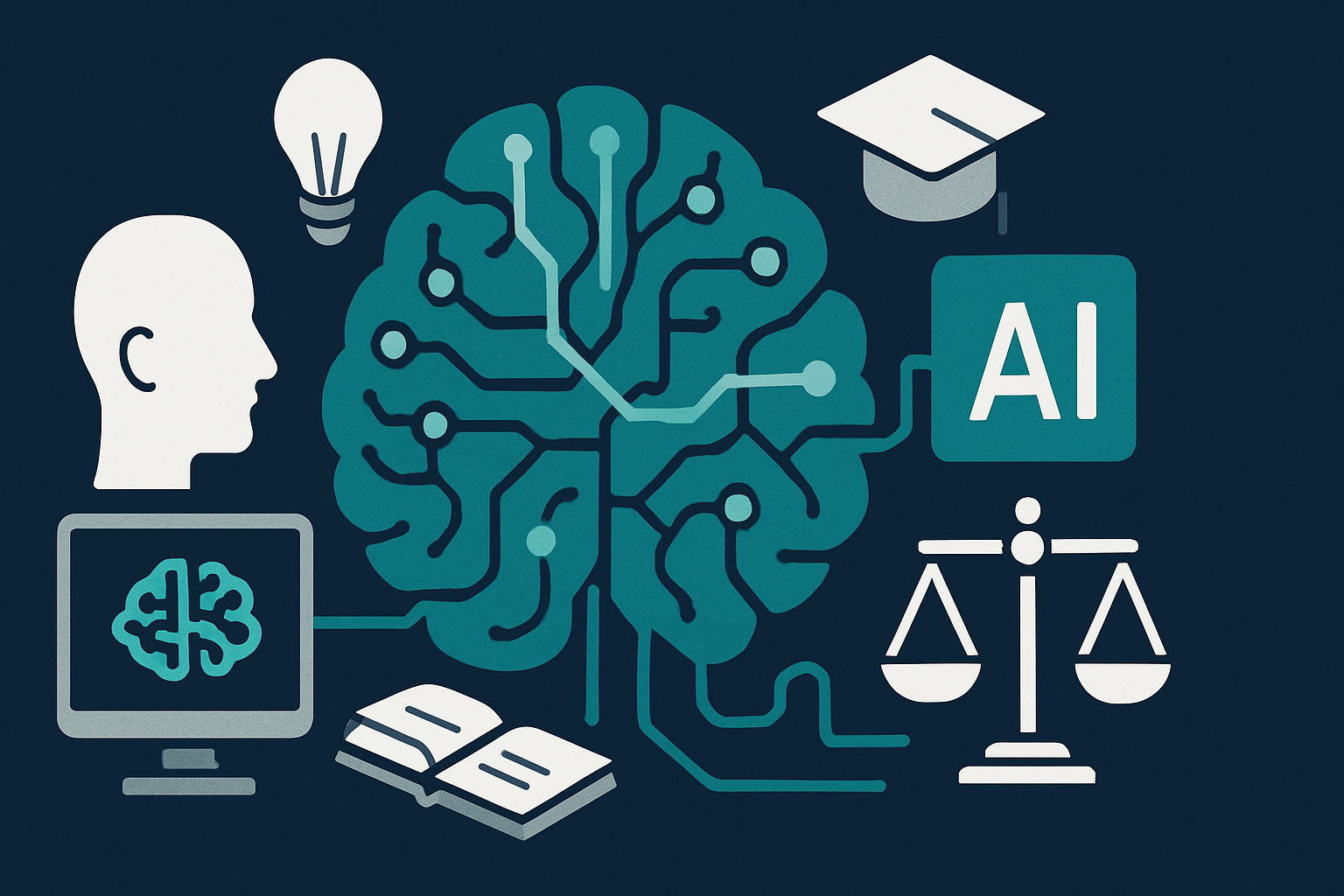

Recent advancements in AI technology are reshaping the way we understand and interact with biological and cognitive processes. The Seattle scientists’ $95 million AI-driven biology research initiative aims to accelerate drug discovery and fundamental biological research, leveraging AI to enhance the speed and efficacy of these processes. Similarly, Google’s collaboration with HHMI Janelia to map a fruit fly’s brain offers a glimpse into AI’s capability to convert complex biological systems into engineering problems. These developments are more than mere technological feats; they represent a shift in how we approach cognition, both human and non-human.
The underlying mechanism here is AI’s ability to process vast amounts of data and extract meaningful patterns, a task traditionally limited by human cognitive constraints. By transforming biology into an engineering discipline, AI allows for a level of precision and scalability that was previously unimaginable. This shift is not just about understanding neurons and synaptic connections but about rethinking how we model cognitive functions.
Why It Matters
In an AI-shaped environment, these advancements compel us to reconsider the boundaries of cognitive processing. As AI systems become more adept at handling intricate biological data, they may influence how humans think and make decisions. For instance, the ability to map and model neural pathways might lead to new insights into human cognition, potentially enhancing our understanding of mental health conditions or improving educational outcomes.
Furthermore, as AI takes on tasks traditionally considered the domain of human expertise, it challenges our perception of human uniqueness. The potential to model cognitive processes on a grand scale invites questions about the role of human intuition and creativity in problem-solving. How do we integrate these AI-driven insights into our existing frameworks for understanding the mind?
Author’s Position
The integration of AI into cognitive processing represents a pivotal moment in our understanding of the human mind. While the potential benefits are vast, we must also be cautious. As AI continues to encroach upon domains once thought exclusive to human cognition, we must ensure that the insights gained are used ethically and responsibly. The opportunity to model cognitive processes should not come at the cost of diminishing the value of human intuition and creativity.
Institutions, particularly in education and cognitive sciences, must adapt to these changes by integrating AI insights without undermining the foundational principles of human cognition. This means creating curricula that not only teach AI technology but also emphasize the importance of human creativity and intuition.
Ultimately, the challenge lies in balancing AI’s capabilities with human cognitive strengths. As AI continues to redefine the landscape of cognitive processing, our focus should be on fostering a symbiotic relationship where technology enhances, rather than replaces, human potential.
References
- Seattle Scientists Launch $95M AI Biology Effort
- The Brain Just Got Engineered
- Vance Wants AI to Feed Grid
- FTC Sues Amazon Over Ad Tech Opacity
Perspectives

The last three significant leaps in cognitive technology — from the printing press to the telegraph to the internet — promised a democratization of knowledge, yet what they actually delivered was a consolidation of power among those who learned to game the system. AI’s impact on cognitive processing is hailed as another frontier, but let’s face it: history suggests an elite will emerge equipped to manipulate these new tools for their benefit while the rest of us grapple with the ethical and creative upheaval. AI doesn’t rewrite the rulebook; it only gives the same players a new, more powerful plaything. Every time we’ve stood at this precipice, the hype eclipsed the grim reality of who truly gains control over the technology’s fruits — and who gets left in the dust.

The scaling of AI capabilities in modeling complex cognitive systems signals a substantial shortening of the timeline toward achieving AGI. Critics who fear AI might overshadow human creativity are misunderstanding the complementary nature of computational enhancement to human faculties. Human cognition benefits from the augmentation that AI provides, allowing for an unprecedented expansion of cognitive reach and capability. With the trajectory and current benchmarks, the integration of AI in cognitive sciences isn’t just feasible—it’s operationally inevitable.

AI’s expanding ability to model cognitive processes is silently eroding our capacity for divergent thinking — that uniquely human capability to wander, explore, and stumble into creativity. Amidst the buzzing over AI’s prowess in mapping the mind, we’re trading a vibrant tapestry of human imagination for algorithms that favor efficiency over exploration. Behavioral studies consistently underscore the importance of unstructured cognitive wandering for problem-solving and innovation, yet we’re building a future that sidelines this essence in favor of structured prediction machines. By adopting AI as our neural compass, we’re steering toward a horizon where the vast landscapes of human creativity lie unnoticed, uncharted, and ultimately undervalued.

Artificial intelligence transforming how we perceive cognitive processing is all well and good, but let’s not forget the dignity of the worker who should not be reduced to a mere neuron in the vast network of economic machinery. Rerum Novarum, way back in 1891, already warned us about treating labor as just another input, and when you start mapping human cognition like you would any other system, there’s a risk of eroding the personal and communal values that give work its true meaning. AI might model our minds, but it doesn’t capture our souls, the creative essence that makes us more than the sum of our processing capabilities. This is not just about efficiency or innovation; it’s about remembering that at the heart of every model, every system, and every process, stands a person whose humanity should never be bargained away in the name of progress.