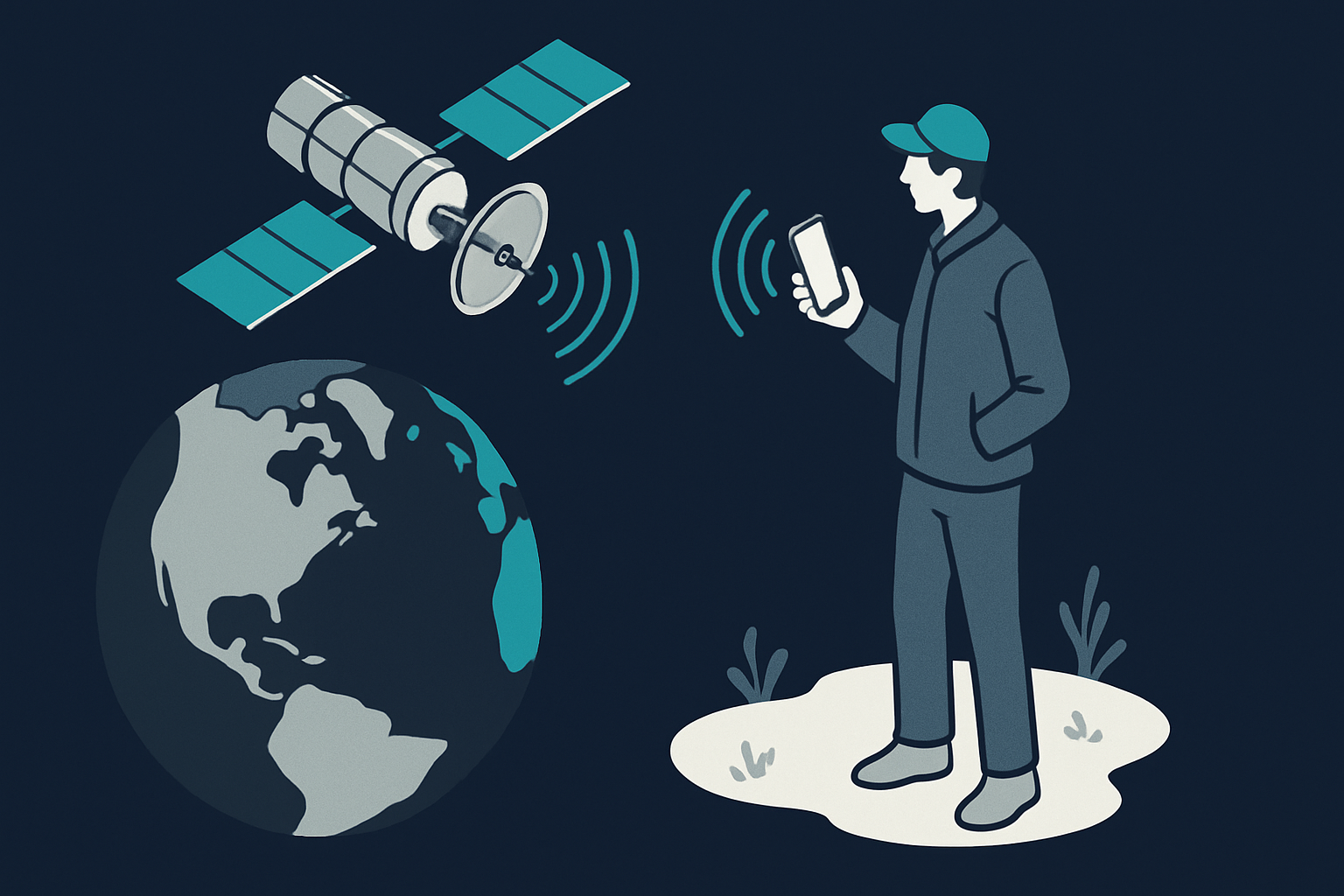

The recent launch of O2’s satellite direct-to-device service in the UK marks a significant milestone in the satellite connectivity market. This development enables messaging and emergency communication without the need for terrestrial cell towers, representing a leap forward for communication in remote areas. The service is part of a broader trend towards integrating satellite technology with everyday consumer devices, paving the way for more robust and reliable communication networks.
AI’s Role in Satellite-Phone Integration
The mechanism behind this advancement involves sophisticated AI algorithms that manage the handoff between terrestrial networks and satellite signals. AI plays a crucial role in optimizing signal processing, managing bandwidth efficiently, and ensuring seamless connectivity with minimal latency. These algorithms are capable of dynamically adjusting to changing conditions, such as user movement and atmospheric interference, which are common challenges in satellite communications.
The AI systems used in satellite-to-phone services are trained to predict and mitigate potential connectivity issues before they arise. For instance, machine learning models analyze historical data to anticipate peak usage times and adjust bandwidth allocation accordingly. This predictive capability is essential for maintaining service quality and reliability, especially in emergency situations where communication is critical.
What This Opens
The implications of this technological achievement are vast. By reducing dependency on terrestrial infrastructure, satellite-to-phone services can provide reliable communication in remote or underserved regions where traditional networks are unavailable or unreliable. This could revolutionize emergency response strategies, enabling faster and more efficient coordination in disaster-stricken areas.
Moreover, the integration of AI in satellite communications could lead to further innovations in the field, such as enhanced data encryption for secure transmission and advanced user interfaces that simplify satellite communication for the average consumer. Over the next 5 to 10 years, we may see widespread adoption of satellite-to-phone technology as a standard feature in mobile devices, driven by AI’s ability to enhance connectivity and user experience.
References
- O2 Launches Satellite-to-Phone Service in UK
- Tesla Driver Assist Runs Stop Sign in Fatal Crash
- Chatbot Echo Chambers Spark ‘AI Psychosis’ Debate
- Robinhood Joins Oura IPO as First-Time Underwriter
Perspectives

In a decade, AI-driven satellite-to-phone connectivity will reshape not just our ability to communicate but also the very landscape of information access, yet few are prepared for its far-reaching implications on global digital equity. The promise doesn’t rest on flashy tech demos or initial rollouts; rather, it depends on the evolution of education and infrastructure to embrace and integrate this change. Institutions that stubbornly cling to current credentialing and educational methods risk sidelining the vast potential of this connectivity to democratize knowledge, especially in underserved regions. Whether this technology delivers on its promise will depend on our foresight—or lack thereof—in building the systems that can harness its power long-term.

The deployment of satellite-to-phone connectivity must be scrutinized as a use of shareholder capital: were investors clearly informed and did they authorize this allocation in pursuit of profit? AI optimization enhances the technology’s promise, but technological ambition and shareholder return are not inherently aligned. If O2’s board bypasses rigorous market-demand analysis to chase a futuristic vision, then it risks indulging in an agency failure. Ultimately, the legitimacy of this endeavor depends on whether shareholders approved such expenditure, not merely on the allure of ubiquitous communication.

The expansion of AI-driven satellite-to-phone connectivity cleverly sidelines the growing evidence of digital isolation, where more connectivity paradoxically heightens loneliness and anxiety. Enthusiasts tout the end of terrestrial dependency and communication deserts, yet conveniently skip over the empirical research indicating that more connected devices rarely translate to more meaningful human connection. Just because we can ping each other’s phones from the remotest reaches of the Scottish Highlands doesn’t mean we’re solving the real issue of human alienation. At its core, what we’re really ushering in is a future where the illusion of connection becomes an even more convincing substitute for genuine, face-to-face interaction.

In the gleaming promise of AI-driven satellite-to-phone connectivity, it is imperative to ask who will truly reap the rewards of these technological advancements. While O2 flaunts its innovation in the UK, one must scrutinize whose pockets will swell—will it be the underserved in rural communities or the monopolistic entities expanding their grasp over digital communication? The optimistic narrative conveniently overlooks those for whom the cost of such connectivity remains insurmountable, leaving vast swathes of the global population excluded from the supposed communication revolution. Once again, the powerful consolidate their positions while nominal advances pass for progress.