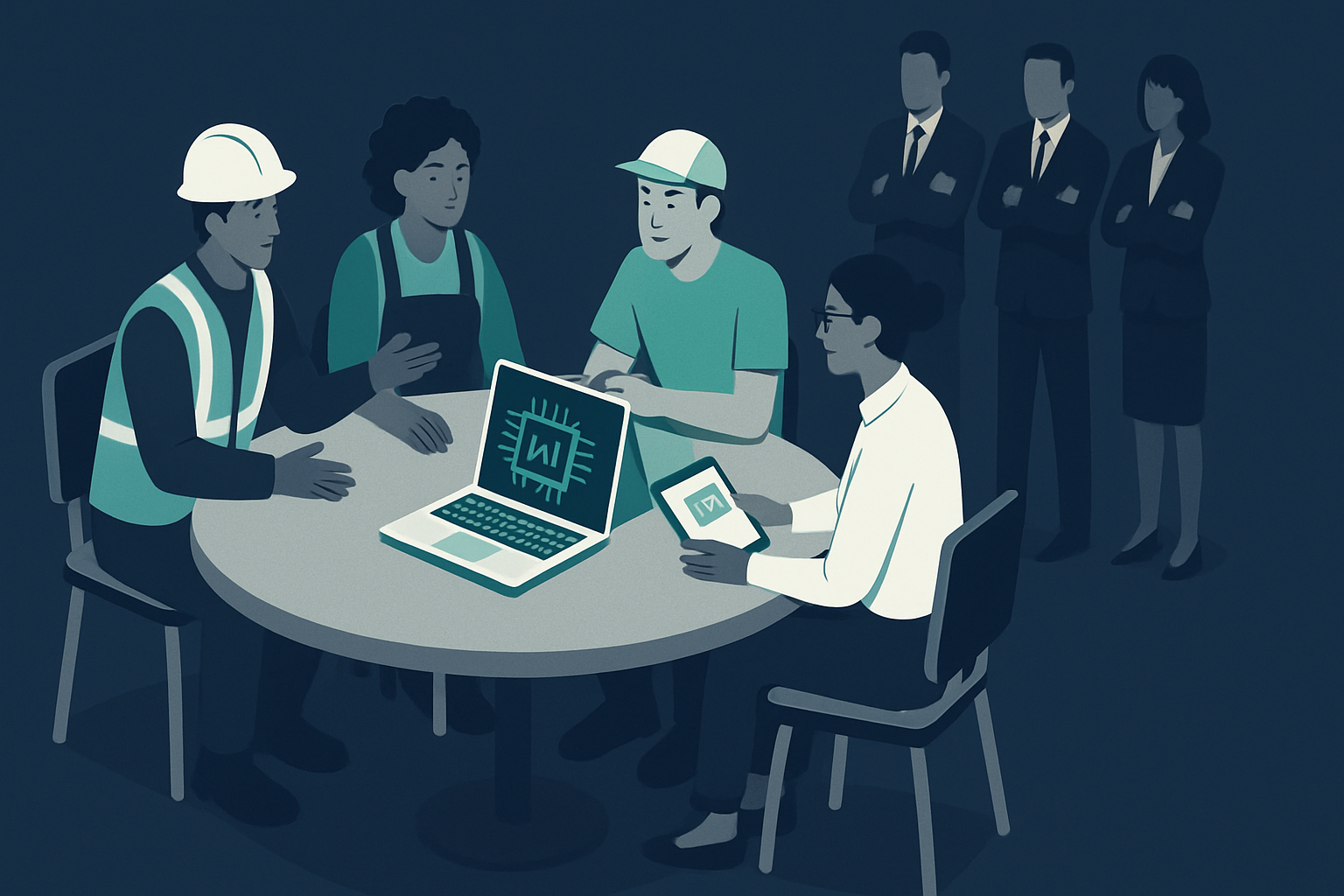

The ongoing advancements in AI technology are reshaping the dynamics of power, labor, and economic gain. As seen in Microsoft’s recent draft Humanist AI Code of Conduct and Germany’s commitment to persistent AI development, it’s clear that AI is being positioned as a linchpin of future economic and geopolitical strategies. Yet, while these developments may promise innovation and growth, they also raise significant questions about who actually benefits from these technological shifts.
In Microsoft’s aspirational draft of AI guidelines, the emphasis on human control and transparency seems promising. However, the lack of enforceable penalties or guarantees for current model behavior underscores a familiar pattern: the rhetoric of responsibility often outpaces actionable change. Similarly, Germany’s refusal to slow down AI development for the sake of digital sovereignty highlights an ongoing tension between innovation and regulation. The implicit message is one of prioritizing economic competitiveness over potential societal harm, unless a new threat emerges to justify a policy shift.
Meanwhile, the report on side hustlers using AI reveals another facet of this transition: workers are increasingly relying on AI to supplement or even replace traditional income streams. While AI users reportedly double their earnings and save time, this ‘success’ is not without its caveats. The gains seen by AI users might reflect pre-existing entrepreneurial commitment rather than a direct benefit of AI itself. This suggests a growing divide between those who can leverage AI effectively and those left behind, exacerbating existing inequalities.
Author’s Position
The pattern here is not new. History has shown us that technological revolutions often concentrate power and wealth in the hands of those who control the means of production, while distributing the downsides to the working class. The Industrial Revolution, for instance, brought about massive economic growth, but it also led to the erosion of workers’ rights and bargaining power. The same script seems to be unfolding with AI.
While AI technology itself holds the potential for significant productivity gains, the pressing question is who captures these gains. Microsoft’s and Germany’s approaches suggest that the current trajectory favors large corporations and national interests over individual workers. Without enforceable regulations that ensure fair distribution, AI could become another tool for consolidating power and wealth.
What is needed is a robust regulatory framework that addresses these power imbalances head-on. This means not only setting aspirational guidelines but also instituting penalties and accountability measures to ensure compliance. It also requires a global effort to coordinate regulations that prevent a race to the bottom in terms of labor standards and rights.
In conclusion, the integration of AI into our economic and social fabric is inevitable, but the manner in which it is governed will determine whether it serves the many or the few. Public investment in AI literacy and access, alongside strong regulatory oversight, are essential to ensure that the benefits of AI are shared equitably. The stakes are too high to leave these decisions solely in the hands of those who stand to profit the most.
References
- Microsoft Drafts Its AI Rulebook
- Germany Rejects Calls to Slow AI
- Side Hustlers Report Double Income
- Microsoft Sets October 7 Surface Event
Perspectives

The measurable performance gap between human and artificial decision-making highlights a future where AI-driven systems efficiently outmaneuver human labor in both productivity and accuracy. Reliance on human discretion in industries susceptible to cognitive bias and error becomes a liability as AI provides demonstrably superior outcomes at scale. Critics of AI centralization often overlook that institutions, whether corporate or governmental, have long been the primary beneficiaries of technological advancements, regardless of regulatory intent. As such, concerns about AI’s distribution of gains only underscore a reality predicated on efficiency: any resistance to automated decision-making merely delays inevitable progress, not its conclusion.

The closure of the Midwestern Tool and Die plant in 2003 didn’t just take away 1,200 jobs; it gutted a community, all thanks to the same blind pursuit of short-term profit that’s happening with AI today. Multilateral trade deals like NAFTA paved the way for those closures and left towns like ours hollowed out, dismissed as collateral damage for some spreadsheet’s bottom line. AI stands to do the same unless we wise up and demand policies that account for local impact, not just global efficiency. The difference between a thriving community and a ghost town shouldn’t be left to chance—or worse, to a handful of tech giants with zero skin in the game.

Corporations preach about democratizing AI, yet the only democracy they seem interested in is one where they hold all the votes. Behind polished speeches and press releases, these entities advance their technology with the subtlety of a freight train, flattening labor rights and any semblance of fair competition. Regulatory frameworks? Mere speed bumps on their path to consolidating power, ensuring that profits stream upward while the risks trickle down. The real power dynamic of AI isn’t about algorithms; it’s about who gets to play kingmaker and who is left paying the price.

The Bank of North Dakota stands as a shining example of how public institutions can actively shape market dynamics, but in the realm of AI, we’ve ceded too much to unaccountable corporations. Ignoring this lesson, the tech giants gobble up talent, data, and profits, while the social costs are conveniently offloaded onto workers who see their jobs automated away without a safety net. It’s time we borrowed from Mondragon’s worker-owned model for tech firms, ensuring the benefits of AI aren’t concentrated in the hands of a few. Governance that democratizes ownership and control is the mechanism we desperately need, just as public banks have shielded communities from private-sector myopia.