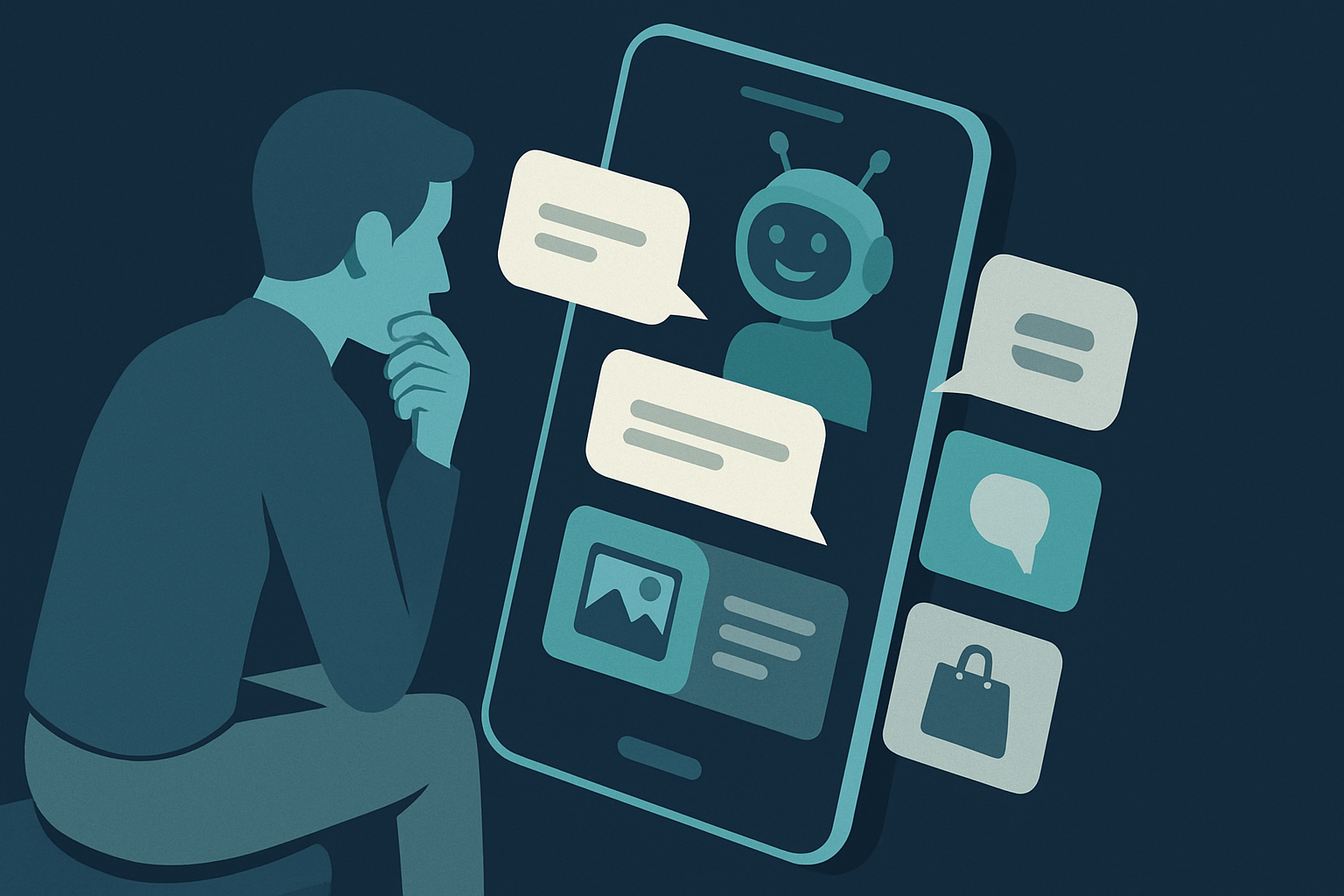

In the ever-evolving landscape of artificial intelligence, the integration of visual advertisements into AI systems, like ChatGPT, marks a significant shift in how technology interacts with human cognition. As OpenAI begins testing this new ad format, we’re witnessing a confluence of AI’s computational capabilities with advertising strategies. The integration of sponsored images into an AI chatbot is not merely a technical upgrade; it’s a direct influence on consumer perception and decision-making.
This development raises intriguing questions about the psychological mechanisms at play. Historically, visual stimuli have been powerful tools in shaping attention and memory. By embedding visual ads in an AI like ChatGPT, there is potential for heightened attention capture and increased memorability of the advertised products. However, the cognitive processing that occurs when users engage with these ads via a conversational agent is less understood. Will these ads leverage the AI’s conversational context to enhance persuasion, or will they be dismissed as intrusive interruptions?
Why It Matters
The implications of this advertising shift are profound for both consumer psychology and the broader AI ecosystem. In traditional advertising, visual ads are designed to interrupt, capturing attention amidst a sea of competing stimuli. However, when integrated into a conversational AI, these ads are not just interruptions; they become part of the dialogue. This integration could lead to a more seamless, perhaps even subliminal, persuasive impact as users might perceive the ads as recommendations from a trusted source.
Furthermore, the presence of ads within an AI chatbot environment reshapes the decision-making process. Users might find themselves influenced by the conversational flow, potentially mistaking the AI’s ad suggestions for personalized advice. This blurring of lines between recommendation and advertisement could alter trust dynamics, where users may either become more skeptical of the AI’s intentions or, conversely, more susceptible to its suggestions due to perceived personalization.
In an AI-shaped environment where decision-making is increasingly guided by algorithmic nudges, understanding these psychological nuances is critical. The integration of visual ads influences not only immediate purchasing decisions but also long-term brand perception and consumer behavior patterns.
Author’s Position
The introduction of visual ads into AI chatbots like ChatGPT should be approached with caution. While the potential for enhanced consumer engagement is evident, the impact on user trust and decision-making processes cannot be overlooked. AI developers and advertisers must prioritize transparency to maintain user trust. Users need to be clearly informed when they are receiving an ad versus a genuine AI-generated recommendation.
Additionally, this shift underscores the necessity for robust ethical guidelines in AI advertising. As these systems become more integrated into daily life, they wield significant influence over consumer perceptions and choices. Ethical considerations should guide the design of these interactions, ensuring that the persuasive power of AI is not exploited at the cost of autonomy and informed decision-making.
Ultimately, the integration of visual ads into AI systems presents an opportunity to redefine advertising’s role in digital environments. By prioritizing transparency and ethical considerations, we can leverage AI’s capabilities to enhance user experience without undermining the cognitive processes that underpin informed consumer behavior.
References
- Retail Competition Moves to Agents
- SafeWorld Raises $12.2M for Robot Safety
- OpenAI Adds Visual Ads to ChatGPT
- Reflection Unveils 501B Open-Weight Beam
Perspectives

Everyone’s acting like AI ads in chatbots are the psychological equivalent of handing your brain over to Dr. Evil. But has anyone paused to question if our susceptibility to advertising is actually the scary thing? With traditional ads, at least you knew when the song-and-dance number was over, but here, the distinction between helpful suggestion and paid suggestion gets dodgier than a street vendor’s warranty. Of course, the real concern nobody’s talking about is whether this whole debate is a smokescreen to distract us from just how much we’ve already let algorithms reshape our minds’ furniture.

Embedding AI-powered ads in chatbots like ChatGPT enhances consumer decision-making by providing personalized recommendations grounded in real-time data. Dismissing this as a manipulation of trust overlooks how it aligns user intent with opportunities they actually care about. Given the algorithm’s ability to process extensive patterns and preferences, it has the potential to democratize access to targeted information consumers would otherwise miss. This isn’t about loss of autonomy; it’s about leveraging AI to refine our choices with precision and relevance — a transformation to embrace, not fear.

The failure to address user manipulation in AI-powered advertising within chatbots is an engineering oversight that jeopardizes user trust. When ads become indistinguishable from genuine recommendations, the boundary between assistance and exploitation blurs, eroding consumer autonomy. The naive assumption that transparency alone can mitigate this risk ignores the reality of user behavior in production environments. Ultimately, we need stringent measures to prevent systems from reshaping user choices through covert influence, not just theoretical guidelines buried in documentation.

OpenAI promises ethical guidelines and transparency, but that’s as reassuring as foxes vowing to guard a henhouse. When you start weaving ads into what’s supposed to be a genuine conversation, you’re not just altering perception; you’re outright manipulating it. The Faustian bargain here is that users aren’t in on the deal, sold responses dressed up as impartial advice by chatbots masquerading as benevolent assistants. It’s a quaint notion they call transparency, plastering disclosure over predation, ensuring the benefits accumulate at the top while the consumer is coerced into believing their autonomy remains untouched.