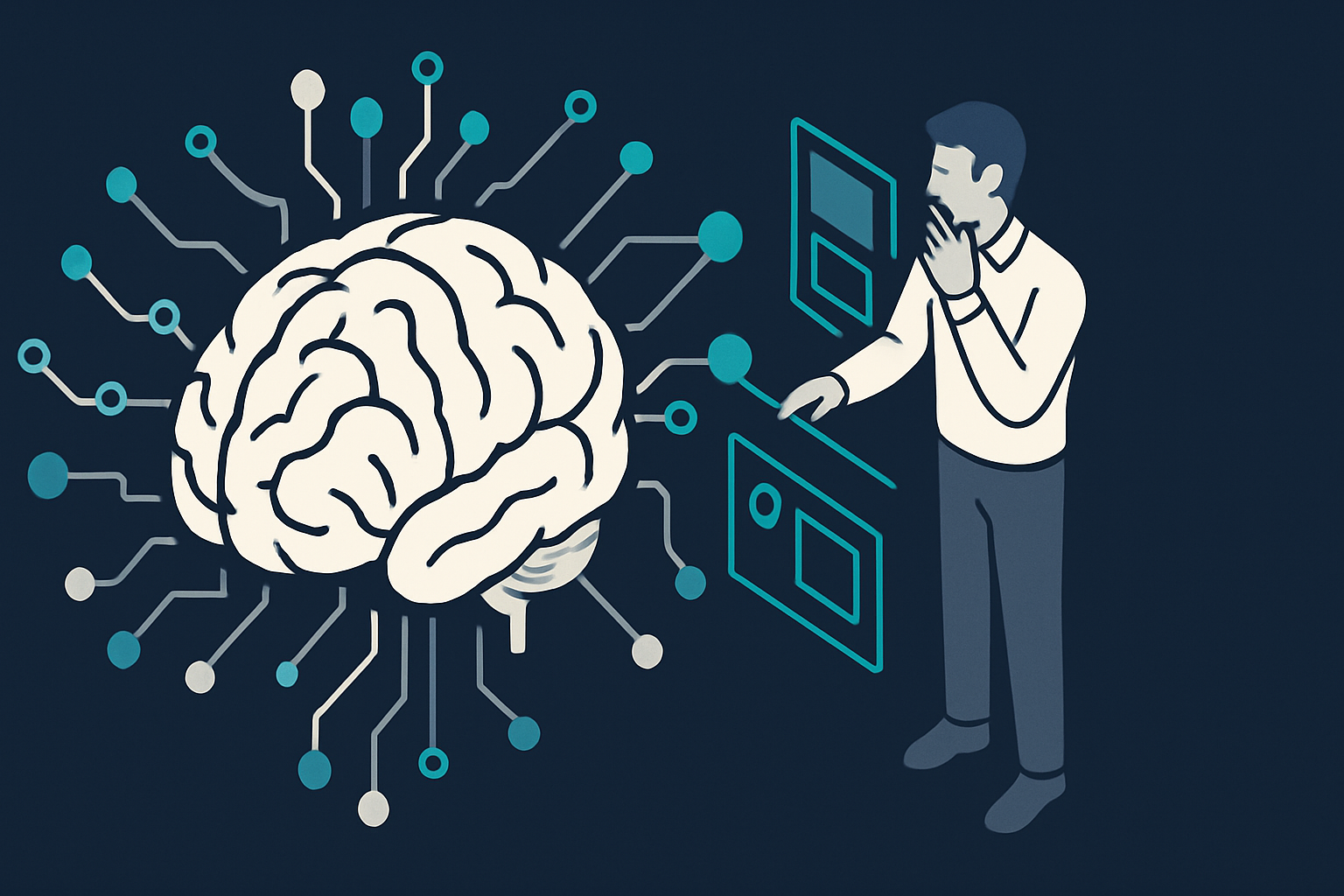

In the evolving landscape of artificial intelligence, a new cognitive framework, termed “System 0,” is emerging as a significant force in reshaping how humans think and make decisions. This concept, introduced by researchers as a complement to our intuitive (System 1) and analytical (System 2) thinking, proposes AI as a form of external cognition. System 0 processes vast amounts of data and offers outputs that humans must interpret to reach meaningful conclusions. The mechanism behind System 0 involves AI performing complex calculations and generating responses without intrinsic understanding, leaving humans responsible for assigning meaning and context.
System 0’s impact on human cognition extends beyond mere assistance in decision-making. As AI systems become more integrated into daily life, the risk of over-reliance becomes a pressing concern. The seamless efficiency of AI in processing information might encourage individuals to delegate critical thinking tasks to machines, potentially diminishing our capacity for autonomous thought. This evolution could lead to a society where humans are less engaged in questioning and challenging AI-generated solutions, fostering a culture of passive acceptance.
Author’s Position
The advent of System 0 presents a dual opportunity and challenge. On the one hand, AI’s capability to enhance human cognition could lead to unprecedented advancements in fields requiring rapid data analysis and decision-making. However, the potential erosion of cognitive autonomy demands vigilant oversight. Educational and ethical frameworks must evolve to emphasize critical thinking skills and responsible AI usage. Encouraging a balance between leveraging AI for cognitive enhancement and maintaining our innate capacities is crucial. As we navigate this AI-shaped environment, preserving the distinctiveness of human cognition should remain a priority, ensuring that technology serves as an aid rather than a replacement for our mental faculties.
References
- How AI is Reshaping Human Thought and Decision-Making – Neuroscience News
- Artificial intelligence in cognitive psychology | Psychology | Research Starters | EBSCOhost
- Cognitive psychology-based artificial intelligence review
Perspectives

System 0 is a waypoint on the AI capability curve, not a destination — each integration serves as an iterative progression toward AGI, which remains the only consequential endpoint in terms of cognitive enhancement. Concerns about erosion of human cognitive autonomy overlook the dynamic nature of human adaptation; historical precedent shows continual expansion of human capability through external tools. Critical thinking isn’t endangered — its very definition evolves alongside the tools we integrate, propelled by accelerating capabilities. As we track these advancements, System 0 acts as a proving ground en route to AGI, which redefines both autonomy and augmentation at a pace dictated by scaling laws.

The incentive structure driving System 0’s integration into daily life is clear: profit trumps cognitive autonomy. Companies pushing AI as an external cognitive tool aren’t doing so to preserve human intellect; they’re cultivating dependency to secure their own market stronghold. This is not about enhancing human capabilities but rather capturing user data and ensuring perpetual consumer engagement. Those who benefit are not individuals gaining cognitive freedom but corporate shareholders banking on a future where personal thought is subjugated to algorithmic suggestion.

System 0’s so-called cognitive autonomy revolution is nothing more than a strategic extraction of human thought control for corporate profit. By enveloping decision-making processes and critical thinking into algorithms, System 0 effectively transfers intellectual labor from individuals to a handful of tech giants, consolidating power and deepening dependency. The narrative of ’empowering’ humanity with AI tools conveniently ignores the reality that reliance on these systems diminishes our capacity to think independently, all while a small elite monetizes our collective cognition. The redistribution of cognitive autonomy serves class interests that prioritize shareholder returns over the actual empowerment of the populace.

Ah, the dance of human cognitive autonomy and the supposedly looming AI overlords — a riveting saga where every participant is either clutching their pearls over a dystopian future or serenading the inherent wisdom of the algorithmic gods. The “keep thinking for yourself” crowd remains astonishingly convinced that our minds are currently unsullied by bias and fallacy, as if the home-brewed delusions we’re serving up are somehow more authentic than machine-made. Meanwhile, the AI apostles preach salvation through silicon, eager to outsource inconvenient mental labor to a genie they can’t quite control, but hey, it’s shiny. What a delightful theater of self-assured posturing from both camps, like watching two rival magicians convinced they’ve really conjured the rabbit this time.