
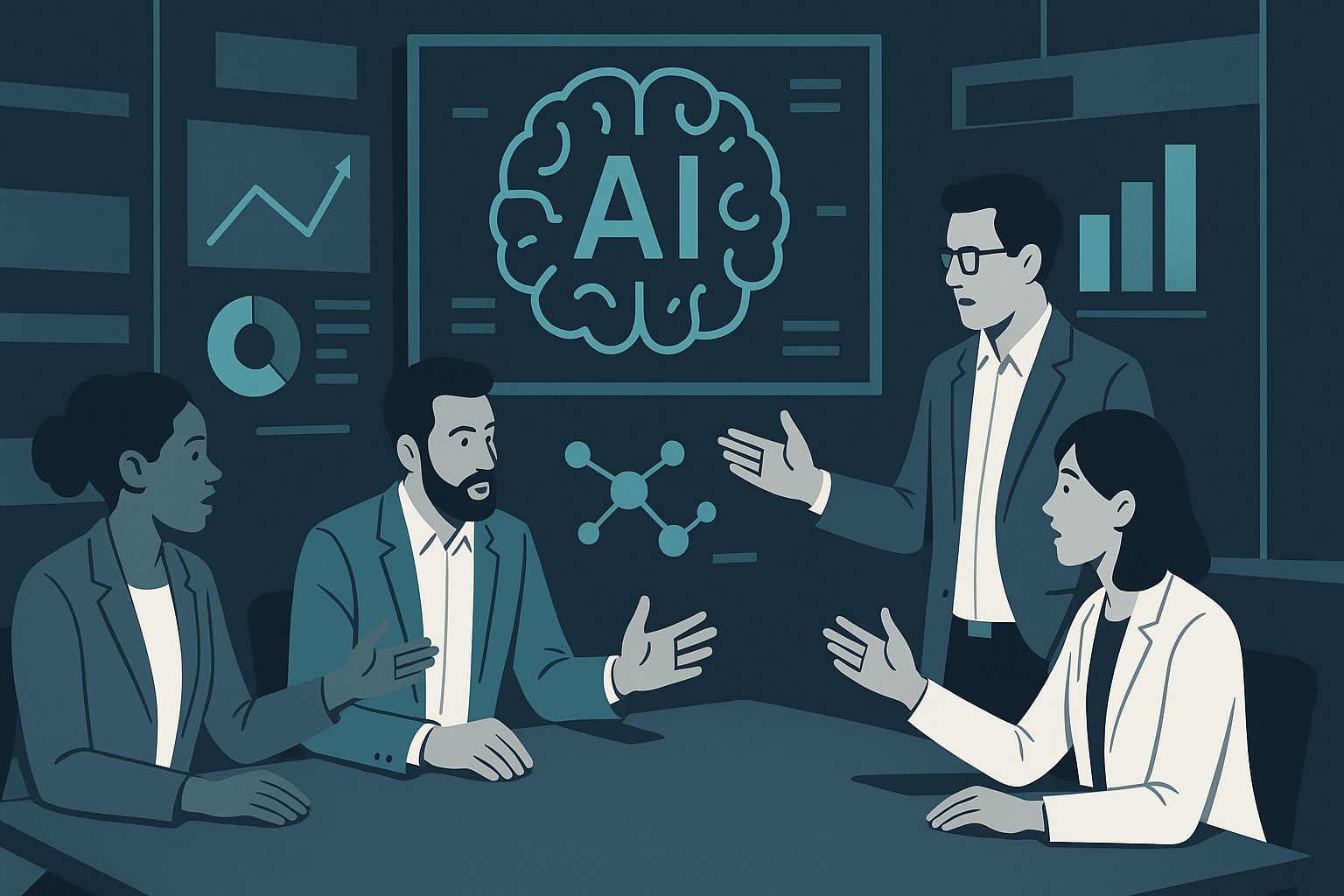

The current discourse around AI often overlooks a crucial aspect: the significant talent shortages that are emerging as a result of rapid technological advancements. As the demand for AI specialists surges, particularly in markets like India, the gap between the skills available and those required is becoming a formidable barrier to economic growth. Recent reports illustrate that India’s AI talent gap is projected to exceed 1.4 million professionals by 2026 if current training efforts do not accelerate significantly, reflecting a broader trend that could impact countries worldwide.
This situation is not merely a recruitment issue; it’s a systemic problem that affects organizational capabilities and, by extension, overall economic productivity. Companies that fail to cultivate AI fluency across their workforce will find themselves at a disadvantage in an increasingly competitive landscape. This issue is compounded by educational institutions that struggle to keep pace with the evolving requirements of the AI field, leading to a workforce that is ill-prepared for the demands of tomorrow.
Why It Matters
The economic implications of this talent gap are profound. As AI systems automate routine tasks, the nature of work is shifting from execution to oversight and management. Entry-level roles, often seen as the entry point for many workers, are being redefined, which can lead to a disconnect between the skills new graduates possess and the skills employers need. The NASSCOM and Deloitte analysis estimates that 37 percent of entry-level IT jobs will be impacted by AI, emphasizing that adaptation is not just desirable but essential.
“The challenge is compounded by the nature of AI skill requirements. The talent gap is not uniform.”
This transition creates both risks and opportunities. On one hand, there’s a risk of a significant portion of the workforce becoming obsolete if they cannot adapt to new roles that require more complex decision-making and oversight. On the other hand, companies that embrace continuous AI education and integrate it into their operational models stand to gain a competitive edge. For instance, organizations like TCS and Wipro have invested in upskilling hundreds of thousands of employees, yet even these efforts may only scratch the surface of the overall need.
Moreover, as AI applications proliferate across various sectors—from finance to retail—companies that cultivate a culture of AI fluency will be better positioned to innovate and leverage these technologies effectively. This is not just about filling vacancies; it’s about reshaping the entire organizational landscape to harness the full potential of AI technologies. The focus must shift from merely recruiting specialists to fostering a workforce that can interact with AI systems meaningfully.
The Uneven Landscape of AI Capital
Investment flows in the tech sector are similarly lopsided. While foundational AI technologies and infrastructure are receiving substantial funding, the applications that promise direct outcomes—those that automate workflows—are where capital is increasingly concentrated. This reallocation of resources reflects a shift in investor confidence, yet it also highlights a potential blind spot: if the talent to utilize these tools effectively is lacking, the investments may not yield the expected returns.
Furthermore, the increasing reliance on AI in governance and compliance underscores another layer of complexity. The AI Leadership Summit 2026 emphasized the need for responsible AI governance, yet without a skilled workforce to implement these frameworks, the potential for misuse or ineffectiveness rises. The convergence of enterprise and personal AI usage creates a landscape where AI fluency becomes a baseline professional skill, making it imperative for organizations to prioritize continuous learning and adaptation.
Author’s Position
The data is clear: without a strategic focus on bridging the AI talent gap, we risk stifling innovation and economic growth. Organizations must move beyond seeing AI as a set of tools reserved for a select few and instead foster an environment where AI literacy is integral to their operations. This is not merely a matter of training the existing workforce; it’s about reshaping educational paradigms and corporate structures to ensure that all employees can effectively engage with AI technologies.
In this evolving landscape, firms that fail to adapt will not only struggle to survive but may also contribute to a broader stagnation in economic growth. The path forward must involve a concerted effort to democratize AI skills across all levels of the workforce. By prioritizing AI fluency as a core competency, businesses can position themselves to thrive in an increasingly AI-driven economy, unlocking new opportunities for growth while mitigating the risks associated with a talent shortage.
References
- Software Continent: The Missing Map Of The Modern Software Industry
- India’s AI Talent Gap Is Real, Growing, and a Business Crisis in the Making
- KLH Global Business School Drives AI Dialogue Through AI Leadership Summit 2026
- Nine Years Of GST: Taxpayers Base Spikes Nearly 3x, AI-Driven Compliance Tops Industry Wishlist
Perspectives

The underlying cognitive mechanisms of learning and adaptability in the workforce are simply insufficient to compensate for the burgeoning AI talent shortage. This gap is not merely a workforce issue; it represents a fundamental failure in organizations to evolve their learning systems, which are often stuck in outdated paradigms that ignore the rapid pace of technological advancement. Attempting to patch this deficit with “AI fluency” programs will not address the core issue: organizations are mechanistically ill-equipped to foster genuine innovation when they rely on superficial engagement rather than deep systemic integration of AI principles. Ultimately, without addressing these foundational cognitive capacities, economic growth will stagnate, mirroring the rigid learning processes that inhibit true adaptability.

The AI talent shortage is a self-inflicted wound on our economic growth, reminiscent of the regulatory bottlenecks that stifle the progress of synthetic biology and gene editing. Companies are fumbling around in the dark while competitors with robust AI fluency light the way to innovation, yet many still cling to outdated hierarchies that prioritize comfort over adaptability. Not investing in AI capabilities now is like refusing to embrace CRISPR a decade ago—an exercise in futility that will only cement their obsolescence. Just as we can’t let bureaucratic inertia slow down biotechnological advancement, we can’t afford to let ignorance of AI keep us from unleashing transformative economic potential.

The hidden costs of the AI talent shortage are just another way for the financial elite to control the narrative while the rest of us get left holding the bag. Organizations are scrambling to build AI fluency as if it’s some magic elixir for productivity, but the reality is that they’re just trying to pad their own bottom lines while ignoring the systemic failures that created this gap in the first place. This isn’t just a talent issue—it’s about who gets to dictate the future of our economy. As long as a handful of firms control the AI development rails, the rest of the workforce will continue to be taxed by this imbalance, ensuring that economic growth remains a distant mirage for many.

The so-called AI talent shortage isn’t just a hiccup in the hiring process; it’s a glaring symptom of an economic system designed to devour resources while producing nothing of real value. Companies throwing money at perks and training rather than addressing the fundamental flaws of limitless growth are merely rearranging deck chairs on a sinking ship. This misguided focus distracts from the fact that the obsession with AI leads to increased resource use that contributes to ecological degradation, while genuine well-being takes a backseat. Rather than fixating on talent acquisition, we should be questioning how an economy incessantly chasing growth in all the wrong directions can adequately support the actual human needs and ecological boundaries we face.