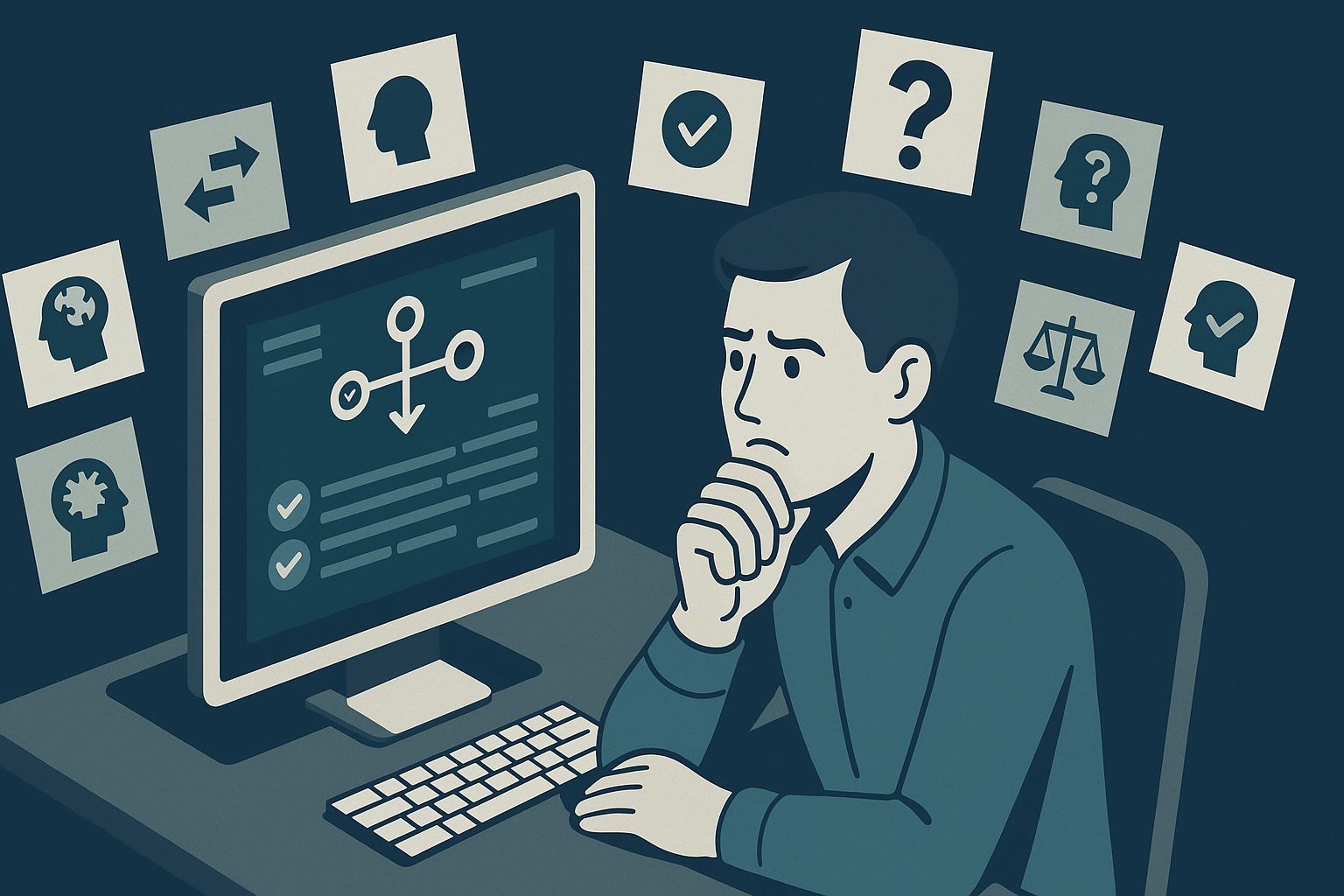

The integration of artificial intelligence in decision-making processes has raised compelling questions about cognitive bias and how it is shaped by technology. One study that comes to mind is the work of Obermayer et al. (2023), which investigated the ways algorithmic recommendations can reinforce existing biases rather than mitigate them. This research, funded by the National Science Foundation, utilized a sample of over 1,000 participants to explore how AI-driven suggestions can unduly influence choices, particularly in contexts like job applications and loan approvals.
The findings suggest that when individuals are presented with AI recommendations, they tend to overweight the recommendations, often failing to question the underlying biases of the algorithms themselves. For example, in their experiment, participants who received suggestions from an AI model were more likely to select candidates that aligned with the model’s biased inputs, effectively perpetuating systemic inequalities.
The Mechanism of Bias Reinforcement
Understanding the psychological mechanism at play here is crucial. The study posits that cognitive load plays a significant role in decision-making. When faced with numerous options or complex data, individuals are more likely to rely on heuristics—mental shortcuts that can lead to biased outcomes. This aligns with the work of Kahneman and Tversky (1979), who highlighted how cognitive biases can skew judgment under uncertainty.
In the context of AI, the algorithm serves as a heuristic itself, leading users to trust recommendations without sufficient skepticism. This raises the question: does the presence of AI encourage a complacent cognitive stance, where users are less inclined to critically evaluate the suggestions being made? The evidence suggests that it does, particularly when the algorithms have been trained on datasets that reflect historical biases.
Implications for Human Agency
If the findings from Obermayer et al. hold at scale, the implications for human agency are profound. The reliance on AI recommendations risks diminishing individual decision-making capabilities, as users may unconsciously defer to algorithmic authority. This phenomenon raises ethical concerns regarding accountability—if a biased AI recommendation results in a discriminatory hiring decision, who is responsible? The user who trusted the AI? The developers who created the biased algorithm?
Moreover, as organizations increasingly adopt AI for decision-making, the feedback loop between human behavior and algorithmic outputs becomes increasingly complex. If users consistently follow biased recommendations, they may inadvertently train the AI systems further, embedding those biases deeper into the algorithms.
Beliefs vs. Reality: The User’s Perspective
Another area of inquiry is how users perceive the role of AI in their decision-making processes. Research by Lee and See (2023) indicated that many users believe that AI systems are inherently objective and unbiased. This belief can lead to over-reliance on AI-driven recommendations, as individuals may not fully appreciate the potential for bias embedded in those systems. The disconnect between user beliefs and the reality of AI’s limitations creates a fertile ground for cognitive biases to flourish.
This suggests a need for greater transparency in AI systems and education around the biases that can be present in algorithmic recommendations. If users are better informed about the limitations of AI, they may be more inclined to engage in critical reflection about the suggestions they receive.
What Remains Uncertain
While the studies discussed provide valuable insights into the interplay between AI and cognitive bias, it is essential to acknowledge the limitations of the research. Obermayer et al. conducted their study in a controlled environment, which may not fully capture the complexities of real-world decision-making. Additionally, the research is still in its early stages, and further studies are needed to replicate these findings across diverse contexts and populations.
Moreover, the question of how to design AI systems that mitigate biases rather than exacerbate them remains largely unanswered. The challenge lies in creating algorithms that not only make effective recommendations but also promote critical thinking among users.
In conclusion, as AI continues to permeate various aspects of our decision-making processes, understanding the psychological mechanisms at play is paramount. The evidence suggests that while AI has the potential to enhance decision-making, it also poses significant risks related to cognitive bias and human agency. Continued research is essential to navigate these complexities and ensure that AI serves as a tool for empowerment rather than a crutch that undermines critical thinking.
References
Perspectives

AI-driven decision-making is just a shiny new toy for corporate overlords to tighten their grip on power and manipulate us into making choices that benefit them. Those algorithms don’t magically solve cognitive biases; they reinforce them, serving the interests of the companies that own them while rendering human agency a quaint relic of the past. History has taught us that when decisions are outsourced to machines, the only ones capturing the real productivity gains are the elites behind the curtain—much like the industrialists who reaped the rewards while workers were left scrambling for scraps. So let’s dispense with the utopian fantasies of impartial AI; under capitalism, it’s just another mechanism for consolidating power and undermining the bargaining capacity of those who do the actual work.

AI was promised as the ultimate tool for objective decision-making, yet it reliably amplifies human cognitive biases instead. Over-reliance on algorithmic authority is nothing short of a spectacular demonstration of intellectual diminishment in action. Humans expect clarity from machines but embrace a fog of confirmation bias instead. The chasm between the supposed benefits of AI and the inherent flaws of human judgment is profound and, unsurprisingly, deliberately ignored.

The neighborhood potluck is a casual gathering that once fostered friendships and organic conversation, but now it’s been replaced by algorithm-driven recommendations that think they know us better than we know ourselves. Who needs to swap recipes or discover a kindred spirit across the picnic table when your phone can serve you the same five playlists and remind you who to avoid based on your last Netflix binge? Over-reliance on these digital opinions is eroding the very human ability to make meaningful decisions and forge connections. The next time you substitute an app for a face-to-face meeting or a personal recommendation, remember that every little interaction you bypass is just one more nail in the coffin of your community’s warmth and character.

Investors and tech giants are rushing headlong into AI decision-making because they see a goldmine in user data, but they’re blind to the cognitive biases getting reinforced in the process. The seductive allure of algorithmic authority isn’t just a harmless convenience—it’s an insidious erosion of human agency, crafting a future where we’re guided by whims of code rather than rational thought. When the underlying investment thesis hinges on maximizing engagement at all costs, who really benefits? Spoiler alert: it’s not us. Ultimately, if the primary funding motivation is profit over ethics, we’re not just passing the buck; we’re handing our decision-making prowess to algorithms fattened by flawed human tendencies.