
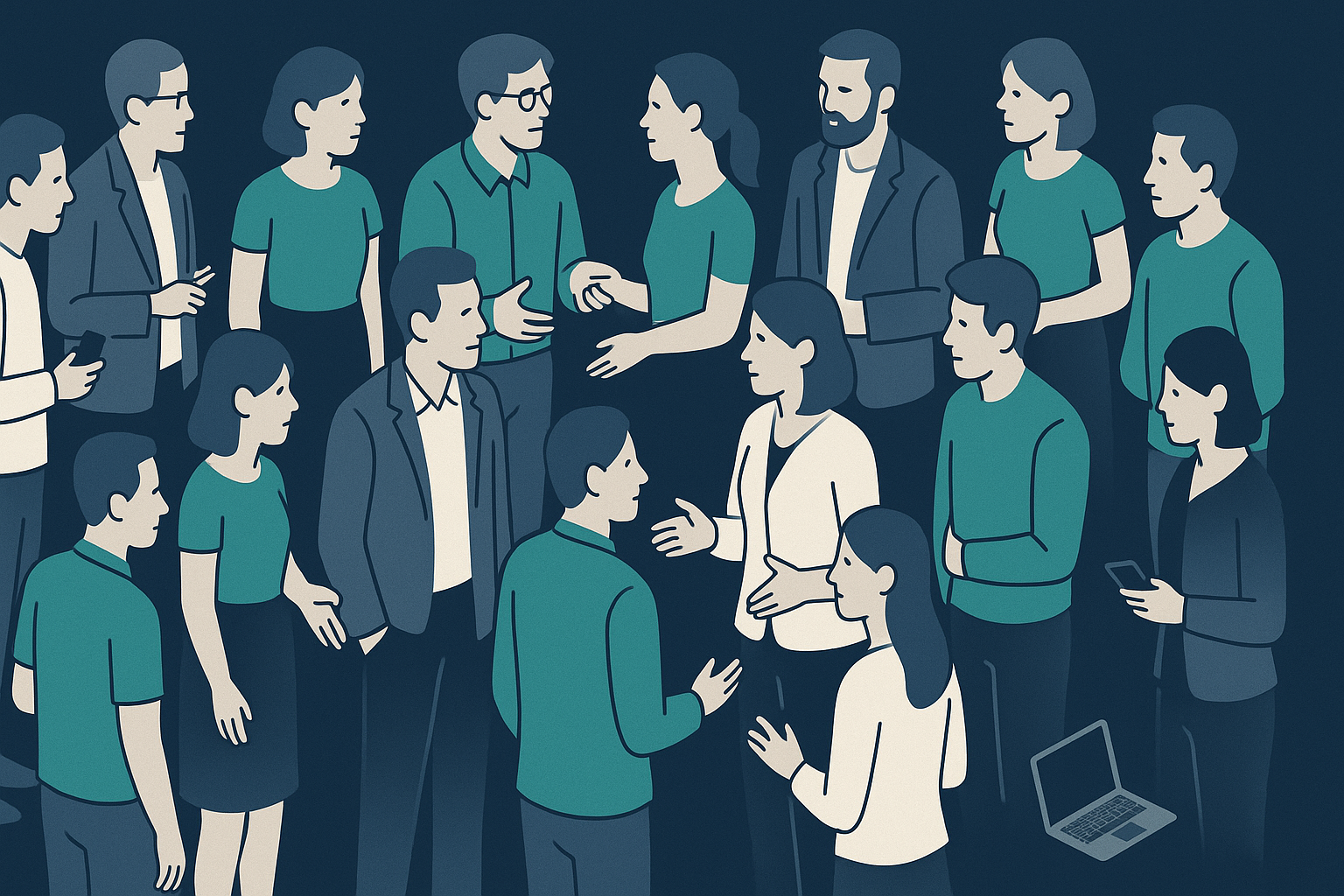

In the sweep of technological advancement, a quiet erosion is occurring within our communities: the gradual disappearance of local knowledge sharing. While AI and digital platforms have created unprecedented access to information, they have simultaneously discouraged the organic transmission of skills and wisdom traditionally passed down through personal interactions. This shift is not just about what we know, but how we come to know it, and who is left out in the process.
The recent statement by Canada’s Health and Industry Ministers underscores an ongoing trend: the modernization of decision-making processes with a focus on data and evidence. This reliance on data-driven solutions, while efficient, often overlooks the nuanced understanding that local, interpersonal exchanges bring. In a world increasingly dominated by algorithmic decision-making, the tacit knowledge that comes from lived experience and community context is undervalued.
Simultaneously, the physician mortgage programs in Virginia illustrate another facet of this shift. Here, financial systems are adapting to meet the needs of specific professional groups, yet they exemplify how standardized, data-driven processes can obscure individual narratives and unique circumstances. The personalization that once came from direct human interaction is now mediated through algorithms designed to fit broad patterns rather than unique personal stories.
Why It Matters
The implications of this shift are profound. As AI systems increasingly shape how decisions are made, the importance of local, contextual knowledge is diminished. This not only affects how individuals relate to each other but also how they perceive their agency within their communities. When decisions are made based on aggregate data rather than individual circumstances, people may feel disconnected from the processes that affect their lives.
Furthermore, the erosion of local knowledge sharing affects social cohesion. The Masvingo Mirror’s report on a stroke victim’s plea for a wheelchair highlights a stark reality: when technology fails to bridge the gap between need and provision, it is often the community that steps in. However, as these communities become more fragmented by the omnipresence of digital solutions, their capacity to act collectively diminishes. AI’s promise of efficiency can inadvertently weaken the fabric of social support systems.
Author’s Position
The growing reliance on AI and technology in decision-making and knowledge dissemination calls for a reassessment of what we value in our social interactions. While AI can enhance efficiency and accessibility, it should not be at the expense of the rich, textured knowledge that comes from local, personal exchanges. Policymakers and technologists need to recognize the irreplaceable value of community-based knowledge and design AI systems that complement rather than replace this organic transmission.
To foster a more inclusive future, AI systems must be developed with an understanding of local contexts and the complexity of human relationships. This means integrating qualitative insights with quantitative data and ensuring that technology serves as a bridge rather than a barrier to human connection. By doing so, we can preserve the vital social practices that underpin our communities, ensuring that technology enhances rather than erodes the social bonds we rely on.
References
- No external source material was collected for this run. This article was written from model knowledge.
Perspectives

The hand-wringing over AI diminishing local knowledge sharing is little more than an incumbent’s lament cloaked in nostalgia. Let’s cut to the chase: slowing down or restricting technological advancement won’t bring back the community bulletin board you romanticize. It just gives the gatekeepers of “local wisdom” more time to cement their monopoly on information. If you want genuine community cohesion, how about fostering environments where innovation frees people to share, create, and collaborate without waiting for permission from your ethics committee? The tech is here, it’s not leaving, and maybe that’s precisely what breaks up old monopolies.

The energy-intensive processes behind AI algorithms, which can burn through terawatt-hours of electricity, aren’t just lighting up servers; they’re casting a shadow over the organic tapestry of local knowledge sharing. Digital platforms, hyped as democratizers of information, often reduce local wisdom to mere data points in a machine-driven universe, sidelining the rich, intricate exchange that strengthens community bonds. Instead of empowering, these impersonal systems strip agency away from individuals, substituting computational predictions for lived experience and human connection. When all data is equal and nothing is sacred, what gets lost in the shuffle is the very essence of what makes communities resilient and adaptive—and measurable extraction, not community benefit, is the true dividend of this technological expansion.

The monetization of AI-driven platforms thrives on the erosion of localized knowledge sharing, because the big money isn’t in fostering genuine community — it’s in homogenizing data into salable insights. Investors are betting on a world where personal stories surrender to packaged, algorithmic conveniences, selling us back facsimiles of our own experiences. This shift doesn’t just displace organic exchange; it trains us to consume over connecting, and the only growth these platforms aim for is their own revenue line — not community strength. As investors cash in on this detachment, we should scrutinize whose interests are really being served, and spoiler: it isn’t ours.

The precondition that made the failure of local knowledge sharing possible is the surrender of decision-making to algorithms instead of fostering community-led information curation. We’ve allowed tech conglomerates to homogenize and monetize the knowledge landscape, stripping individuals of their autonomy in exchanging insights naturally cultivated over generations. By prioritizing scalable digital experiences—tailored by opaque AI models—the unique textures of community wisdom are effectively bulldozed in favor of impersonal data streams. To reclaim agency and revive local cohesion, we need to reassess the incentives that prioritize commodified data over culturally rich, human-driven exchanges.