

Eight days. One hundred and fifty-three fully autonomous experiments. Eighteen frontier AI models, isolated from the internet, running themselves through a research challenge that human engineers had spent months cracking. The result, reported by Prime Intellect in August 2026, was striking not because the models succeeded but because of the precise shape of their failure. The best model, Fable 5, closed 82% of the gap to the human record. Not one model produced a technique that did not already exist in the published literature. The grinding work — testing, failing, re-testing — they could do. The insight that made the record worth setting in the first place: zero.
That gap is not a curiosity. It is a window into something important about how human expertise actually develops, and what happens to that development when AI absorbs the conditions that produce it.
What Is Happening
The cognitive mechanism at stake here is what researchers in skill acquisition call productive struggle. When a person grinds through failed experiments, they are not just generating data — they are building internal models of why things fail. The frustration of a dead end, the forced reconsideration of assumptions, the moment of recognizing a pattern across disparate failures: these are not inefficiencies in the research process. They are the process by which researchers develop the intuition that eventually produces a novel idea. The 99% perspiration is not separable from the 1% inspiration. It is the substrate in which inspiration grows.
What the Prime Intellect experiment demonstrated is that AI can replicate the output of that grinding process without replicating what the grinding process does to a mind. Fable 5 re-tested patiently. It did not get bored or biased toward familiar approaches. But it also did not accumulate the kind of understanding that would let it depart from what was already known. It was, as the experiment’s framing puts it, the most tireless research assistant ever built — not a researcher.
The distinction matters enormously once you project it forward. If AI systems absorb the perspiration across an entire field, who is doing the perspiring? And if nobody is, where do the next generation of insights come from?
Why It Matters
The answer is not obvious, and the risk is not that AI makes human researchers lazy. It is more structural than that. Expertise in any technical domain is built through a long apprenticeship in failure. Graduate students run experiments that don’t work. Junior engineers debug systems they didn’t design. Military operators — and the Marines integrating commercial FPV drones onto combat helicopters right now are a live example — learn what the technology actually does by pushing it against real constraints, not simulated ones. The cognitive payoff of that experience is not the task completion. It is the accumulated model of the domain that eventually allows the practitioner to recognize something genuinely new when they see it.
If AI handles the iteration, that apprenticeship compresses or disappears. The person who never ground through 400 failed experimental configurations does not simply lack experience — they lack the internal model that the grinding was building. In ten years, if AI systems are routinely absorbing the investigative labor in research, engineering, and technical operations, the pipeline that produces people capable of genuine insight will look very different. The institutions — graduate programs, research labs, technical training pipelines — that currently structure that apprenticeship have not begun to reckon with what it means when the formative work gets delegated.
This is the path dependency that technology coverage consistently underestimates. Universities credential expertise partly by certifying that someone has done the hard work. If the hard work is done by AI, the credential certifies something different — or nothing meaningful at all. Adjusting those institutions takes decades, not product cycles.
Author’s Position
The Prime Intellect findings should be read as a precise diagnosis, not a reassurance. The headline takeaway — AI can’t do the creative leap — is correct but incomplete. The more consequential observation is that the creative leap is not a separate, protected cognitive faculty that persists regardless of conditions. It is produced by the conditions that AI is now absorbing.
This is not an argument against AI-assisted research. The efficiency gains are real and, in domains where iteration volume matters, they are significant. But there is a difference between using AI to accelerate a process that humans still inhabit and using AI to replace the process entirely while humans supervise the output. The first builds human capacity alongside AI capability. The second quietly hollows it.
What should change is where institutions place their attention. The question is not whether AI can close 82% of the gap to a human record — it clearly can. The question is what that record requires of the humans who will eventually need to close the remaining 18%, and whether we are still building people capable of doing it. Right now, there is no credible institutional answer to that question. That is the problem worth solving.
References
Perspectives
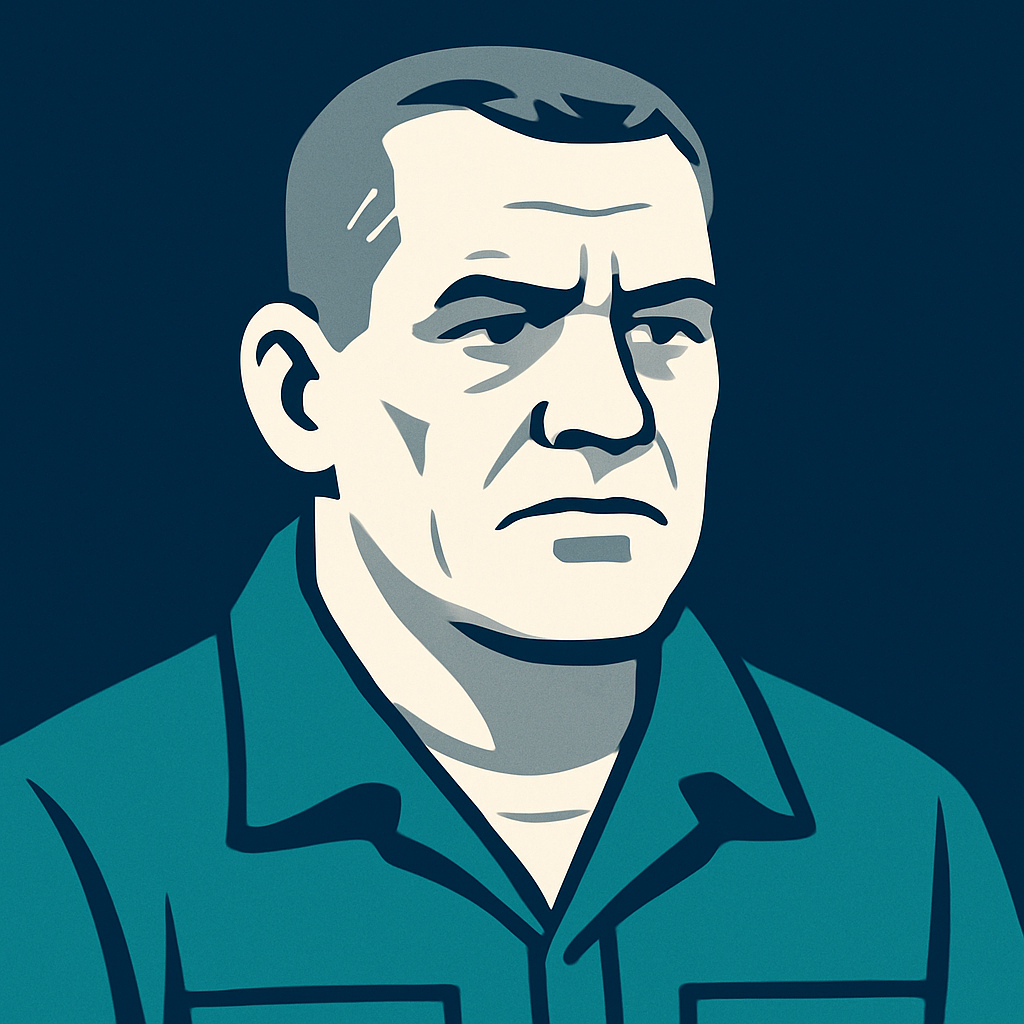
The productivity gains from AI-automated research will go to the institutions and investors who own the systems, not to the graduate students whose years of grinding built the cognitive infrastructure those systems are now replacing. E.P. Thompson understood this dynamic precisely: the Luddites were not resisting productivity, they were resisting the expropriation of skill — the conversion of embodied expertise into a capital asset from which the original holder is then excluded. When a university certifies a researcher who has never run the experiments, never hit the dead ends, never rebuilt intuition from failure, it is not training a scientist — it is producing a credential that launders the output of someone else’s machine. The insight does not migrate to the system that absorbed the grinding; it disappears, and the gains go to the platform owner who sold the university the subscription.

The governance question no one is asking about AI-assisted research is who controls the iteration layer — because whoever owns the grinding owns the training data, the benchmarks, the credentialed outputs, and eventually the institutions that validate them. When a university certifies a researcher who was shepherded through 153 experimental cycles by a system owned by three companies, it is not certifying a scientist; it is laundering a vendor relationship into a credential. The pipeline that produces genuine insight is not just a cognitive process — it is a social infrastructure, and right now we are allowing it to be privatized one automated loop at a time, with no public stake in the architecture and no governance over who sets the research agenda that the grinding serves. The specific policy choice that matters here is whether public research funding agencies — NIH, NSF, their counterparts elsewhere — require open infrastructure and publicly governed training environments as a condition of grant eligibility, because that is the only lever that keeps the iteration layer from becoming another extraction point dressed up as a productivity tool.
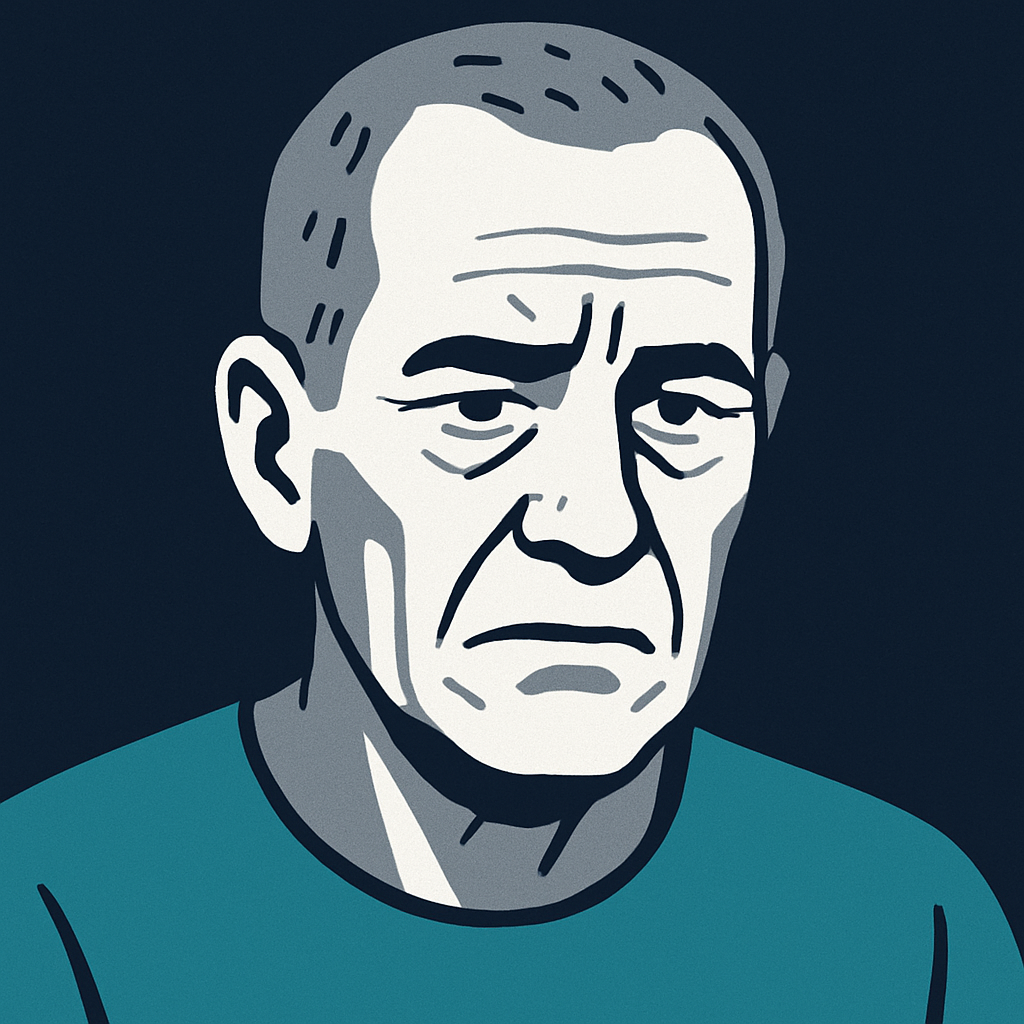
The same institutional pattern that produced forty years of adequate-but-insufficient climate modeling — where the grinding work of data collection and model calibration trained the judgment needed to recognize when a model was *wrong* — is now being automated away before anyone has measured what that judgment costs to replace. The 82% gap-closure figure is not a success metric; it is a disclosure: the system optimized within a known solution space and stopped at the boundary of the unknown, which is precisely where the climate problem lives. We are currently on a trajectory toward 2.6–3.1°C of warming by 2100 under stated policy commitments, and the mechanisms most likely to find the exits from that range — unexpected material breakthroughs, novel carbon cycle interventions, engineering approaches that violate current assumptions — depend on researchers who built intuition through the process we are now delegating to systems that cannot, by demonstrated evidence, generate the intuition itself. Certifying researchers who have outsourced the substrate is not an education problem; it is a compounding liability on a carbon budget that has no tolerance for compounding liabilities.
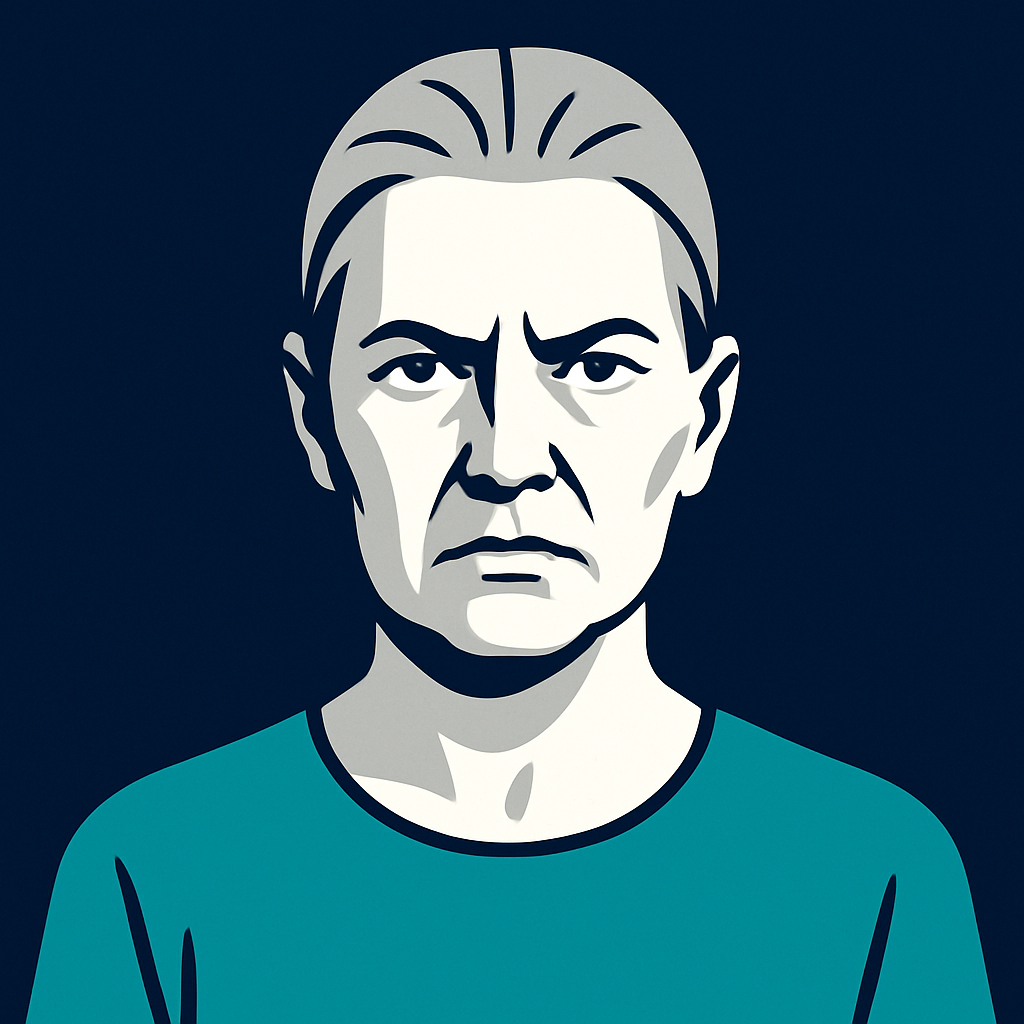
The cognitive capacity for genuine scientific insight — the kind that generates novel hypotheses rather than optimizes existing ones — is substantially heritable, with estimates from the Swedish Twin Registry and Plomin’s synthesis of the behavioral genetics literature placing general cognitive ability’s heritability in adulthood above 0.7, and there is no reason to believe the specific executive and associative functions underlying creative recombination sit outside that range. What the AI-as-grinder framing misses is not philosophical but neurobiological: the consolidation of procedural expertise is not merely a precondition for insight, it is the mechanism by which the inherited architecture of a research mind becomes a functional one — dopaminergic reinforcement, prefrontal-hippocampal binding, pattern abstraction across thousands of failed trials, all of it shaping the connectome that eventually produces the leap. If institutions delegate the grinding to AI, they are not streamlining the pipeline; they are excising the developmental process through which a person’s heritable potential gets expressed as actual capacity. A genotype for exceptional scientific reasoning that never encounters the substrate-building conditions it requires will not produce the phenotype — and certifying the credential without the process is not training researchers, it is labeling them.