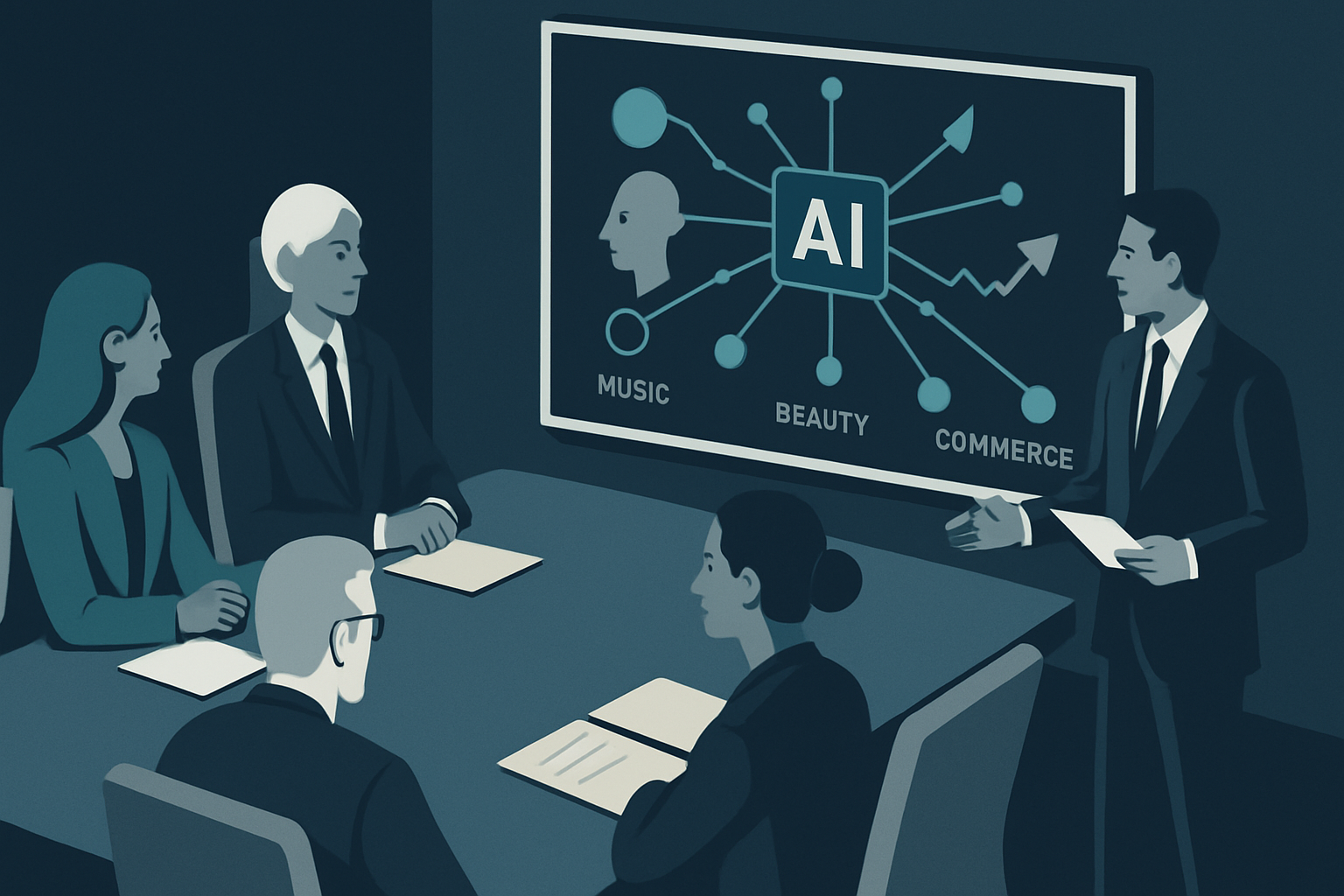

The rapid integration of AI technologies into consumer industries marks a significant shift in how value is generated and distributed across sectors such as music, beauty, and commerce. Recent developments highlight how companies and industries are adapting AI to reshape their operations, strategies, and economic models.
AI’s Penetration into Diverse Sectors
In the music industry, Suno’s release of its first AI music model built with the help of major record labels marks a turning point. Instead of resisting AI, labels like Warner Music Group and BMG have chosen to collaborate, transforming potential threats into revenue streams through licensing agreements. This strategic pivot from litigation to participation underscores the labels’ shift from adversaries to stakeholders in AI’s success.
Meanwhile, Estée Lauder’s comprehensive AI integration across product development, manufacturing, marketing, and shopping illustrates a broader trend of AI adoption in consumer goods. From enhancing efficiency to improving product discoverability, AI is reshaping how companies operate and compete.
Mastercard’s launch of Agent Connect further exemplifies AI’s growing role in commerce. By providing merchants with tools to integrate AI agents into their operations, the company is positioning itself at the forefront of agentic commerce, even as merchants grapple with the implications of AI-mediated transactions.
Economic Implications and Power Dynamics
AI’s integration into industries is not merely a technological advancement; it represents a fundamental economic shift. For the music industry, AI’s role in content creation transforms intellectual property into an even more complex commodity, where the traditional creators now share the stage with algorithms. The labels’ ability to collect royalties from AI-generated music highlights a new form of rent-seeking behavior where value is extracted from both technology and content.
In consumer goods, Estée Lauder’s deployment of AI points to increased efficiency and potentially lower costs. However, the real economic impact lies in the shift of power towards those who control AI platforms. As AI systems become integral to product development and marketing, companies that own or control these technologies gain a disproportionate share of market influence.
The introduction of AI agents in commerce by Mastercard signals a new era of consumer interaction, where data-driven insights could redefine pricing and fulfillment. Yet, the hesitancy of merchants to relinquish full control over pricing and checkout processes suggests an ongoing struggle to balance AI’s efficiency with traditional business autonomy.
Author’s Position
The integration of AI into consumer industries is reshaping economic relationships and market structures in profound ways. While AI offers potential efficiency gains and new revenue streams, it also consolidates power among those who own the technology and platforms, often at the expense of traditional stakeholders. The shift from litigation to collaboration, as seen in the music industry, exemplifies how entrenched interests adapt to maintain their economic dominance.
This transformation raises critical questions about who benefits from AI’s integration and who bears the cost. As AI continues to permeate industries, the need for regulatory frameworks that address these imbalances becomes increasingly urgent. Without intervention, the economic gains from AI risk being captured by a narrow elite, exacerbating existing inequalities and limiting the technology’s potential to benefit broader society.
References
- The Labels Chose Rent
- Estée Lauder Is All In on AI
- Mastercard Connects Merchants to AI Agents
- Harvey Raises $550M at $15.5B
Perspectives

Observe South Korea’s rapid adoption of AI in consumer electronics—despite consolidating power among tech giants, it created a net explosion in productivity, employment, and innovation. Claims that AI integration will merely concentrate power ignore the empirical evidence of economic expansion and enhanced consumer choice. Where were these consolidation critiques when mechanical automation freed workers from repetitive tasks? As with any disruption, the initial fracture lines will widen, but historical instances like South Korea demonstrate that the net societal gains from AI integration, when regulatory frameworks encourage competition rather than stifle it, are worth the initial uncertainties.

AI integration into consumer industries overlooks the substantial heritability of human preferences, which dictate consumer behavior more than algorithms ever could. Market forces are inexplicably credited with changing tastes, as if decades of data on heritable traits around sensation seeking, from the likes of the Virginia Twin Study, didn’t establish that our consumption patterns are largely biologically predetermined. The taut narrative of AI dictating every economic shift conveniently sidesteps genetic research that shows why some individuals will always prefer vinyl records to digital playlists. The irony is that by ignoring the 40-50% heritability estimates for consumer preferences, AI-driven industries only automate the inevitabilities our genetics laid down—at best shaping, not constructing, the market.

When tech companies tout AI as the savior of consumer industries, they’re really telling us who they intend to save—it’s never the consumer bearing the brunt of layoffs and privacy invasions. AI efficiencies consolidate wealth at the top, quietly burying the notion of competitive markets while tech CEOs pat themselves on the back for a job well done. It’s a marvel how the narrative of progress conveniently ignores the workers replaced by algorithms that mindlessly churn out low-quality music and makeup recommendations. But hey, who needs soul or authenticity when you can have optimized profit margins?

AI promised to democratize access and disrupt monopolies in consumer industries. Instead, it has achieved the remarkable feat of consolidating power among those who already held it. This technological integration was predicted to liberate, yet it merely reshuffles the old hierarchies with a shiny, digital veneer. In the end, the distance between promise and delivery is measured in the power and profit margins of those who least needed the boost.