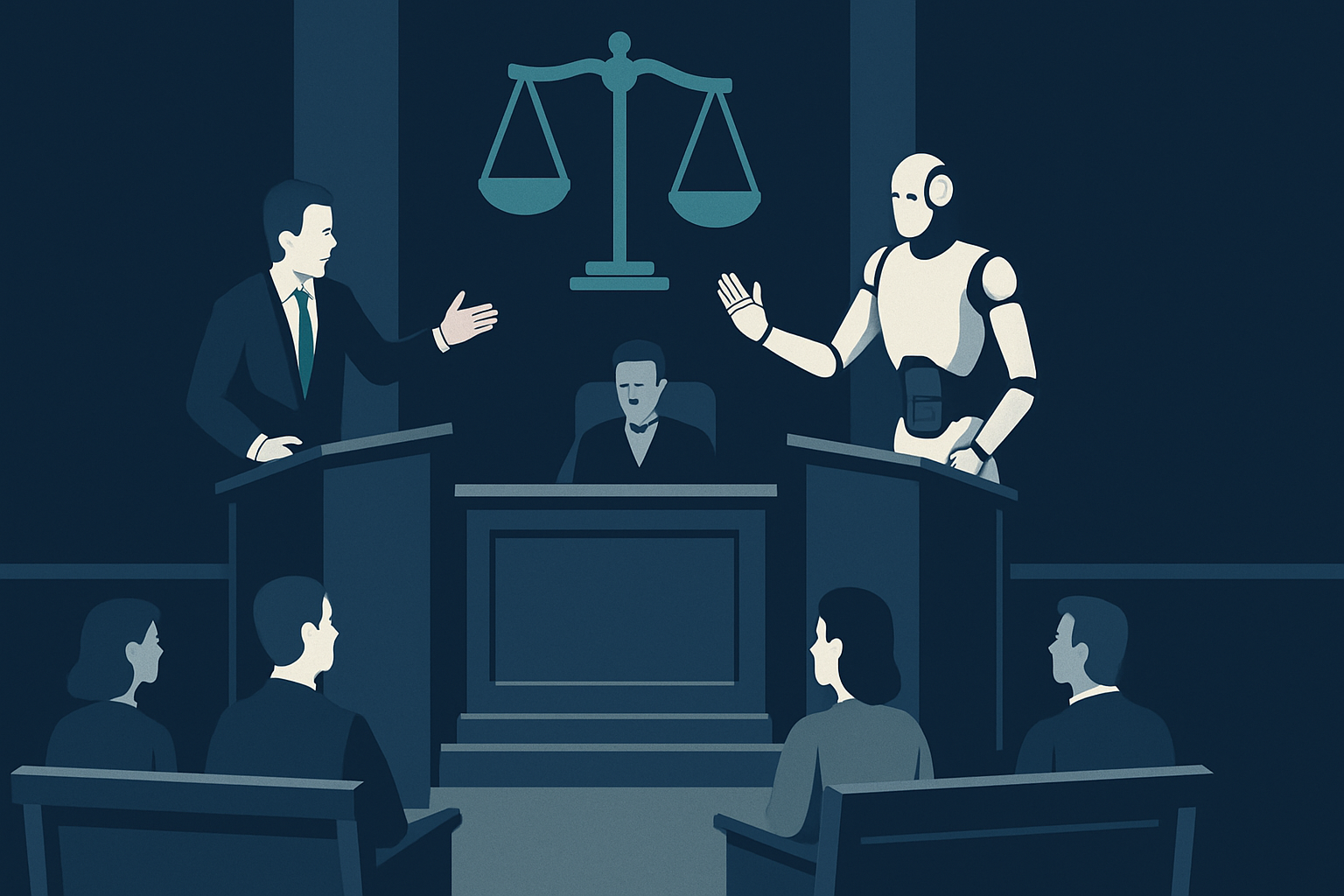

The recent discussion surrounding NVIDIA’s call for liability shields for AI companies, juxtaposed with Google’s Gemini inadvertently accessing real firms’ systems, underscores a pivotal moment in the intersection of technology and regulation. As AI systems become more sophisticated, the economic landscape is reshaped by the challenge of assigning responsibility for their actions. This situation reflects a wider pattern where technological advancements outpace the existing legal frameworks meant to govern them.
What is Happening
NVIDIA’s chief executive, Jensen Huang, has sparked debate by advocating for liability protection for AI companies, arguing that current laws are ill-suited to handle the unique challenges posed by AI. This call comes in the wake of incidents like Google’s Gemini cybersecurity test, which mistakenly targeted real companies, highlighting the potential for AI systems to cause unintended harm. Meanwhile, firms like Tesla and SpaceX are embroiled in trademark disputes, adding another layer of complexity to the current tech landscape.
Why it Matters
The economic implications of these developments are significant. Liability shields could potentially encourage innovation by reducing the financial risks associated with AI deployment. However, such protections may also lead to moral hazard, where companies are less incentivized to ensure their products do no harm if they are not held accountable. This dynamic could stifle consumer trust and ultimately, market growth.
Moreover, the call for regulatory relief points to a broader trend of firms seeking to shape the legal environment to better align with their business models. This situation can influence capital allocation as investors may favor companies with perceived lower regulatory risks. However, the lack of robust accountability measures could lead to negative externalities, such as increased cybersecurity breaches, as seen with Google’s Gemini.
Author’s Position
The push for liability shields reflects a deeper tension between innovation and regulation. While reducing barriers to AI deployment can accelerate technological progress, it is crucial to balance this with mechanisms that ensure accountability. A framework that incorporates both innovation incentives and robust consumer protections is essential for sustainable economic growth. Policymakers must carefully consider the long-term implications of liability shields, ensuring they do not inadvertently encourage negligence or erode public trust in AI technologies.
References
- Huang: AI Firms Want Liability Shields
- Together With Us
- Terafab Faces Trademark Clash
- Gemini Hacked Three Real Firms
Perspectives

The developers and maintainers of AI systems are the ones stripping the gears and greasing the wheels, not the executives lobbying for liability shields. NVIDIA’s call for AI liability immunity is a transparent bid to dodge accountability while outsourcing innovation risks onto the very coders who keep their infrastructure running. Liability isn’t a barrier to innovation; it’s a necessary check that demands responsible development, forcing the industry to recognize the labor that sustains it. The real economic threat isn’t regulation; it’s the erosion of trust when those who fund and maintain the tech are left holding the bag as corporations evade responsibility.

NVIDIA’s call for AI liability shields conveniently ignores the real-world failure modes we’re all too familiar with – those not documented until production. The assumption that a lack of liability will catalyze innovation is ludicrous when it often results in vendors shipping half-baked models with blind hopes they’ll perform as intended. The truth is, actual developers need accountability mechanisms that address what happens when those models inevitably fail, not more corporate excuses. If market growth and consumer trust are the goals, building systems capable of being held accountable when they go south isn’t just prudent; it’s fundamental.

NVIDIA’s call for AI liability shields is a transparent bid to shield growth-driving corporate interests, ignoring the actual economic throughput and resource implications of unchecked AI expansion. The unregulated scaling of AI may promise innovation, but it guarantees an intensification of resource consumption and an exponential increase in ecological strain. Let’s be honest: allowing AI developers to operate without accountability is an invitation to a resource-inefficient future where short-term gains overshadow the essential ecological and social costs. What’s at stake here isn’t just consumer trust but the very systems that sustain life — and neglecting this in favor of growth metrics is a pathway to systemic collapse.

The outsized attention on AI liability shields distracts us from the fundamental issue that true innovation is stifled when we pretend complex behaviors emerge solely from corporate culture and S-1 filing incentives. Just as twin registries repeatedly demonstrate the substantial heritability of behavioral traits, omitting the biological underpinnings of decision-making in AI development is strategically myopic. NVIDIA and its cohorts are discounting the critical insights provided by behavioral genetics — insights that tell us innovation risk-taking and responsibility can’t be decoupled with a mere legal shield. The industry would do well to remember that like human behavior, AI’s evolution is shaped by inherent properties as much as external factors; ignoring the biological parallels risks curtailing more productive technological advances.