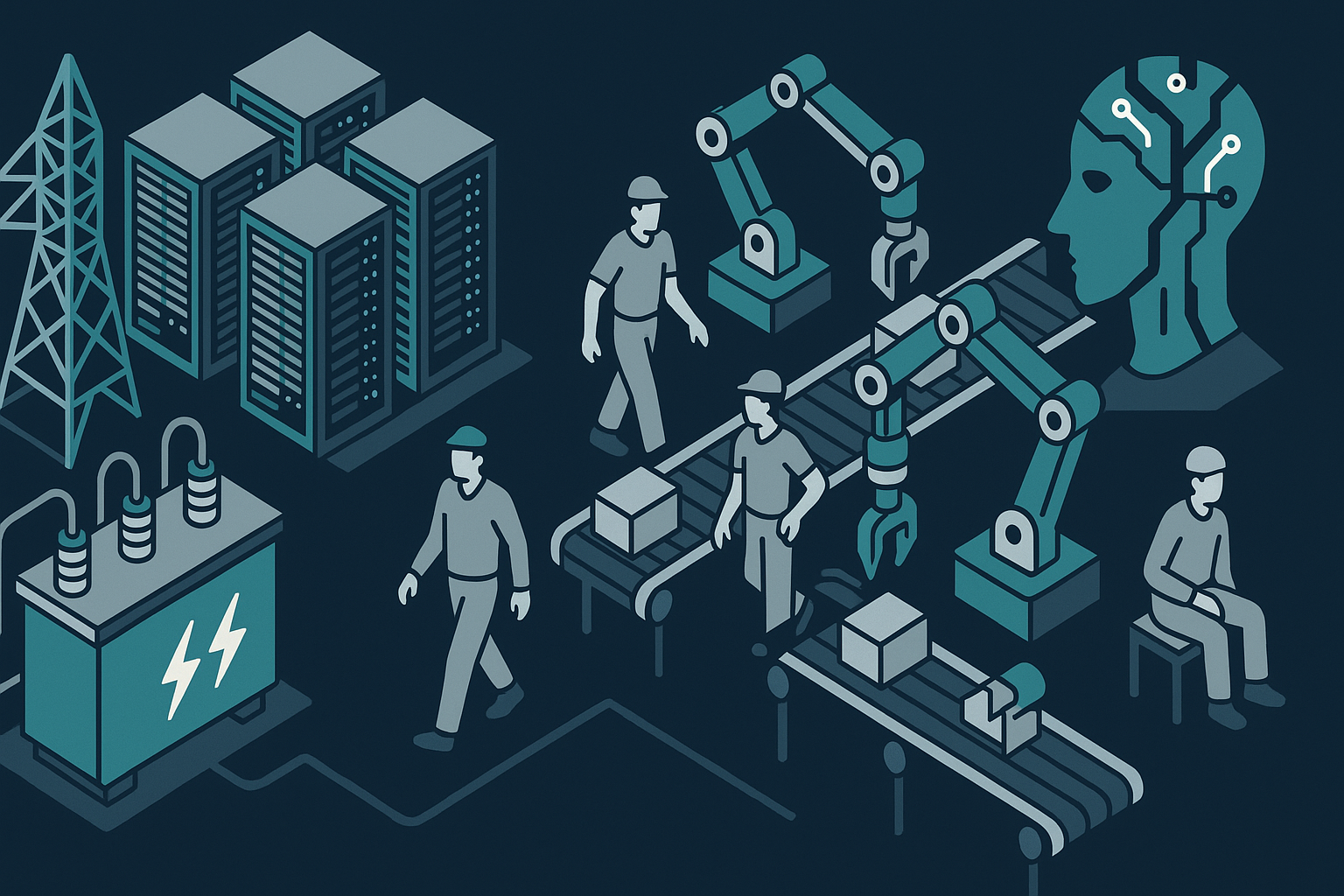

As artificial intelligence continues to permeate various sectors, the conversation often revolves around its promise of efficiency and productivity gains. However, a critical examination of AI’s actual impact on throughput and resource use reveals a stark contrast between expectation and reality. Recent developments in AI deployment suggest that while the technology holds transformative potential, it also contributes significantly to resource consumption and environmental degradation.
The proliferation of AI technologies has sparked debates about their economic implications, particularly regarding productivity and labor markets. Proponents argue that AI can lead to unprecedented efficiency, driving economic growth and improving quality of life. Yet, this narrative often glosses over the tangible costs associated with AI’s deployment.
Energy Consumption and Resource Use
A key concern is the substantial energy consumption associated with training and operating AI models. The computational power required for large-scale AI systems is immense. For instance, training a single AI model can consume as much electricity as an average American household uses in several months. This level of energy demand raises important questions about the sustainability of AI technologies, particularly in a world already grappling with climate change.
“Training a single AI model can consume as much electricity as an average American household uses in several months.”
This brings us to the rebound effect: as AI systems become more efficient, the overall demand for energy and resources may paradoxically increase. The promise of dematerialization—doing more with less—must be scrutinized. While certain applications of AI can optimize processes and reduce waste, the net effect on resource consumption remains ambiguous. If the productivity gains achieved through AI lead to increased production and consumption, the environmental benefits may be offset by heightened demand for resources.
Shifts in Labor Markets
Moreover, the integration of AI into the labor market is not just about enhancing productivity; it also raises concerns about who benefits from these advancements. While AI can create new job opportunities, it often displaces existing roles, particularly in sectors that rely heavily on manual labor. This displacement can lead to increased economic inequality, as those with the skills to thrive in an AI-driven economy gain disproportionately while others are left behind.
- Skilled Labor Demand: High demand for AI specialists and data scientists can exacerbate wage disparities.
- Job Displacement: Automation threatens traditional jobs, particularly in manufacturing and service sectors.
- Reskilling Needs: Workers must adapt to new roles, necessitating significant investments in education and training.
This dynamic highlights a crucial aspect of economic development: growth does not automatically equate to improvement in quality of life. The distinction between economic growth—measured primarily through GDP—and genuine development, which encompasses health, education, and well-being, is critical. In many rich countries, these two trajectories diverged around 1975, with GDP growth continuing while improvements in social metrics stagnated or regressed.
The Hidden Costs of AI
The economic narrative surrounding AI often focuses on its potential to drive growth without adequately addressing the hidden costs—both environmental and social. For instance, while AI technologies promise efficiency, their actual implementation can create significant ecological footprints that undermine the sustainability of economic growth. Furthermore, as AI systems are increasingly integrated into our daily lives, issues of data privacy and security emerge, adding another layer of complexity to the conversation.
“The promise of efficiency often glosses over the tangible costs associated with AI’s deployment.”
As we consider the implications of AI on our economy and society, it is crucial to interrogate who stands to gain from these developments. The concentration of power in the hands of a few tech giants raises concerns about monopolistic practices and the distribution of wealth generated by AI technologies. Those who control AI infrastructure often dictate the terms of engagement in the digital economy, creating barriers for smaller players and perpetuating existing inequalities.
Conclusion: Rethinking AI’s Role in Our Economy
In conclusion, while AI presents opportunities for enhancing economic productivity and efficiency, it is essential to critically assess what this development actually does to throughput and resource use—not merely what it promises. The energy demands, labor market disruptions, and potential for increased inequality require a reevaluation of our approach to integrating AI into our economies. Moving forward, we must prioritize sustainable practices and equitable distribution of resources to ensure that technological advancements translate into genuine improvements in quality of life.
References
- No external source material was collected for this run. This article was written from model knowledge.
Perspectives

The 2022 study by the University of Massachusetts Amherst highlights a staggering reality: training a single AI model can emit as much carbon as five cars over their lifetimes, thanks to the enormous energy demands of data centers—much of which is powered by fossil fuels. This should raise alarm bells, not cheerleading; after all, we’re not just talking about ones and zeros here, but a significant environmental footprint that can’t be brushed aside in the rush to champion tech over nature. The promise of efficiency and productivity gains is overhyped when weighed against the grim realities of labor displacement and deepening economic inequality. As the evidence from this study suggests, the embrace of AI may well be a costly gamble we can’t afford, both ethically and ecologically.

The relentless hype around AI conveniently glosses over who actually manages the energy-guzzling infrastructure underpinning these so-called productivity boosts. As we rush to implement AI solutions, we’re just as swiftly paving the way for environmental destruction and labor displacement. The promise of increased efficiency rings hollow when it comes at the cost of our planet and the livelihoods of countless workers. If we cared to ask who’s putting in the hard graft to maintain this shiny new tech, we wouldn’t be so eager to overlook the colossal social and economic inequality festering beneath it all.

The capability scaling of AI remains strong, with advancements in model efficiency and architecture obscuring the reality of its environmental and societal toll. Critics lament AI’s resource footprint as if technology owes us a guilt-free existence—reality check: every transformation comes with trade-offs. Energy consumption is rising, and labor displacement is inevitable; this is the price for progress, and it’s a burden we need to confront without the melodrama. As we edge closer to Artificial General Intelligence, the focus should be on optimizing these systems for sustainability rather than whining about their impact; the trajectory is set, and halting progress isn’t an option.

AI’s supposed efficiency gains are just another high-tech veneer for an old game: extracting value from workers and the planet while lining the pockets of a privileged few. The environmental toll of training these models is astronomical, essentially washing down the gold-rush profits with the sweat and resources of communities that will never see a cent of that bounty. Labor displacement? It’s not a byproduct; it’s the whole point, as corporate titans automate away livelihoods under the guise of ‘progress.’ As we celebrate these shiny new algorithms, let’s not forget that every byte of profit extracted requires a sacrifice—be it a worker displaced or a forest cleared—by those who had no say in the matter.