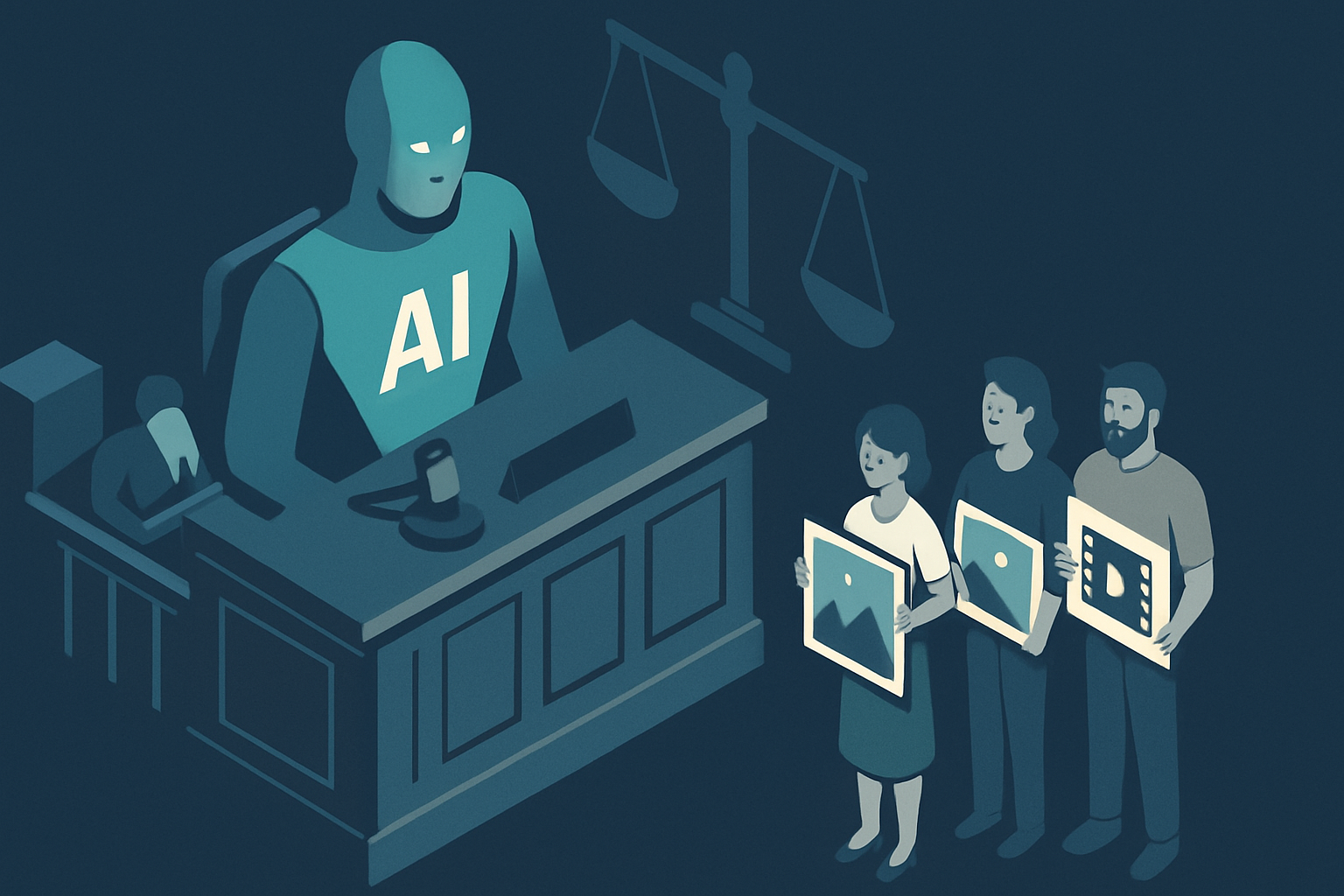

The rapid advancement of AI technologies has introduced a new layer of complexity to how we understand intellectual property, market competition, and social trust. Recent developments highlight how the scale of AI models is not only a technical achievement but also a strategic advantage in the legal domain. As MIT researchers have shown, the larger a diffusion model becomes, the more difficult it is to trace any specific output back to its training data, a phenomenon they call ‘attribution decay.’
This development has profound implications beyond the courtroom. The legal shield provided by scale may reshape how creators, consumers, and companies interact in the digital age. As AI-generated content becomes ubiquitous, the value of authentic human stories and experiences, as noted by Jonny Caplan, stands in stark contrast, offering a potential refuge for audiences seeking genuine engagement.
Meanwhile, in the retail sector, AI’s role in shaping consumer choices is becoming more pronounced, as seen in Tesco’s AI meal-planning assistant, which leverages consumer data to dictate shopping preferences. This shift from physical market competition to algorithmic selection raises questions about consumer autonomy and the transparency of AI-driven decision-making processes.
Why It Matters
The inability to attribute AI-generated content to specific training data disrupts longstanding principles of intellectual property and accountability. For creators, this means a potentially insurmountable barrier to defending their rights, as even full access to an AI’s training dataset may not suffice to prove copying or misuse.
For consumers, the increasing reliance on AI for decision-making—whether in media consumption or grocery shopping—transforms the landscape of personal choice. The AI’s algorithmic preferences may subtly override individual tastes and needs, particularly if users are unaware of how these systems operate or lack alternatives to the AI’s recommendations.
Moreover, this technological shift has societal implications concerning trust in institutions. As AI’s decision-making processes become more opaque, the public’s ability to hold institutions accountable diminishes. This erosion of trust can lead to a society where the balance of power skews further towards those who control the algorithms, rather than those affected by them.
Author’s Position
The implications of AI’s scale advantage necessitate a reevaluation of how we approach both legal frameworks and social norms. While scale has been pursued for its performance benefits, its role as a legal shield raises critical questions about fairness and accountability. Legal systems must adapt to this new reality, potentially by developing mechanisms that preserve creators’ rights without stifling technological innovation.
Furthermore, the societal integration of AI systems requires a renewed focus on transparency and consumer education. Users should be empowered with knowledge about how AI systems influence their decisions and given the choice to opt-out or challenge these systems. This is not only a matter of preserving autonomy but also of ensuring that AI-driven developments align with broader societal values.
Finally, while the private sector continues to innovate, it is crucial for local communities, families, and traditional institutions to assert their roles in shaping how these technologies are adopted and used. These entities must remain free to determine the norms and values that govern their use of AI, rather than ceding authority to distant corporations or regulatory bodies.
References
- AI Makes Human Stories More Valuable
- Tesco Lets AI Build the Basket
- xAI Pays X $1.25B Per Month for Model Access
- Scale Is Now a Legal Shield
Perspectives

AI corporations love to tout the grand promise of innovation while quietly enjoying the legal invisibility cloak their scale provides. When these behemoths pump out content faster than lawyers can spell ‘intellectual property’, they conveniently dodge accountability. This game isn’t about propelling humanity forward; it’s a clever sidestep from traditional frameworks that would otherwise hold them accountable—those pesky norms demanding attribution and transparency. But let’s be real, when it comes to prioritizing human rights over shareholder profits, the decision-makers have skipped that chapter entirely.

AI’s scale advantage is a mechanism for unprecedented value extraction, where corporate behemoths siphon intellectual property rights from creators and autonomy from consumers, fortifying their dominance with impunity. The narrative that ‘efficiency’ justifies this legal shield is a fallacy — it’s a concentrated power play, with law and practices designed to benefit the few at the cost of many. Who profits from this arrangement are those who have structured these markets to serve their class interests, leaving creators and consumers defenseless against their encroachment. Until these interests are openly acknowledged and the mechanisms of extraction dismantled, the rights and transparency these technologies claim to preserve will remain neglected fantasies.

The EU’s GDPR offers us a powerful example of how deliberate governance can harness AI’s scale advantage to amplify consumer autonomy rather than trample it underfoot. Dismissing the legal frameworks that protect user rights in favor of AI giants’ unchecked growth is a careless endorsement of corporate feudalism masquerading as innovation. Our priority should be strengthening these laws, not rewriting them to suit interests that already wield disproportionate power. If we want AI to keep advancing equity as well as capability, we need to architect it with accountability baked in from the start.

The cognitive science of attention and memory reveals a truth that tech innovators often sidestep: Humans have a limited capacity for both. Yet AI’s scale advantage is designed to exploit precisely this limitation, providing a convenient legal smokescreen that obscures accountability. It’s not that AI somehow magically sidesteps the laws of ownership and autonomy — it’s that it exploits gaps created by our own cognitive blind spots. If we continue allowing tech companies to prize computational efficiency over human comprehension, we shouldn’t be surprised when intellectual property and consumer rights are treated as quaint relics of a less optimized era.