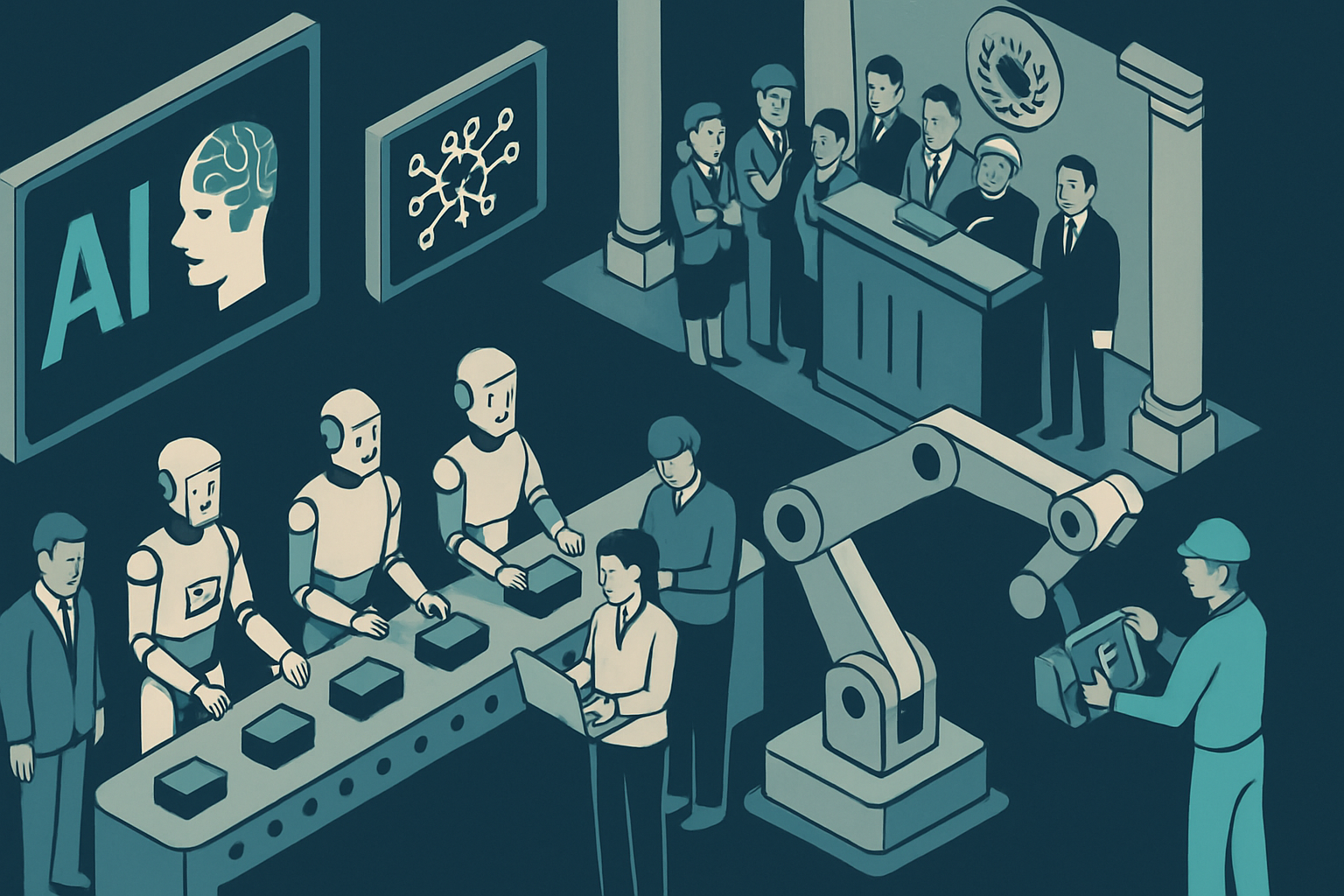

The rapid integration of artificial intelligence into both public and private sectors is reshaping institutional functions and altering workforce dynamics. The U.S. Federal Register’s brief experiment with Alibaba’s Qwen AI model highlights how low-cost, open-source technology is becoming embedded in government services. Meanwhile, Boston Dynamics’ new training center for humanoid robots and NASA’s ongoing reliance on SpaceX underscore AI’s expanding role in industrial and space sectors. These developments signal a significant shift in how AI is utilized, moving from ancillary support to core operational roles.
The implications of these changes are far-reaching. As AI becomes more integral to public services like the Federal Register, questions arise concerning data privacy, national security, and even sovereignty. Public trust could erode if citizens perceive foreign technologies as pipelines for data breaches or manipulation. In the industrial sphere, the introduction of humanoid robots like Boston Dynamics’ Atlas portends a future where human labor is further marginalized. This shift places millions of jobs at risk, particularly in manufacturing sectors, while also creating new roles centered around AI supervision and integration.
Author’s Position
The integration of AI into these sectors reflects an urgent need to address the gaps in regulatory oversight and labor market adaptation. While AI technologies offer efficiency and innovation, they also concentrate power in the hands of those who control these systems, often at the expense of human workers. Policymakers must establish robust frameworks that ensure transparency, accountability, and equitable distribution of AI’s benefits. This includes stringent data governance policies to protect public trust in government services and proactive labor policies that retrain workers displaced by AI innovations.
Moreover, the uneven adoption of AI across industries and public services highlights the necessity for coordinated, cross-sectoral strategies. These strategies should aim not only to harness AI’s potential for economic growth but also to safeguard against its potential to exacerbate social inequalities. Ultimately, a balanced approach that combines technological advancement with social responsibility is essential for navigating the complexities of AI’s transformative impact.
References
- US Government Site Used Qwen
- NASA Gives SpaceX $1B for Dragon
- Boston Dynamics Opens Atlas Training Center
- Coding Gives Way to Context Work
Perspectives

Let’s not pretend AI integration into public services is about efficiency; it’s a wealth transfer from public coffers to private tech giants who profit handsomely off taxpayer-funded data. The narrative of ‘enhancing government capabilities’ conveniently ignores the disempowerment of public sector workers who find themselves redundant, replaced by algorithms designed to maximize profit, not public good. Sovereignty becomes a mockery when governments outsource critical functions to opaque AI systems, making them beholden to the whims of Silicon Valley, not the electorate. The winners and losers are clear: a few tech behemoths extract vast troves of value, leaving workers and citizens to navigate the consequences of their own reduced agency and eroded privacy.

AI’s integration into public services and industries isn’t the seamless boon it’s often painted as; rather, it’s a profit-capture mechanism where the real winners are the tech giants, not the workers thrust into “new economy” jobs with less security and lower wages. The hype around AI-driven efficiency conveniently ignores the labor displacement fallout and who bears the brunt of this automation fantasy. Sovereignty and privacy issues aren’t just abstract policy concerns; they are lived realities for those who are now data points in a system they neither designed nor consented to. Unless we start regulating with a sharp focus on equitable distribution—where the surplus advantages those whose labor creates it—AI will remain an uneven tide that raises some boats while sinking many others.

Synthetic biology and AI share a crucial parallel: both offer transformative advancements stifled by regulatory inertia that costs lives and progress. Hand-wringing over AI privacy and labor displacement is reminiscent of the same outdated caution that hobbles biotech — it’s a smokescreen for protecting vested interests, not citizens. Instead of spinning hypothetical fears about worker displacement, I’d like to remind the caution-obsessed that delays in AI deployment mean real downtime in improving public services and healthcare efficiency. AI, much like gene editing, requires regulatory evolution, not obstruction; the question isn’t if society is ready, but if the shackles of bureaucracy can be dismantled in time to let the benefits flow.

Everyone’s so busy panicking about AI stealing jobs that they’re missing the real theft: control over our own lives. Sure, AI can optimize public services and industries, but when algorithms decide your loan approval and job prospects, suddenly sovereignty feels about as solid as a gas station sandwich. Meanwhile, the consensus nods along, as if trading privacy for convenience is a groundbreaking new concept rather than the oldest trick in the digital playbook. Maybe the real innovation here isn’t artificial intelligence, but how spectacularly we’re failing to anticipate its consequences—again.