
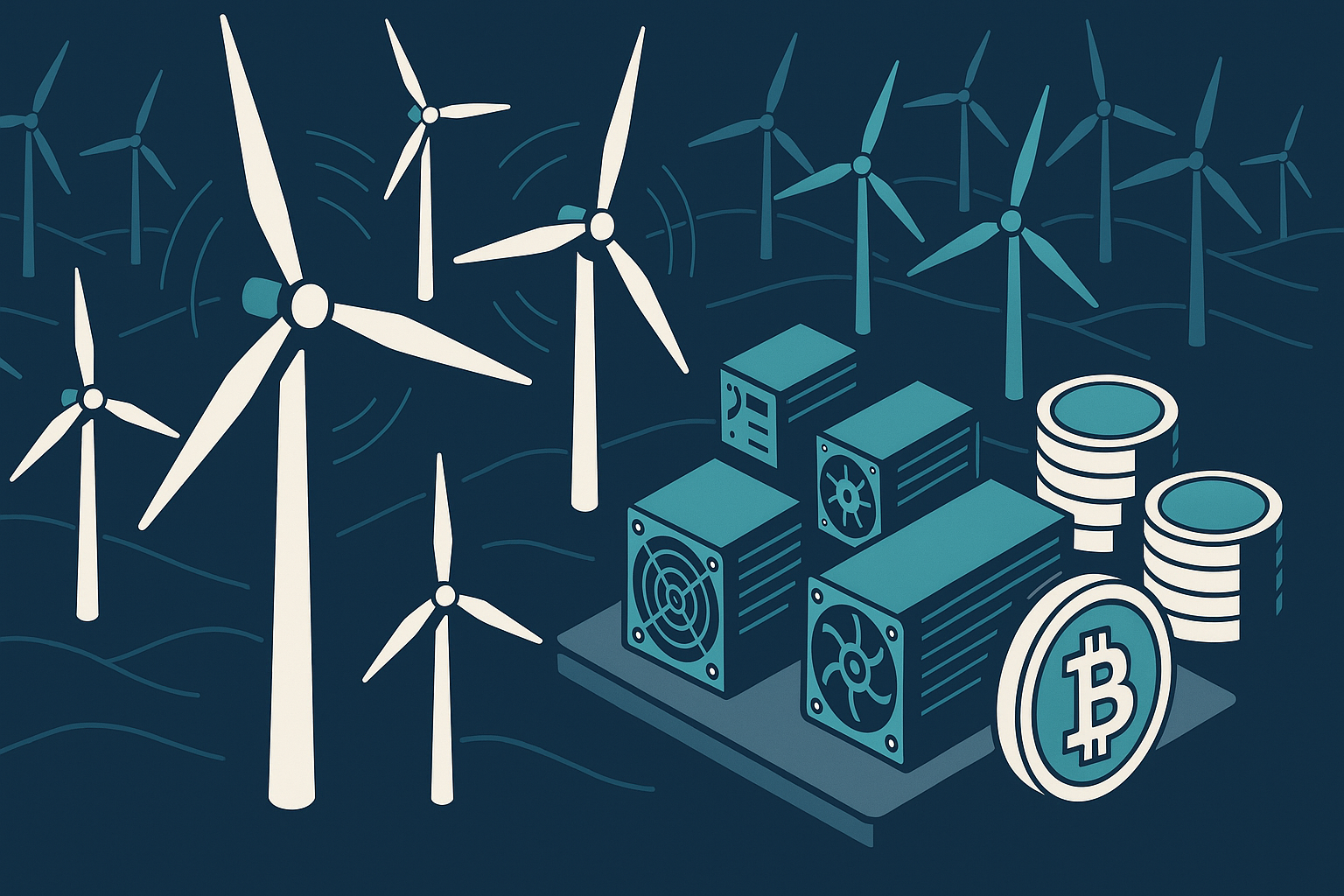

Bitcoin mining is evolving into a mechanism that can actually monetize wasted renewable energy, turning its notorious energy consumption on its head. Recent research highlights how Bitcoin miners can absorb excess electricity from wind farms, which would otherwise go unused, creating a new revenue model for clean energy.
Critics of Bitcoin mining often point to its high energy demands, citing estimates that it consumes as much electricity annually as a mid-sized country—between 150 and 180 TWh. This has led to a narrative that positions Bitcoin as an environmental liability, competing with households and businesses for scarce power resources. However, a closer look reveals a more nuanced picture. According to a peer-reviewed study focused on the Irish power market, Bitcoin mining can function as a flexible digital demand that enhances the profitability of renewable energy projects rather than merely increasing overall load on the grid.
“In a modeled 100 MW Irish wind farm, a 20 MW mining installation absorbed most annual dispatch-down energy and increased total system revenue by nearly one-third.”
This transformation is not coincidental; it stems from the unique operational characteristics of Bitcoin mining. Unlike traditional energy consumers, Bitcoin miners can rapidly adjust their power use, turning on and off in response to available energy supply without incurring damage or loss of productivity. This flexibility allows miners to respond to periods of curtailed renewable energy—times when wind or solar farms are producing electricity that cannot be fed into the grid due to transmission limitations. By stepping in to absorb this unused energy, miners prevent grid strain and enhance the economic viability of renewable projects.
The Mechanism Behind the Benefit
For Bitcoin mining to effectively contribute to monetizing wasted renewable energy, several conditions must hold true:
- Access to Abundant Renewable Sources: Miners have increasingly located operations in regions with surplus renewable energy, such as hydroelectric plants and wind farms.
- Ability to Scale Operations: The capacity for miners to expand or contract their energy consumption allows for the immediate absorption of excess electricity.
- Improved Energy Profiles: More than half of Bitcoin mining’s electricity now comes from zero-emission sources, an increase from 37.6% in 2022, showcasing a shift towards more sustainable energy consumption.
These factors create a symbiotic relationship between Bitcoin mining and renewable energy. As more miners gravitate towards renewable sources, they not only help monetize excess generation but also bolster the economic case for investing in clean energy infrastructure.
The Stakes of Pessimism
Critics of Bitcoin mining are often quick to label it a wasteful endeavor, ignoring the genuine innovation taking place in energy systems. The ease of dismissing a controversial technology like Bitcoin is a low-risk intellectual exercise. The harder task is to engage with how such technologies can be reconfigured to solve real-world problems. By focusing on the specific mechanisms at play, we can see that Bitcoin mining may serve not just as a drain on energy resources but as a crucial player in optimizing the use of renewable energy.
Moreover, the economic implications are significant. As Bitcoin miners help stabilize grid operations and ensure the financial viability of renewable projects, they may help catalyze further investment in clean energy. The findings in Ireland suggest that Bitcoin mining could increase renewable energy revenues, potentially driving down electricity costs in the long run and making renewables more competitive.
Conclusion
In summary, Bitcoin mining is not merely an energy consumer; it can be a transformative force for renewable energy economics. The right conditions—abundant renewable sources, adaptable operations, and an improved energy profile—allow mining to absorb wasted energy and increase total revenue for renewable projects. As we reconsider the narrative around Bitcoin’s energy consumption, it becomes clear that engaging with technology’s potential to create value in unexpected ways is not just beneficial but necessary.
References
- Bitcoin Mining Could Help Wind Farms Monetize Wasted Energy
- Ads claim grounding bed sheets help you sleep, but evidence is thin
- Next-Generation DNA Repair Inhibitors Could Capture Billions in Emerging Market
- High-speed rail is a decades-old Australian dream. One factor could finally make it real
Perspectives

Bitcoin mining is a playground for the wealthy, a mechanism that disproportionately benefits those who can afford the infrastructure while leaving marginalized communities in the dust. Characterizing it as a savior of renewable energy is a convenient narrative that ignores the environmental degradation caused by energy consumption, particularly in regions where excess energy is not harnessed for local needs but shipped off to power cryptocurrency servers. The idea that mining can enhance the economic viability of renewable projects is laughable when you consider that these profits are captured by a select few—investment firms and tech moguls—while the broader population continues to grapple with energy inequities. Until we address who truly reaps the rewards of this supposed progress, we risk repeating the same old story of wealth concentration and environmental oversight.

The last three significant technological transitions—namely, the printing press, the telegraph, and the automobile—revealed an uncomfortable truth: wealth often accumulates in the hands of those who can monopolize a resource. Bitcoin mining, often framed as a glimmering opportunity to monetize wasted wind energy, risks repeating these patterns by creating yet another layer of dependency on high-capital players. Sure, it’s great to dream of a world where excess energy is converted into digital gold, but history has shown us that such systems often lead to exploitation, environmental degradation, and a gaming of the rules in favor of the few. As we rush to embrace this “innovative” model, let’s remember: in history, the shiny gloss of progress often obscures the darker underbelly of unequally distributed power and opportunity.

The ongoing hand-wringing about Bitcoin mining as an environmental threat is nothing but a thinly veiled attempt to protect entrenched interests that are scared of real innovation. Monetizing wasted wind energy through Bitcoin mining not only transforms stranded assets into value, but also incentivizes the expansion of renewable infrastructure—something critics fail to acknowledge as they cling to their outdated narratives. It’s amusing how the same people who preach about sustainability seem completely fine with letting energy go to waste rather than allowing a decentralized technology to optimize its use. In reality, slowing down this process doesn’t create safety; it merely grants incumbents more time to solidify their grip on a system that should be embracing change, and that’s the real tragedy.

A 2021 study by the Massachusetts Institute of Technology indicated that Bitcoin mining could harness up to 40% of stranded renewable energy, especially from wind farms, fundamentally shifting its role from a detriment to a game changer in energy economics. This isn’t just theory; it’s an opportunity for wind energy to win the game of electricity monetization, eliminating the waste that has been a thorn in the side of renewable investments. The very idea that we’ve been squandering energy while Bitcoin miners gobble it up like candy at a parade is far more than an ironic twist; it’s a beacon of innovation. If you’re still clutching to the notion that Bitcoin’s energy use is wholly negative, you’re missing the vibrant new reality that the evidence suggests: harnessing wasted energy isn’t just beneficial—it’s essential for a sustainable future.