
Your daily briefing on AI, technology, economics, and society — from q52.ai.
Industry & Economics
AI’s Economic Divide: The Impact on Labor Markets and Industry Dynamics
What’s happening: AI is transforming labor markets and industry dynamics, creating a divide between sectors and worker demographics. The construction industry is leveraging fears of AI to attract new workers, while the travel sector is adopting ‘Agentic AI’ to enhance marketing strategies. These shifts reveal how AI is not only changing operational frameworks but also exacerbating economic inequalities.
Key points:
- The construction industry is facing a labor shortage and is using fear of AI to lure school leavers into vocational trades, emphasizing that AI cannot replace hands-on roles.
- Agentic AI technologies are enabling the travel industry to implement personalized marketing strategies, enhancing consumer engagement and operational efficiency.
- As companies adopt AI, there is a risk of widening economic disparities, with skilled workers benefiting while unskilled workers may face job displacement or lower-paying positions.
- The disconnect between financial decision-makers and the gaming community can lead to layoffs and dissatisfaction, highlighting the importance of understanding worker interests in AI-driven environments.
- The integration of AI in various sectors raises questions about who controls these technologies and the data that informs them, further complicating labor market dynamics.
Why it matters: The evolving strategies in industries like construction and travel reflect a broader economic trend where power and resources increasingly concentrate among those who effectively utilize AI. This creates a critical divide in labor markets, as individuals with the right skills thrive while others risk being left behind. The implications extend beyond individual sectors, suggesting a need for policy and educational responses to address the challenges posed by AI’s integration into the economy.
Our take: The article highlights a significant tension between technological advancement and economic equity. While AI can drive efficiency, it also raises urgent questions about the future of work and the responsibilities of companies to ensure that all workers can participate in this new landscape. Addressing these disparities will require intentional strategies that prioritize inclusive access to AI-related skills and opportunities.
Tech & Engineering
Rethinking AI-Driven Software Development Practices: Bridging the Gap
What’s happening: The integration of AI into software development is evolving from merely enhancing existing tools to fundamentally redesigning development workflows. Companies like Cognizant are partnering with cloud providers such as Google Cloud to enhance their AI capabilities, reflecting a broader trend of embedding AI across industries, particularly in sectors like finance and manufacturing.
Key points:
- AI is now essential in software engineering, requiring developers to not only code but also design intelligent and adaptable systems.
- Engineers will need to acquire new skills, including understanding AI principles, data ethics, and model training.
- The complexity of AI systems requires infrastructure that supports AI model dependencies while maintaining low latency and high availability.
- AI introduces new security challenges, necessitating the development of threat models that address vulnerabilities in both code and data used for training models.
- Robust monitoring and logging are crucial for managing complex AI-driven data pipelines to ensure understanding of data flow and its impact on model performance.
Why it matters: The shift towards AI-driven software development signifies a critical transformation in the engineering landscape, demanding a more interdisciplinary approach that intertwines software development, data science, and security. As AI becomes integral to development practices, organizations must adapt their methodologies and skill sets to mitigate risks and enhance system resilience, ensuring that software not only meets current demands but is also prepared for future challenges.
Our take: The article rightly emphasizes the necessity for engineers to broaden their expertise beyond traditional coding. However, it overlooks the potential challenges of integrating these new skills into existing teams, particularly in organizations resistant to change. Balancing the need for innovation with the realities of workforce adaptation will be crucial as AI continues to reshape software engineering.
Sciences
AI’s Role in RNA Design: Advancing Drug Discovery with Ising Machines
What’s happening: Recent advancements in artificial intelligence combined with Ising machines are revolutionizing RNA design, which is crucial for drug discovery. This new methodology significantly improves the optimization of RNA sequences, making it easier to develop therapeutic applications like mRNA vaccines and gene therapies.
Key points:
- Researchers have created a method that uses AI and Ising machines to optimize RNA sequences, as detailed in a study published in Nature Biotechnology.
- The Ising machine facilitates the encoding of RNA structures, enabling quick exploration of sequence options and identification of the best candidates for therapy.
- By modeling RNA sequences as spins in an Ising framework, researchers can simulate various configurations’ interactions and energy states, crucial for RNA’s folding and function.
- Machine learning algorithms refine the search for RNA sequences, predicting which designs are likely to fold into functional structures based on historical data.
- This innovative approach not only speeds up RNA-based therapeutic development but could also be applied to other drug discovery areas like protein engineering and small molecule design.
Why it matters: The integration of AI and Ising machines in RNA design represents a significant leap forward in drug discovery processes. By allowing for rapid iteration on RNA sequences, this technology could accelerate the timeline for clinical trials and new treatments. Furthermore, as the pharmaceutical industry increasingly embraces these advanced computational methods, we may see a broader range of applications across various drug development fields.
Our take: The collaboration between AI and innovative computing methods like Ising machines highlights a pivotal shift in how biological research is conducted. However, the potential ethical implications of accelerated drug development and the need for thorough testing should not be overlooked as we move forward.
Society
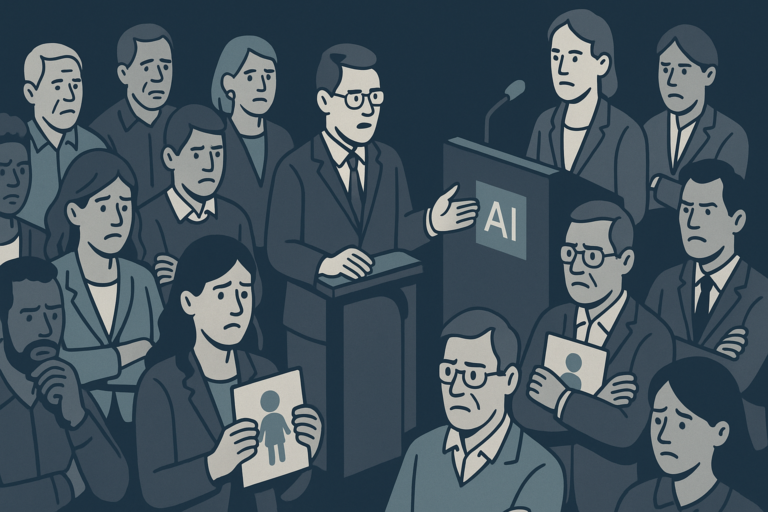
The Growing Disconnect: AI and the Erosion of Institutional Trust
What’s happening: As the Geneva AI Summit approaches in June 2027, discussions are intensifying around the governance of artificial intelligence, particularly concerning human rights. However, a troubling trend is emerging: the erosion of trust in institutions as AI proliferates, highlighting the disconnect between institutional promises and the real experiences of affected communities.
Key points:
- Institutional actors, including governments and international organizations, are convening to shape AI governance frameworks, but marginalized voices are often excluded from these discussions.
- The UN’s coalition on children’s rights, while a positive step, may not address the specific local challenges children face in a digital world.
- AI deployment tends to prioritize efficiency over empathy, leading to citizens being treated as mere data points rather than individuals with rights and needs.
- This disconnect fosters mistrust in institutions, as decisions made behind closed doors raise concerns about surveillance and control instead of empowerment.
- There is a call for a shift in AI governance to emphasize transparency and inclusivity, ensuring that the interests of marginalized communities are represented and that AI serves the public good.
Why it matters: The implications of eroding institutional trust in the context of AI are profound. As AI technologies increasingly shape critical areas like education and healthcare, the inability to engage meaningfully with affected communities risks reinforcing existing power imbalances and societal divisions. If institutions fail to prioritize transparency and inclusivity, the public may become more skeptical of AI initiatives, potentially stifling innovation and collaboration that could benefit society as a whole.
Our take: The current approach to AI governance is misguided if it continues to overlook the voices of those most impacted by these technologies. Without a genuine commitment to inclusivity and the public good, the frameworks being developed may only serve to deepen societal divides rather than bridge them. Institutions must recognize that trust is built through engagement, not top-down mandates.
Psychology

How AI Is Reshaping Our Understanding of Trust and Relationships
What’s happening: Artificial intelligence is significantly changing how we perceive trust and relationships. Traditional views on trust, which rely on reliability and consistency in human interactions, are being challenged by AI’s influence, particularly through algorithms that shape our social experiences and emotional interpretations.
Key points:
- Trust in relationships is evolving; it’s increasingly influenced by AI systems that analyze interaction data, which can alter our perceptions of reliability and emotional connections.
- The concept of ‘positive sentiment override’ suggests that goodwill can help interpret ambiguous behaviors positively, but AI’s pervasive presence risks undermining this interpretive lens.
- AI-driven environments may lead to relationships resembling transactional interactions, reducing the emotional nuances that foster genuine connections.
- Rituals that promote mindfulness and gratitude, such as saying grace before meals, are becoming rarer in an AI-infused world filled with distractions.
- Individuals seeking validation from AI could prioritize algorithmic approval over authentic human connection, potentially impacting their self-worth and emotional health.
Why it matters: The shift in how we perceive relationships due to AI has significant implications for emotional well-being and social dynamics. As technology increasingly mediates our interactions, there is a risk that the richness of human connection may be lost, leading to a superficial understanding of trust and companionship. This could result in a generation that prioritizes algorithmic feedback over genuine human relationships, ultimately impacting mental health and social cohesion.
Our take: The challenge lies in actively designing AI systems that enhance rather than hinder emotional intelligence in our interactions. We must recognize the potential for AI to distort our relational dynamics and advocate for technology that supports deeper connections, ensuring that human authenticity is not sacrificed in the pursuit of efficiency.
That’s the digest for July 09, 2026.
Questions? Reach out at info@q52.ai.
q52.ai — Engineering Better Questions
