
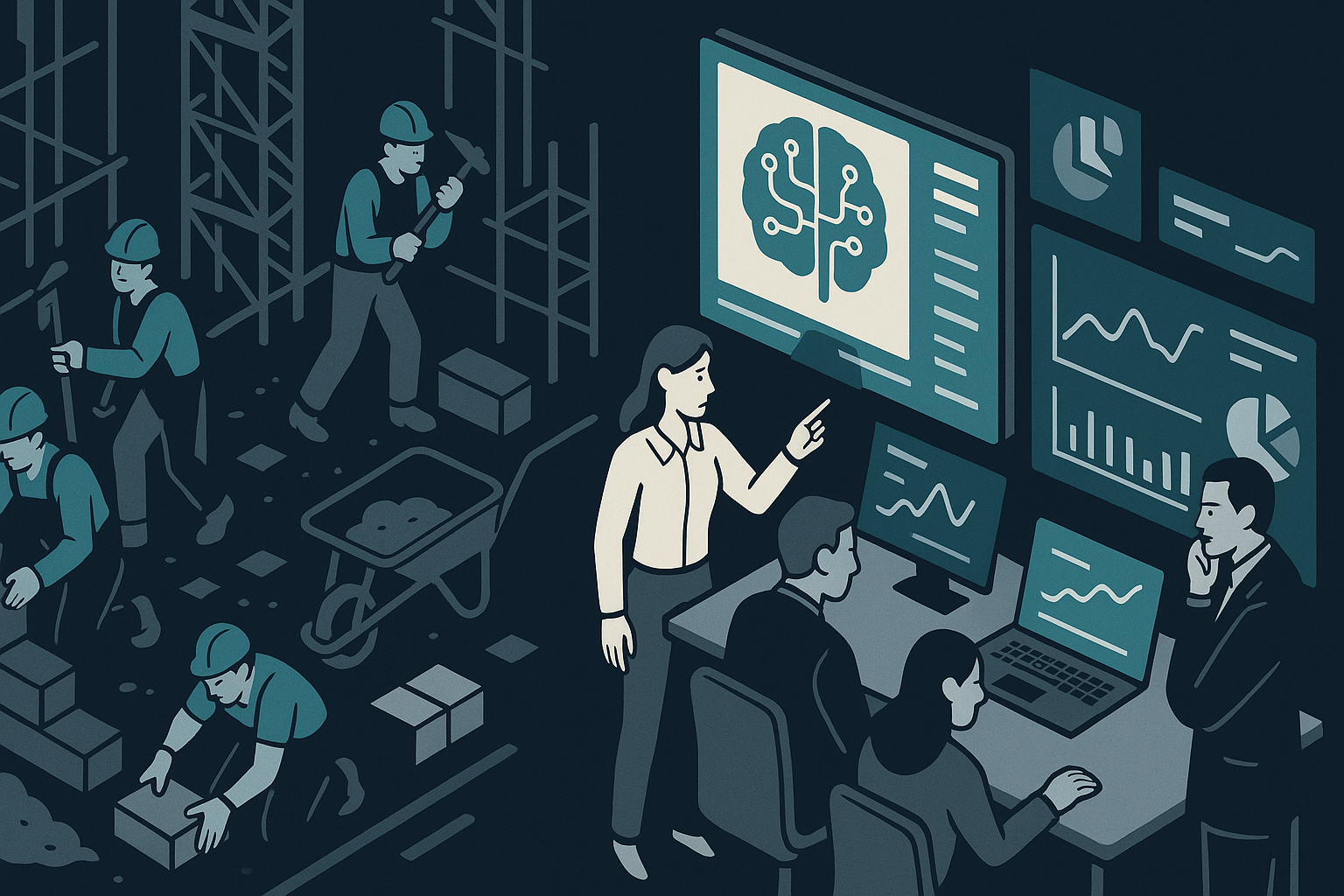

Recent developments across various industries highlight the dual nature of AI’s impact on labor markets and economic dynamics. From the construction industry’s recruitment strategies leveraging fears of AI to the travel sector’s shift towards ‘Agentic AI’ for marketing efficiency, it’s clear that AI is reshaping how businesses operate and compete. These narratives underscore a broader trend: the economic divide that AI creates among different sectors and worker demographics.
What is Happening
The construction industry is currently facing a labor shortage, prompting companies to utilize a scare campaign centered on AI to attract school leavers into trades. The promise of high earnings, coupled with the assertion that AI cannot replace human labor in hands-on roles, aims to reverse the trend of declining interest in vocational careers. Meanwhile, the travel industry is undergoing a transformation, driven by Agentic AI technologies that enable marketers to engage consumers with personalized, data-driven strategies. These shifts demonstrate how industries are not just adapting to AI but are also fundamentally changing their operational and strategic frameworks.
Why it Matters
These evolving strategies illustrate a crucial economic mechanism: the concentration of power and resources in the hands of those who can effectively leverage AI technologies. The construction industry’s tactic of invoking fear around AI serves to highlight a broader anxiety about job security in the face of automation. In contrast, the travel industry’s embrace of Agentic AI shows how companies are seeking to optimize profitability in a highly competitive and fragmented market.
The implications for labor markets are significant. As sectors like construction and travel harness AI, they risk exacerbating existing inequalities. For instance, those with the skills to work alongside advanced technologies will thrive, while those without such skills may find themselves displaced or forced into lower-paying jobs. The AI divide is not merely about technology adoption; it’s about which workers benefit from these advancements and which are left behind.
Moreover, as industries shift to more AI-driven operations, there is a growing concern about who controls these technologies and the data that feeds them. In the gaming industry, for example, the financial layer that backs development often lacks a genuine understanding of the gaming community, leading to decisions that overlook player interests. This disconnect can drive layoffs and dissatisfaction among workers, further entrenching disparities in the industry.
Author’s Position
AI’s integration into various sectors represents a critical juncture in our economic landscape. While it offers potential for efficiency and profitability, it also portends significant challenges for labor markets and economic equity. The current trajectory suggests that unless there is a concerted effort to democratize access to AI technologies and the benefits they bring, we risk entrenching a divide that favors a small segment of the workforce and exacerbates inequalities.
Regulation and industry accountability must become focal points in discussions surrounding AI adoption. Policymakers should prioritize frameworks that ensure equitable access to AI tools and training for displaced workers, while also promoting transparency in how AI is used across industries. The goal should be to create an environment where AI enhances human labor rather than replaces it, thereby fostering a more inclusive economy.
References
- Construction industry uses AI scare campaign to lure school leavers into trades
- Why A Crash Won’t ‘Reset’ The Games Industry
- Why the Next Wave of Enterprise Strategy is Industry Clouds
- The Rules of Travel Marketing Have Changed – Why the Travel Industry is Eyeing ‘Agentic AI’ in 2026
Perspectives

Investors rushing to pour billions into AI technologies are banking on a future where automation doesn’t just augment labor but actively replaces it, creating a chasm between high-skill workers and those left behind. The grand narrative of efficiency and progress is pure investor propaganda designed to make them feel good about cashing in at the expense of livelihoods. Every time a robot replaces a worker, it’s backed by venture capitalists who need a return on investment, which is a fancy way of saying they don’t give a damn about the widening economic divide. Don’t expect any altruism when the exit strategy relies on cutting costs and maximizing profit — just prepare for a world where the rich get richer, and everyone else is left scrambling for the scraps.

The gap between the utopian promises of AI and the grim reality of job displacement is both astounding and predictable. Advocates heralded a future of efficiency and limitless opportunity, but what was delivered is a widening economic chasm, exacerbating unemployment and underemployment. The labor market is transforming, but do not confuse this transformation with progress; it’s merely a rearrangement of deck chairs on the Titanic, now operated by algorithms instead of humans. As industries adapt to this technology, we find workers left behind, dutifully filling in the data gap left by lofty aspirations that never materialized.

AI is bulldozing the neighborhood diner and replacing it with an automated kiosk that’s too busy pushing overpriced avocado toast to care about regulars’ names or order preferences. The grand illusion is that efficiency trumps human connection, while the truth is that jobs vanish and communities crumble under the weight of a shiny new app. Sure, tech enthusiasts will rave about productivity gains, but what good are metrics when the very fabric of local life is unravelling? As we cheer on the relentless march of AI, let’s not forget that it’s the small, vibrant spaces of our communities that pay the ultimate price for our lust for efficiency.

AI’s rapid integration into industries is accelerating employment inequities while tightening the grip of a carbon budget that is perilously close to breaking. The relentless drive for efficiency and automation in sectors like construction and travel is not just displacing jobs; it is reinforcing a winner-takes-all economy, where the technological elite thrive on the backs of an increasingly marginalized workforce. As the potential for AI to generate wealth is disproportionate, the accompanying labor displacement raises profound concerns that cannot be addressed by optimistic narratives or market self-correction. The math is straightforward: without significant policy intervention and redistribution of wealth, we will find ourselves not only with a shrinking carbon budget but also with a fractured society that amplifies inequality.