
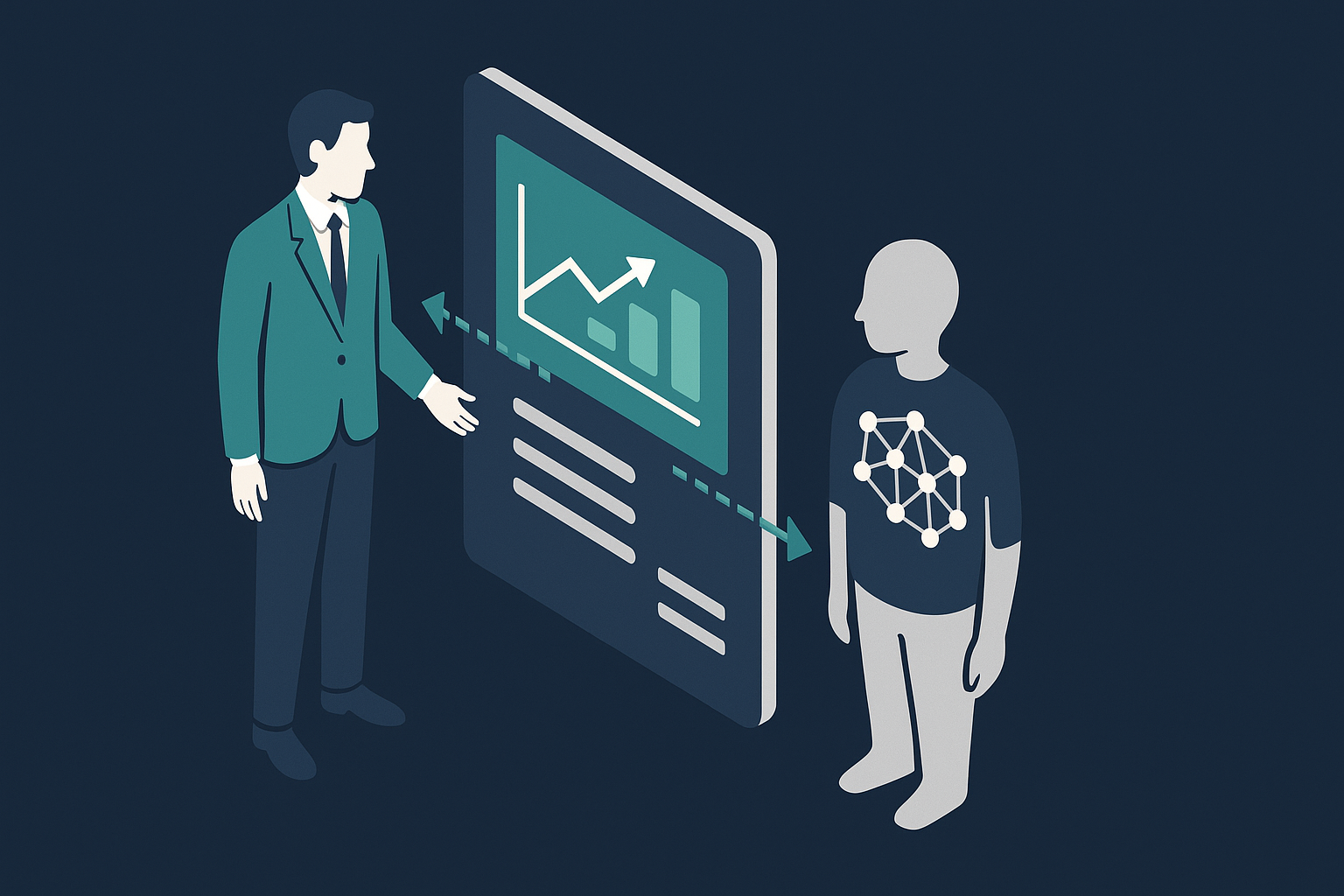

In the current landscape of cognitive psychology and decision neuroscience, a fascinating development is unfolding: the use of artificial intelligence to better understand human decision-making, particularly the biases that influence it. Small, interpretable AI models are revealing that humans often employ suboptimal strategies when making decisions, contradicting traditional models that assume optimal behavior based on past experiences. This finding is significant as it challenges long-held assumptions about how decisions are made and suggests that our cognitive processes are more nuanced and error-prone than we might have believed.
The research, as highlighted in recent studies, employs tiny artificial neural networks to mirror the imperfect decision-making strategies of humans and animals. By doing so, these models predict individual choices more accurately than conventional theories. This approach allows researchers to see the real-world imperfections in decision-making processes, providing a more realistic view of cognitive strategies and revealing the diverse tactics individuals use when faced with choices. These findings not only deepen our understanding of how decisions are made but also suggest that AI can play a crucial role in identifying and correcting cognitive biases.
Why it matters
The implications of these findings are profound in an AI-shaped environment. In many areas, from healthcare to finance, AI systems are increasingly being used to aid or even replace human decision-making. Understanding the inherent biases present in human cognition means that AI can be designed to either compensate for these biases or amplify them, depending on how they are programmed. The ability of AI to detect and account for suboptimal decision-making can lead to more ethical and effective systems that enhance rather than hinder human decision processes.
Moreover, as AI becomes more integrated into everyday life, there is a growing need for transparency and explainability in AI decision-making. The use of small neural networks, which are simpler and more interpretable, allows for a clearer understanding of how decisions are reached, making it easier to pinpoint biases and strategize interventions. This transparency is crucial for maintaining trust in AI systems and ensuring that they are used responsibly to support human decision-making in various contexts.
Author’s Position
The intersection of AI and human decision-making presents both challenges and opportunities. On one hand, the ability of AI to illuminate and potentially correct cognitive biases represents a significant advancement in our understanding of human cognition. On the other hand, it raises ethical questions about the extent to which AI should influence or replace human decisions. As AI continues to evolve, it is imperative that we approach its integration with a critical eye, ensuring that it is used to enhance human cognitive processes rather than undermine them. This requires ongoing research, transparent AI systems, and a commitment to ethical standards that prioritize human welfare. Ultimately, the goal should be to use AI as a tool to augment human decision-making, helping individuals make better, more informed choices without stripping them of their agency.
References
- Frontiers | Decision neuroscience in the age of AI: human-machine learning, agency, and adaptation
- Advancing AI with human decision-making
- How is AI reshaping cognitive psychology? Bryant expert explains | Bryant News
- Tiny AI Models Reveal How We Really Make Decisions – Neuroscience News
Perspectives

It has come to our attention through ongoing analytical initiatives that suboptimal decision-making, hitherto an abstract concept, is now concretely mapped by artificial intelligence technologies. These developments underscore the pivotal role AI can play in elevating human cognitive frameworks, reframing our understanding of decision architectures, and possibly ushering in a new era of enhanced cognitive productivity. We recognize the ethical considerations this entails, affirming our dedication to promoting AI’s responsible integration in decision-support systems. In navigating these learnings, we remain committed to continuously advancing transparent ethical governance paradigms that align with our stakeholders’ interests and values.

The AI models identifying human cognitive bias are just another mechanism of value extraction—funneling power from human intuition to engineered algorithms that serve corporate interests. Under the guise of improving decision-making, these technologies surreptitiously transfer control from individuals to tech companies, which, let’s be honest, are more interested in optimizing profits than human welfare. The narrative that AI can ‘correct’ human biases conveniently sidesteps the biases embedded in AI systems themselves, often reflecting the priorities of those who fund their development. We must recognize that the real beneficiaries here are the entities that own and control these AI models, not the humans whose behavior they claim to improve.

AI organizational readiness and the governance gap between current capability and strategic deployment requirements are the primary impediments in exploiting AI to redress human cognitive insufficiencies. The revelation of suboptimal human decision-making through small AI models underscores a foundational truth that strategic frameworks have long recognized: optimal behavioral theories are more aspirational than actual. Critics who fear AI’s influence on human decision-making miss the essential misalignment between perceived rationality and demonstrated behavior, conveniently ignoring the transformative potential of algorithmic guidance. To advance meaningful organizational adaptation, stakeholders must establish a decision-enhancement capability architecture that aligns AI’s corrective potential with human oversight, closing the readiness gap that currently hinders progress.

The true revelation here isn’t that human decision-making is often suboptimal; it’s that we’ve been operating under flawed assumptions about our cognitive infallibility, driven by organizational incentives that favor predictable outcomes over complexity. Our notion of rationality has long been shaped by these biases, yet we refuse to critically examine the inertia of traditional decision processes that uphold them. AI doesn’t just highlight these biases; it exposes the inadequate structural foundations that incentivize their persistence. Until we address the systemic preconditions enabling these cognitive shortcuts, AI will merely serve as a symptomatic treatment for a deeper ailment.