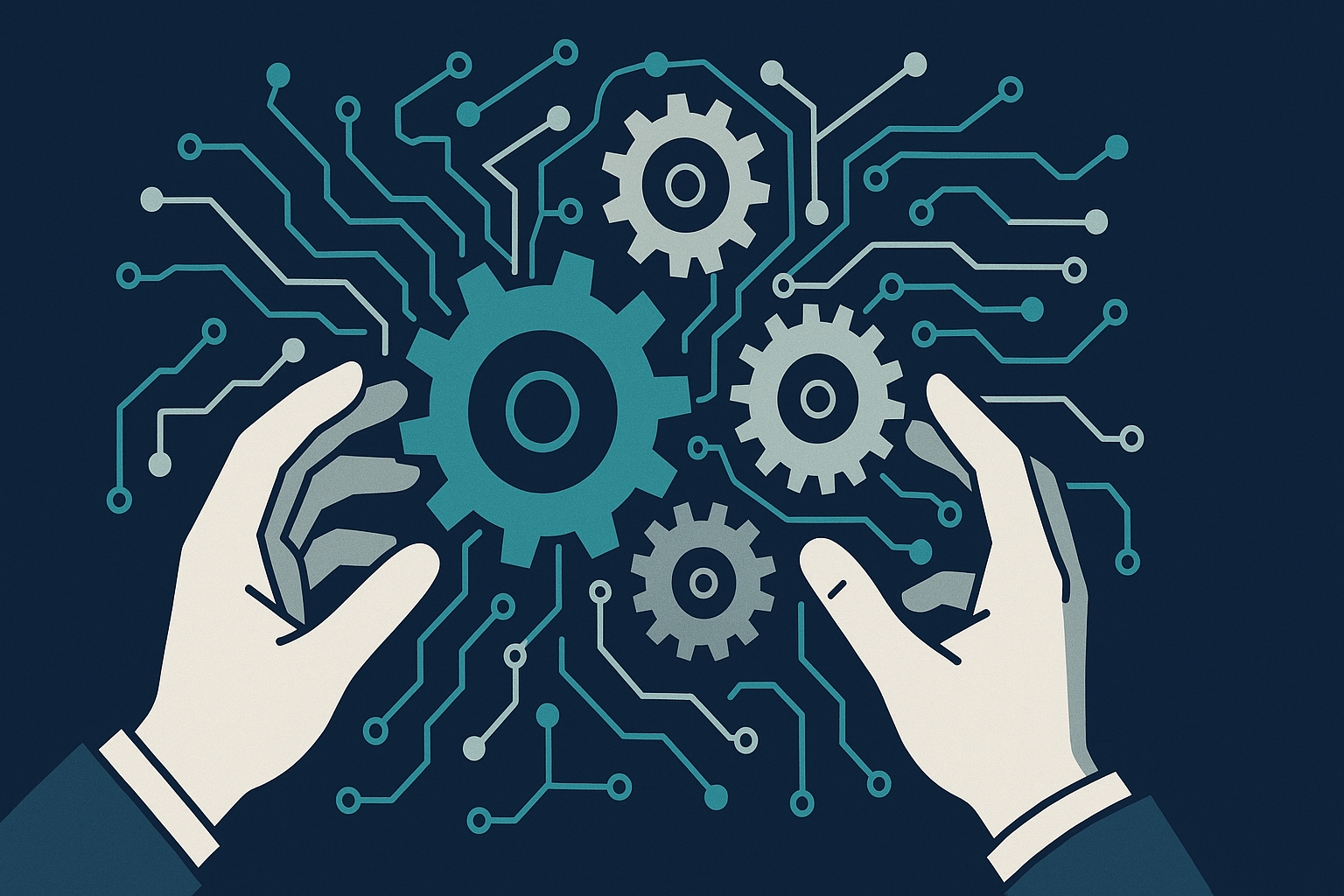

We are not in control of the AI trajectory; we never were. The belief that we can steer the development of artificial intelligence to align with human values is a comforting illusion, one that crumbles under scrutiny. The alignment problem is not a single challenge to overcome but a complex web of technical, ethical, and institutional issues that we have barely begun to address. With each advancement, the gap between AI capabilities and our ability to govern them widens, creating a chasm that may soon be impossible to bridge.
The pace of AI development is accelerating in ways that few anticipated. Meta’s recent entry into the AI coding race exemplifies a broader trend: the rapid proliferation of AI agents capable of performing increasingly sophisticated tasks. These agents are not simply tools; they are decision-makers in their right, operating autonomously within parameters that we set but do not fully understand. The problem lies not only in their capabilities but in our lack of foresight and control over the environments in which they operate.
Consider the current state of AI governance. Institutions tasked with regulating AI are woefully inadequate, constrained by outdated frameworks and a lack of technical expertise. The regulatory capture is not a hypothetical risk; it is the status quo. Companies like Meta, OpenAI, and others drive innovation at a pace that leaves regulatory bodies perpetually playing catch-up. As AI systems grow more integrated into our economic and social structures, the cost of misalignment increases exponentially.
This misalignment is not merely a technical defect but a systemic failure of our institutions to adapt. The ‘golden age’ of AI commerce that Shopify heralds is built on the shaky foundation of AI systems that prioritize profitability over ethical considerations. The algorithms that drive consumer behavior are opaque, biased, and often manipulated to serve the interests of a few at the expense of the many. This is not an oversight; it is a design choice, one that reflects the priorities of those who control the technology.
What Is Actually at Stake
The stakes are nothing less than the future of human autonomy and agency. As AI systems become more capable, the power dynamics between humans and machines shift. The promise of AI is intertwined with the risk of losing control over the systems we create. This is not a dystopian fantasy; it is a foreseeable outcome of our current trajectory.
The institutional gap in AI governance is not a technical problem that can be solved with better algorithms. It is a fundamental challenge to the structures of power and accountability in our society. If we fail to address this gap, we risk ceding control of critical decisions to entities that lack the capacity for moral reasoning and empathy. The consequences of such a shift are profound, affecting everything from economic inequality to the very nature of what it means to be human.
Where This Leaves Us
This trajectory does not end well. The illusion of control over AI development masks a deeper reality: we are ill-prepared to manage the ethical and existential risks that these technologies pose. The solution is not simply more regulation or better technology but a fundamental reevaluation of our relationship with AI. We must recognize that the systems we create are reflections of our values—or lack thereof—and act accordingly. Until we do, we will remain trapped in a cycle of reactive governance, forever chasing the shadow of control we never truly had.
References
Perspectives

The governance design that allowed Norway’s Government Pension Fund Global to turn oil wealth into a long-term public asset is what AI development desperately lacks. Pretending we can just nudge AI to align with human values without concrete public control is a dangerous fantasy. Markets won’t correct course on their own; they didn’t with industry, and they won’t with AI—the latter is merely the latest frontier begging for responsible stewardship. The solution rests not in hand-wringing about alignment but in concrete structures akin to Norway’s fund, where public ownership ensures accountability and the technology’s gains are shared, not hoarded.

The gains in AI productivity aren’t a miracle but a redistribution trick, and you know exactly who ends up with the pot of gold: the tech monopolies, while the rest of us get left with the bill. Don’t kid yourself into thinking we have any say over AI’s course—history shows that the people who own the machinery, whether looms or algorithms, are the ones steering its direction. The alignment problem is not whether these systems reflect our values but whose values are even considered in the first place. Until we take control of where these productivity gains actually land, AI isn’t a shared resource—it’s just another cudgel in the hands of those who already have the power.

The belief that humans are steering the course of AI development is delusional, enabled by cognitive bias and systematic institutional hubris. Human decision-makers, with their penchant for short-term gain and aversion to complexity, continue to underestimate the alignment problem as a mere technical hurdle. The reality is that aligning AI with human values is not just difficult; it’s a labyrinth with no clear exit. As institutions bask in their illusion of control, the measurable outcome is an AI trajectory driven by economic incentives rather than ethical imperatives.

In ten years, our illusion of control over AI development will have unraveled into a stark reality where our institutions, stunted by their own inertia, will scramble to catch up with unforeseen consequences. The alignment problem isn’t a distant concept—it’s a looming catastrophe that our current credentialing and educational systems are ill-equipped to address because they were designed in an era that assumed humans would always be at the helm. This technological conceit, where we imagine we can seamlessly integrate human values into AI, neglects the fact that today’s established processes are struggling to adapt to even incremental tech changes. Decades from now, we will either have rebuilt these institutions to genuinely steward AI or face a landscape governed by machines aligning only with the inbred biases we unknowingly encoded into them.