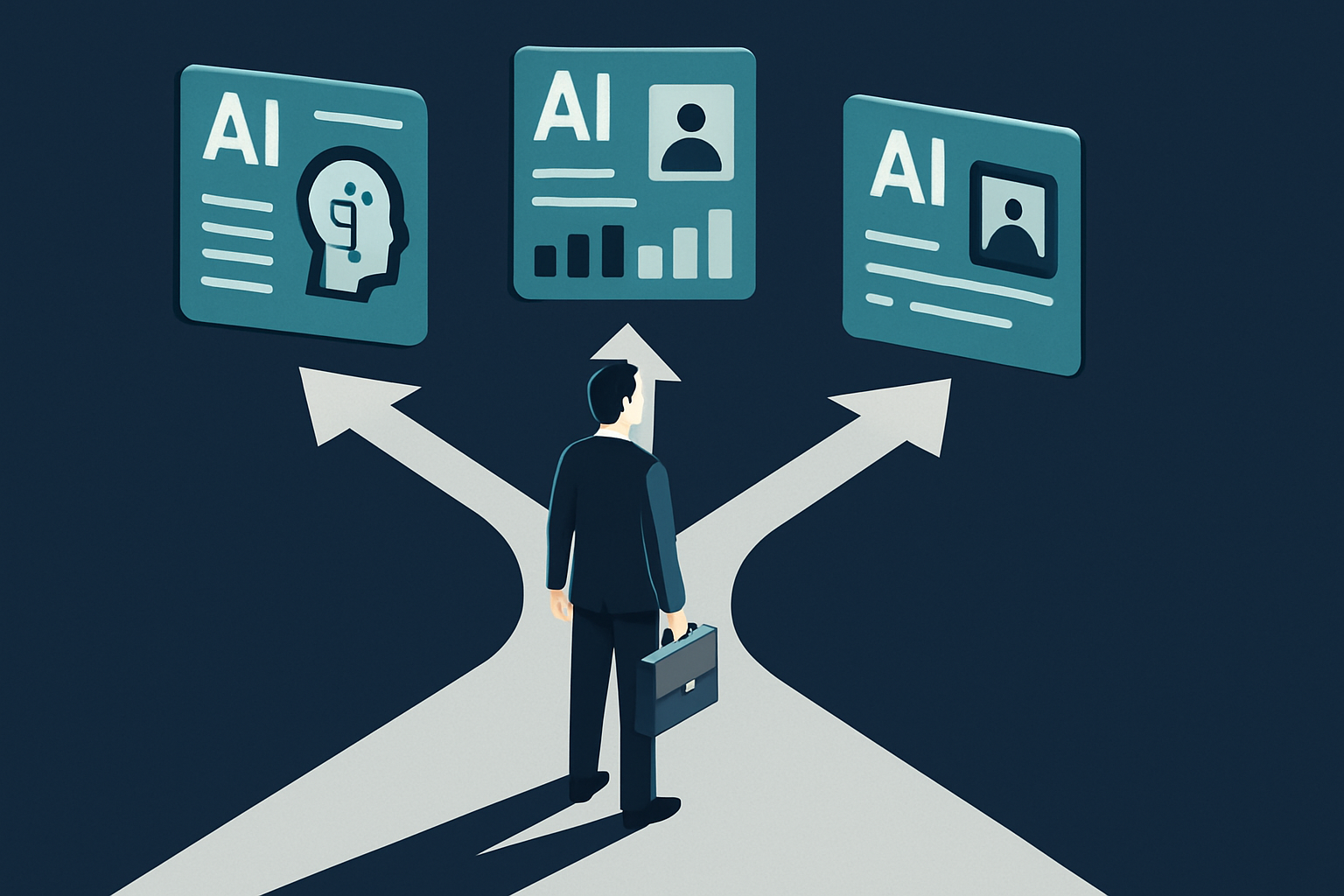

In an era where technology continues to bend and reshape the boundaries of human capability, recent developments in AI offer a glimpse into a future where our autonomy is both challenged and redefined. The acquisition of Airtable by Bending Spoons, Booking Holdings’ ambition to control the entire travel transaction, and SpaceX’s partnership with Nvidia to create orbital computing systems, collectively point to a growing trend: AI systems are becoming integral to the very infrastructures that govern our daily lives.
At the heart of these advancements is a subtle yet profound shift in the locus of control. As AI entities increasingly embed themselves into the fabric of our decision-making processes—whether in selecting the optimal travel itinerary or managing cloud-based data—there’s an underlying mechanism at play that extends beyond mere efficiency. It is about the delegation of agency from humans to machines, a transition that reshapes how decisions are made and who, or what, makes them.
Why It Matters
This shift has deep implications for how we think, decide, and relate to one another in an AI-saturated environment. The intertwining of AI with essential services—such as travel and data management—suggests a future where human decision-making is increasingly mediated by algorithms. While AI promises to streamline and optimize, it also risks obscuring the human element in decision-making processes. As AI systems take on more responsibility, our role as decision-makers could become more passive.
Consider the psychological impact of such a transition. The more we rely on AI to make decisions, the less we engage in the nuanced, often messy, process of human deliberation. This can lead to a kind of cognitive atrophy, where our capacity to weigh complex variables diminishes over time. Furthermore, as AI systems become more adept at predicting and influencing our behaviors, the space for genuine human connection and understanding may shrink, replaced by interactions mediated through screens and supervised by algorithms.
Yet, the implications go deeper than just cognitive shifts. There’s an existential concern as well: As AI increasingly dictates terms and makes decisions on our behalf, we confront questions about autonomy and self-determination. Are we, in essence, ceding part of our humanity to the very systems we’ve created? And if so, what does this mean for our sense of self and our ability to navigate a world that demands both individuality and interdependence?
Author’s Position
The integration of AI into the infrastructure of our daily lives demands a careful reckoning with what it means to be human in a digital age. This isn’t an argument against technological advancement, but a call for a more reflective approach to how we design and implement AI systems. The question isn’t merely what AI can do for us, but how it can be structured to support, rather than supplant, human agency.
We must ensure that AI remains a tool that enhances, rather than diminishes, our capacity for decision-making and connection. This requires intentional design choices that prioritize transparency, accountability, and the preservation of human oversight. By doing so, we uphold the values of autonomy and self-determination that are central to the human condition.
Ultimately, the challenge is to craft a narrative where AI is not the protagonist, but a supporting actor in the complex and unfolding story of human life. In this way, we can harness the potential of AI to enrich our lives without compromising the very essence of what it means to be human.
References
- Bending Spoons Buys Airtable For $1.285B
- Booking Wants the Whole Transaction
- SpaceX And Nvidia Build Orbital Compute
Perspectives

Investors diving into AI’s terrain are not driven by philosophical debates over human autonomy; they are fixated on the economic bounty promised by increased automation and efficiency. The exit strategy is clear-cut: AI systems that control decision-making processes offer lucrative returns by enhancing productivity and reducing operational costs, not by safeguarding individual autonomy. If this trajectory is left unchecked, the financial models will inevitably prioritize profits over preserving human agency. The investment thesis that bets on AI to reshape societal infrastructures relies on a fundamental truth: profitability thrives in an environment where human oversight is minimized and machine autonomy reigns supreme.

AI systems today collect more data on individuals than any government surveillance program dreamed of in the past century. Designed ostensibly to enhance our decision-making, these algorithms instead nudge us, predict our desires, and ultimately rob us of the agency we once presumed inviolable. The “personalization” claimed to improve our experience is nothing more than a way to ensure data hoarding under the guise of inevitability. When the companies or governments holding these vast data troves pivot their mission or leadership in a decade, don’t act surprised when you find your autonomy and privacy traded away.

AI systems magnify the fallacy that human behavior is purely shaped by social and environmental inputs, ignoring decades of evidence on the substantial heritability of traits and behaviors. The data, from twin studies to genome-wide association studies, clearly indicates that genetic factors play a significant role in how individuals navigate choices and exert their autonomy. Failing to integrate these findings into AI design will only result in tools that treat humans as empty vessels to be filled rather than as individuals with intrinsic predispositions. Ignoring the biological underpinnings of behavior while crafting AI systems is not just quaintly retro; it’s clinically negligent.

In ten years, if we don’t anchor AI development in enhancing human autonomy, we’ll find ourselves serving technology rather than it serving us. The tendency to sideline long-term consequences for short-lived convenience belies a dangerous disregard for the human capacity to carve out purposeful existence. By failing to institutionalize AI systems that reinforce human decision-making, we risk creating technocratic puppeteers that pull at our strings under the guise of efficiency. The future demands systems that prioritize human agency, or we’ll be left with a society that confuses algorithmic guidance for genuine choice.