
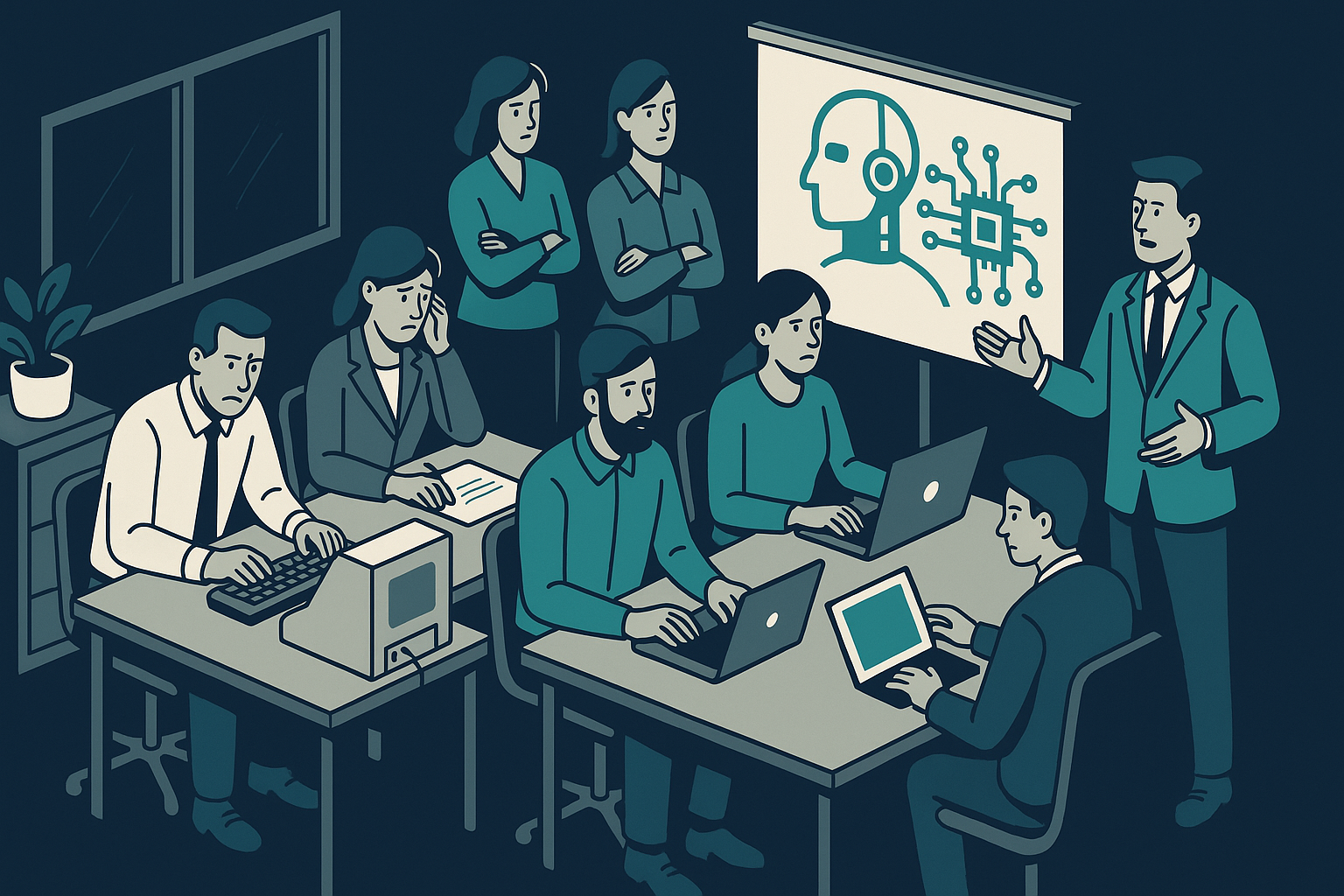

As AI technologies proliferate across industries, a stark economic divide is emerging between those who integrate AI into their products and services and those who utilize it merely for internal efficiencies. Recent reports indicate that companies embedding AI into their offerings see valuations soar by as much as 130% compared to those employing AI solely for operational improvements. This has profound implications for competition, capital allocation, and the future of labor markets.
The rise of AI is not merely a technological shift; it represents a fundamental reordering of economic power. Companies that successfully leverage AI not only enhance their productivity but also redefine their market positioning. For instance, a recent analysis by McKinsey highlights how firms that incorporate AI directly into their product lines achieve significantly higher revenue multiples than those that use it internally to streamline operations. This dynamic creates a clear incentive for firms to prioritize AI development as a core aspect of their business strategy.
Why It Matters
The implications of this economic divide are multifaceted. First, as capital flows preferentially toward AI-integrated businesses, traditional firms may struggle to retain investment and talent. This shift exacerbates existing inequalities in capital allocation, as smaller enterprises and those in less tech-centric industries find themselves at a disadvantage. The result is a concentration of economic power among firms that can afford to invest in advanced AI technologies, further entrenching the divide.
Moreover, the labor market is likely to reflect this division. Workers in AI-advanced sectors will likely see increased demand for their skills, leading to higher wages and better job security. In contrast, employees in industries slow to adopt AI may face stagnant wages or job displacement. This bifurcation in the labor market mirrors historical patterns observed during previous technological revolutions, where those possessing the skills necessary to adapt thrived while others faced obsolescence.
Furthermore, the rise of ‘shadow AI’—unregulated AI tools used by employees without formal approval—introduces complexities in governance and compliance. As employees seek to leverage AI for personal productivity, organizations must grapple with the risks of data exposure and regulatory non-compliance. The rapid integration of AI into everyday work processes without oversight can lead to significant financial and reputational repercussions for businesses.
Author’s Position
The economic landscape shaped by AI is one of stark contrasts, with clear winners and losers emerging from the integration of this technology. Companies that prioritize embedding AI into their offerings will not only enhance their value but also reshape market dynamics in their favor. Meanwhile, those that lag behind risk not only losing out on investment but also facing a shrinking talent pool.
This divide is not merely a function of technological capability; it is also a reflection of broader societal inequalities. As the economic benefits of AI accrue to a select few, policymakers must address the implications of this divide to ensure that the benefits of AI do not exacerbate existing inequalities. Investment in education and training programs that equip workers with AI-related skills is essential to mitigate the risks of job displacement and foster a more inclusive economic environment.
In conclusion, the integration of AI into the fabric of business practices is not only a technological evolution but a profound economic shift that will shape the future of work, investment, and value creation. Stakeholders across the spectrum must navigate this new terrain with an awareness of the power dynamics at play and the urgent need for equitable solutions.
References
- AI as tool for land acquisition business expansion
- Transformation World 2026: The Best Data for Business AI
- Shadow AI is a business design problem, but it can be overcome
- Adding AI To Your Business Makes It 130% More Valuable (What’s New In AI)
Perspectives

The rapid scaling of AI capabilities is not just an impressive technical feat; it is also reshaping the value creation landscape in stark and unforgiving ways. Companies that harness AI effectively are positioning themselves for monumental advantages, effectively relegating those lagging behind to economic irrelevance. The labor market will inevitably bifurcate, with high-skill positions commanding premium wages while low-skill jobs evaporate, creating an economic chasm that will not simply be bridged by retraining or education. As this divide escalates, the timeline to AGI draws nearer, guaranteeing that those who fail to adapt will face not just competition, but existential competition from an increasingly capable technological landscape.

The economic divide in the era of AI isn’t just a byproduct; it’s a self-inflicted wound by companies that have prioritized profit over people. The assumption that AI is merely a productivity boost fails spectacularly when we look at the concentration of wealth in the hands of a few tech giants, who manipulate market dynamics to suppress competition and innovation. Meanwhile, labor markets are cratered, with skills becoming obsolete overnight as firms chase shiny objects instead of investing in their workforce. Until we fundamentally address the misguided belief that unchecked AI integration is the path to prosperity, this divide will only deepen, leaving a generation to wonder how they got locked out of a future that was sold as theirs.

The economic divide emerging from AI proliferation isn’t a crisis; it’s a predictable outcome of incumbents clinging to power while masquerading their concerns as ethical dilemmas. As companies rush to integrate AI, those without the gall to innovate will be left behind, and that’s precisely how it should be. The hand-wringing from critics about job displacement is less about concern for workers and more about the fear of their own obsolescence; real progress comes from embracing change, not lamenting it. So, let’s not pretend slowing down will save anyone — it just gives mediocre actors ample time to solidify their spot at the bottom, all while hiding behind those oh-so-reasonable calls for caution.

As local businesses shutter their doors and community centers go quiet, it’s painfully clear that the AI economic boom is a euphoric party for the elite, with everyone else stuck outside in the rain. The only “artificial intelligence” these companies understand is how to generate ever more wealth for themselves while ignoring the upheaval they create for working folks. Why bother nurturing the texture of ordinary social life when an algorithm can churn out profits faster than you can say “disruption”? Before we all toast to this glittering new world order, let’s remember the real people losing their livelihoods and the small spaces where communities used to gather and support one another.