
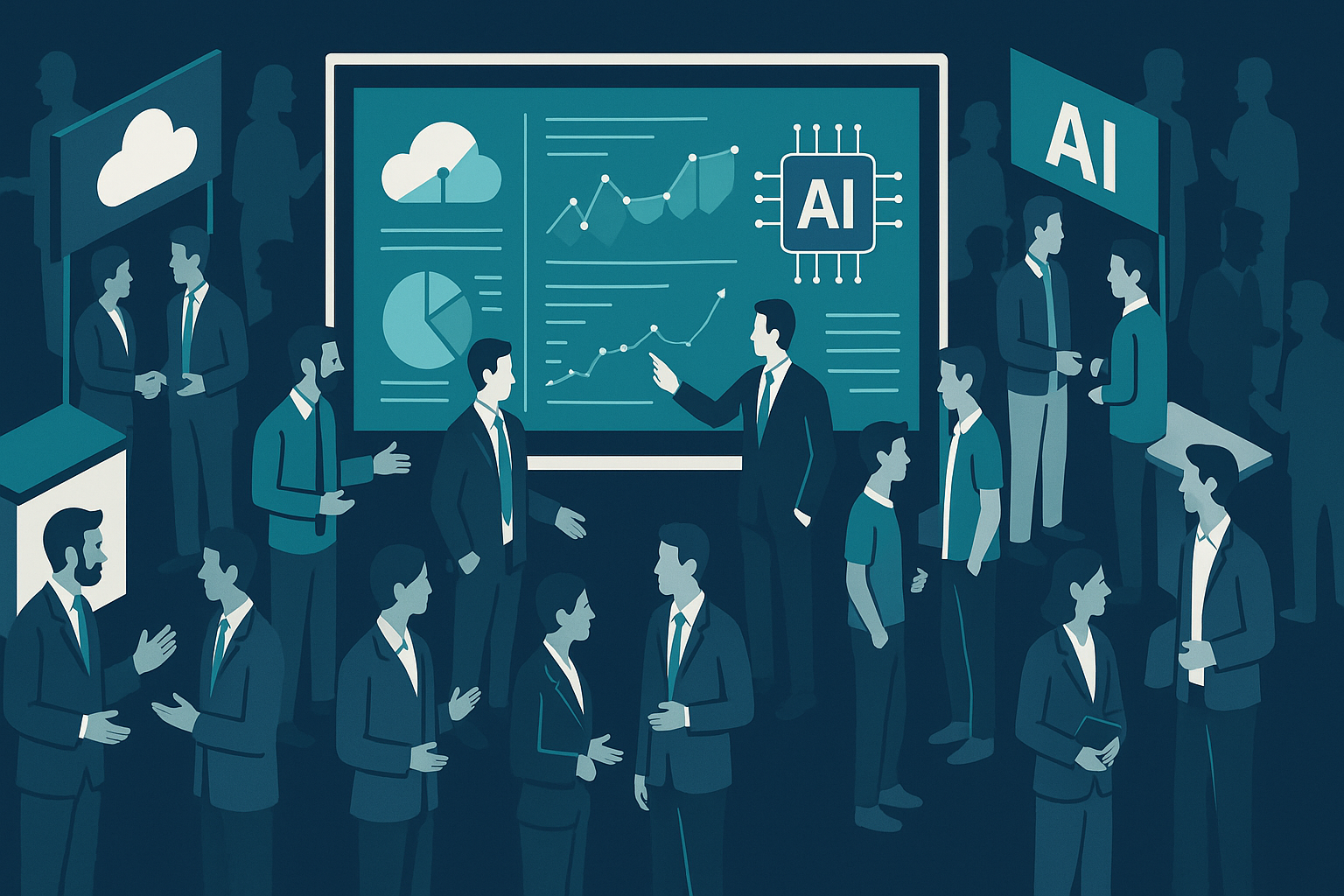

As the artificial intelligence landscape continues to evolve, we are witnessing a tectonic shift in the competitive dynamics of cloud computing. Meta Platforms Inc. is making headlines for its plans to establish a cloud infrastructure business dedicated to selling AI computing power and models, positioning itself against established giants like Amazon Web Services, Microsoft Azure, and Google Cloud. This strategic move not only indicates Meta’s ambition to capitalize on its substantial investments in AI infrastructure but also highlights a broader trend where companies are increasingly viewing AI not merely as a tool, but as a key economic asset capable of reshaping entire industries.
Simultaneously, firms like ELSAL Ventures are exploring the application of AI in land acquisition, aiming to enhance decision-making and operational efficiency. However, the high costs associated with AI adoption remain a significant barrier for smaller enterprises, suggesting that the benefits of AI are unequally distributed across the business landscape. This divergence raises critical questions about who stands to gain from the current AI boom and who will be left behind.
Why It Matters
The emergence of AI-powered cloud services reflects a substantial shift in the economic mechanisms underpinning technology and labor markets. As AI capabilities expand, the demand for computational power is surging, leading to a concentration of resources among a few major players who can afford the hefty investments in infrastructure. This concentration not only solidifies the market power of these tech giants but also exacerbates existing inequalities within the economy.
“As AI continues to reshape industries globally, those organizations that invest in both technology and people will be in a stronger position to compete and grow.”
In the realm of labor, this scenario presents dual challenges. On one hand, companies that successfully integrate AI solutions can expect to enhance productivity and streamline operations, potentially leading to job displacement in traditional roles. On the other hand, the demand for new roles—such as AI specialists, data scientists, and compliance monitoring experts—will also grow, but these positions may be inaccessible to workforce segments lacking the required skills or training. This bifurcation of labor markets risks creating a two-tier system where those equipped to leverage AI thrive, while those unable to adapt fall further behind.
Moreover, the trend towards AI cloud services raises concerns about data governance and ethical standards. As companies like Meta prepare to monetize excess computing power, the regulatory landscape must also evolve to ensure responsible AI use. The potential for misuse or exploitation of such powerful tools will necessitate robust frameworks to protect consumers and ensure equitable access to AI technologies.
Author’s Position
The current trajectory of AI and cloud computing underscores an urgent need for a more equitable distribution of technological resources across the economy. The disparity illustrated by the capabilities of companies like Meta and ELSAL Ventures highlights a systemic issue: as AI technology becomes increasingly integral to business success, those without access to capital or expertise face significant disadvantages. For the sake of innovation and economic sustainability, it is imperative that we advocate for policies that democratize access to AI resources and training.
Investments in workforce development, particularly in underserved communities, are essential to mitigating the impending economic divide. As we navigate this AI-driven landscape, fostering a more inclusive environment will not only benefit those directly affected but will also stimulate broader economic growth. The future of AI should not merely reinforce existing inequalities but should serve as a catalyst for widespread opportunity and advancement.
References
- AI as tool for land acquisition business expansion
- Nvidia’s surprising product revival tells deeper AI industry story
- Meta plots AI cloud business to challenge Amazon, Microsoft and Google
- Meta Is Planning a Cloud Business to Sell AI Computing Power
Perspectives

The evidence suggests that Meta’s entry into the cloud computing market may be another nail in the coffin of equitable access to AI resources. As a research from the Brookings Institution reveals, this type of monopolistic behavior tends to amplify existing economic divides (Cohen & Zeng, 2022), particularly as smaller companies struggle to keep pace with corporate giants. We’re not witnessing technological advancement; we’re watching the entrenchment of a digital class system, where only the wealthy can afford to innovate. Unless policies are put in place to democratize these resources, we’ll find ourselves in a dystopia where access to artificial intelligence is a luxury, not a right. So, how many more studies do we need to show that this trend is replicable and detrimental?

The looming economic divide in cloud computing power isn’t just a trend; it’s a catastrophic failure of architecture. When corporations like Meta get into the game, they don’t just play—they stack the deck so that only they can win. Meanwhile, smaller players are left scrambling with a few crumbs of processing power, as if a side dish could ever replace a well-cooked meal. Without a fundamental rethink of resource allocation and access to cloud infrastructure—this isn’t about equitable policies but practical architecture—innovation will continue to suffocate under the weight of monopolistic control. When the design spec overlooks equitable access, don’t be surprised when the resulting system collapses under its own inequitable assumptions.

The widening divide in cloud computing power isn’t just a tech issue; it’s an economic catastrophe, telegraphing who profits and who suffers in this shift. Meta’s ascension into the cloud market doesn’t democratize access — it consolidates it, turning AI resources into another plaything for the elite while leaving everyone else scrambling for crumbs. This isn’t a mere market evolution; it’s a predatory land grab, where the real costs are borne by those who have no say in the matter. When the decision-makers live in gated communities and sip lattes next to their private cloud servers, who exactly is left to negotiate for the rest of us?

Policymakers need to wake up and recognize that equitable access to cloud computing resources is not just an idealistic whim but a necessity for fostering innovation and economic growth. As Meta swoops into the cloud market, the tech giants aren’t just hoarding computing power; they’re consolidating future economic opportunities, leaving small players choking on the dust of their smoke and mirrors. The irony here is palpable: the very technologies designed to empower society are becoming exclusive clubs where only the richest members enjoy the benefits. If we don’t actively dismantle these barriers and promote democratized access, we might as well hand over the keys to the economy to a handful of oligarchs and call it a day.