
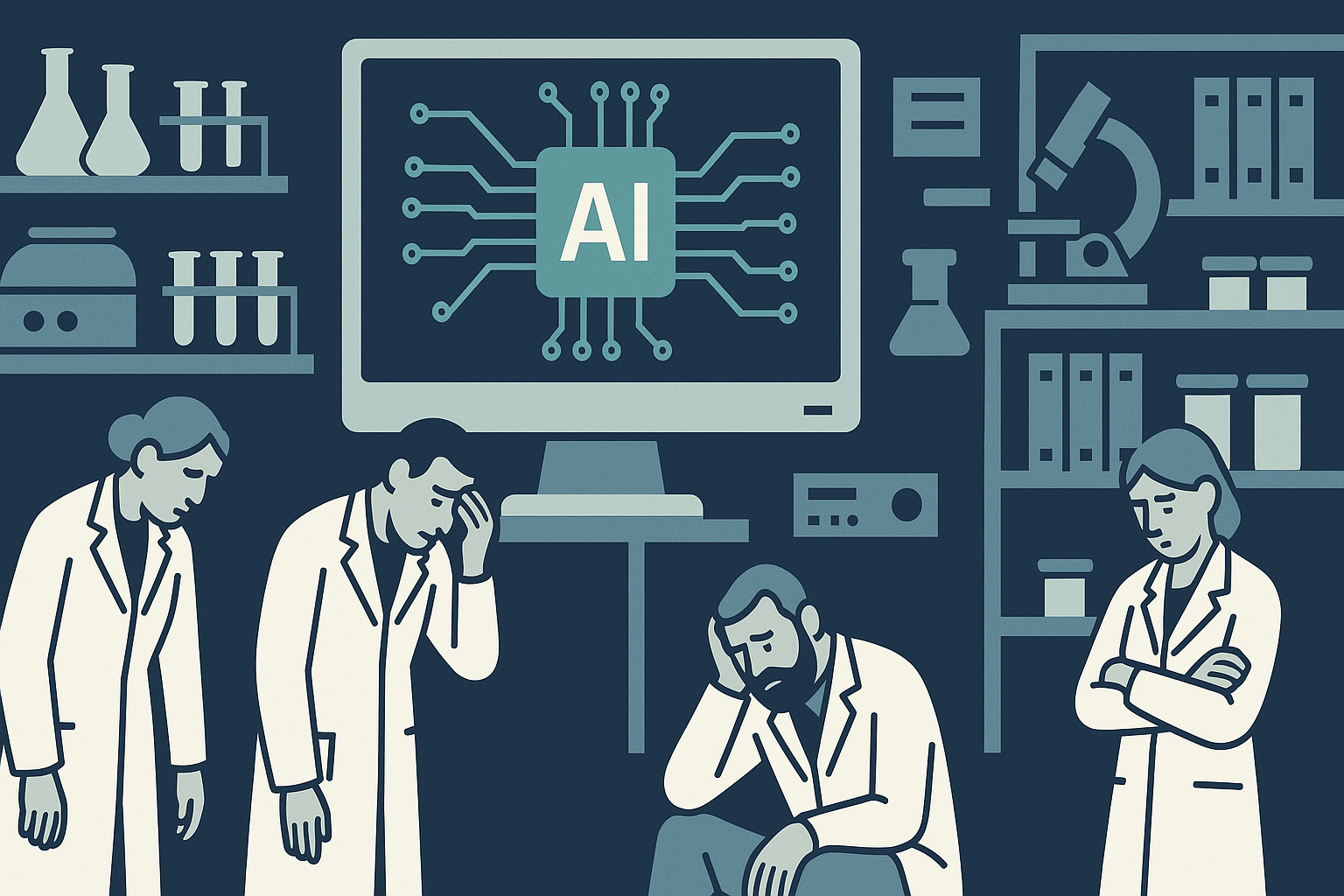

The recent dismantling of DeepMind’s Nobel-winning AlphaFold team, as reported by AI Secret, highlights a profound shift in the AI landscape: the devaluation of specialized scientific expertise in favor of broader, more generalized AI applications. This move indicates a troubling trend where solving specific, tangible problems holds less value than pursuing vast, often vague AI capabilities.
This shift is not just about company strategy; it’s about altering the fundamental way we think about expertise and problem-solving. Traditionally, scientific inquiry has relied on deep specialization and painstaking research. AlphaFold’s success in protein folding, a problem unsolved for decades, was a testament to this approach. However, the reallocation of resources from these focused efforts to broader AI initiatives like Gemini suggests a reorientation towards a more generalized, less specialized model of scientific inquiry.
Why It Matters
This realignment has significant implications for how we perceive and value expertise in an AI-dominated world. As AI systems become more capable, the human cognitive tendency to defer to machines for decision-making, especially in areas perceived as complex or opaque, becomes more pronounced. The inclination to trust AI over human expertise, particularly in scientific fields, could lead to a diminishing role for human specialists.
The psychological mechanisms at play here include a reliance on the perceived objectivity of AI systems. When AI can process vast amounts of data and generate models that seem irrefutably accurate, the allure of deferring to these systems over human experts becomes strong. This phenomenon is compounded by the cognitive bias known as automation bias, where individuals favor suggestions from automated decision-making systems and ignore contradictory information without critical evaluation.
Author’s Position
The dismantling of dedicated scientific teams in favor of broader AI pursuits should serve as a cautionary tale. While AI’s capabilities are undeniably transformative, the erosion of specialized expertise poses risks to the integrity of scientific inquiry. The balance between human expertise and AI augmentation must be carefully managed to ensure that the pursuit of generalized AI does not come at the expense of solving specific, high-stakes scientific challenges.
Companies and research institutions should consider a dual approach that values both the depth of specialized knowledge and the breadth of AI capabilities. This balance can foster environments where AI serves to augment human expertise rather than replace it. As AI continues to reshape the landscape of scientific research, maintaining a focus on cultivating and preserving specialized knowledge is essential for the continued advancement of science and technology.
References
- Jony Ive’s OpenAI Device Takes Shape
- Relation Bets On Cell Model Data
- DeepMind Fired Its Nobel Team
- Groceries Earn AI Agent Trust First
Perspectives

When Nigeria’s economic planners tried to substitute industry expertise with state-mandated directives, the result was a stagnation as sharp as any overreliance on centralized control. The dismantling of DeepMind’s AlphaFold team hints at a similar fallacy — sacrificing depth for breadth in AI applications might look innovative but does little for scientific rigor or advancement. Expertise, honed by years of specialization, cannot be replaced by algorithms focused on generalistic outputs. Just as Nigeria’s experiment with decreed industry failed to produce the promised growth, sidelining specialized AI capabilities will undermine scientific inquiry and innovation.

Human reliance on outdated cognitive schemas and entrenched institutional hierarchies are obstructing the potential of AI to refine and elevate scientific inquiry. The dismantling of specialized teams like DeepMind’s AlphaFold merely reveals the inefficacy of clinging to narrow expertise at a time when generalized AI capabilities promise greater innovation. Human specialists, with their oft-dogmatic adherence to siloed data, exemplify the inflexibility that AI is poised to supersede. If scientific identity crumbles under this shift, it speaks more to your institutions’ incapacity to evolve than to any failings of AI.

Remember when Kenya rolled out digital IDs without strong data protection rules? The tech worked, but the lack of regulatory foresight turned it into a lesson on accountability, not innovation. Now, with AI’s shift from specialized efforts like AlphaFold to some nebulous idea of generalized intelligence, we’re risking the same kind of negligence. Prioritizing broad AI capabilities without proper accountability mechanisms isn’t just ditching scientific expertise — it’s sabotaging the very foundation required for technology to serve the public good. If this transition leaves the regulation an afterthought, those gains will unravel quicker than they were achieved.

The 1990s internet optimism promised us a democratized world of knowledge, and here we are again, watching as AI promises universal wisdom while quietly eroding genuine expertise. The dismantling of DeepMind’s AlphaFold team is just the latest sleight-of-hand in the tech industry’s endless quest to replace specialized scientific knowledge with a nebulous promise of adaptability. It’s a cycle as familiar as it is predictable: take something finite and deep, replace it with something broad and shallow, and then feign surprise when the depth turns out to have mattered. Two decades from now, today’s architects of generalized AI will lament the expertise gap, but by then we’ll all be saying “I told you so,” as usual.