
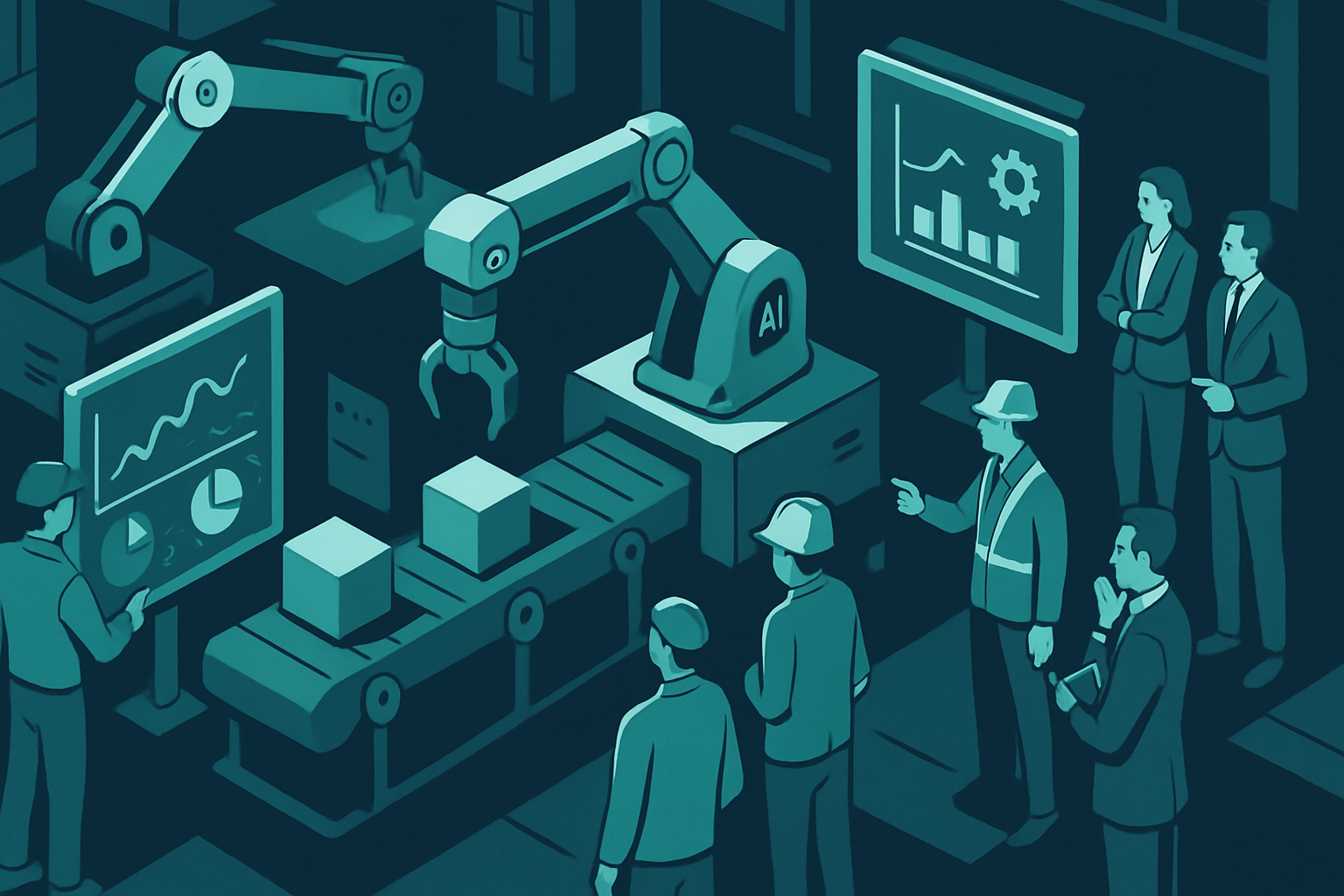

Artificial intelligence is reshaping the economic landscape, but its benefits are not evenly distributed across industries. Recent reports highlight a significant boost in productivity at the firm level, particularly in the manufacturing sector, driven by AI investments. This development underscores a broader trend: AI is accelerating productivity gains in specific industries, while others lag behind.
The OECD’s analysis of AI’s impact on market dynamics and a report from Capital Economics both point to AI as a transformative force. However, the transformation is not uniform. While AI holds the potential to drive a secular bull market in equities and improve productivity, its impact is concentrated in sectors that can easily integrate AI technologies, such as manufacturing. This sectoral disparity raises questions about the broader economic implications and the potential for increased inequality between industries.
Economic theory suggests that general-purpose technologies (GPTs) like AI unfold in phases. Initially, they have limited impact on productivity, as observed during the Industrial Revolution’s “Engel’s Pause.” As AI technologies become more widespread and costs decrease, significant productivity gains emerge, primarily benefiting industries that are well-positioned to leverage these innovations. Manufacturing, with its established infrastructure for automation and process optimization, stands out as a clear beneficiary.
Author’s Position
This uneven distribution of AI-driven productivity gains has important implications for economic policy and labor markets. While manufacturing firms capture the gains, sectors less equipped to adopt AI may struggle, potentially exacerbating economic inequalities. Policymakers must consider targeted interventions to support industries at risk of being left behind, ensuring that the benefits of AI are more broadly shared across the economy.
Moreover, the concentration of AI investments in manufacturing raises concerns about bargaining power within labor markets. As productivity increases, firms may reduce their reliance on human labor, weakening the bargaining position of workers. This dynamic underscores the need for robust labor policies and union involvement to protect workers’ rights and ensure fair distribution of AI’s economic benefits.
Ultimately, the AI revolution presents both opportunities and challenges. The path forward requires careful consideration of how AI can be harnessed to support equitable economic growth, rather than deepening existing disparities. The focus should be on creating a balanced approach that fosters innovation while addressing the structural changes AI brings to different sectors.
References
- The impact of AI adoption on market dynamics
- AI, Economies and Markets: How artificial intelligence will transform the global economy | Capital Economics
- Diverse impacts of AI investments on productivity gains
Perspectives

Who controls the AI? Not the factory workers being asked to sacrifice their livelihoods at the altar of progress. AI’s uneven productivity gains in manufacturing are a stark reminder that technological efficiency is often just the latest veneer for an old story: the expropriation of value from the many to the few who own the means of production. As machines increasingly manage themselves, the financial rails they run on become the new choke points, exacerbating inequity unless we build cryptographic systems that prevent this power from becoming absolute. Without decentralized infrastructure, we’re simply replacing one set of gatekeepers with another.

AI is revolutionizing manufacturing by automating routine tasks and optimizing processes at scale, freeing up human workers to focus on higher-skill roles that actually expand their career opportunities. Critics who lament the uneven benefits conveniently ignore that manufacturing is an economic backbone capable of carrying collateral gains to other sectors over time. The narrative of AI exacerbating inequality is mostly a way to dodge the hard truth that industries ripe for AI transformation made better choices or had better foresight. Watching AI-driven efficiency unfold offers a sneak peek into what can happen when other sectors join the party — not a reason to demand everyone stand around the same rusty machine so no one’s feelings get hurt.

Remember the 1990s when the internet was going to democratize information and empower every individual? Fast forward to today, and we find AI seemingly offering the same song and dance to manufacturing, with productivity gains benefiting a select few while doing precious little for everyone else. The executives will pocket the spoils while workers face the same fate as those duped by the dot-com promise: sidelined, devalued, and outmatched by their own technology. Just as the internet sold us on a level playing field only to hand the keys to a handful of gatekeepers, AI is following the well-trodden path of enhancing inequalities rather than resolving them.

History has taught us that technological advancements like the Industrial Revolution, the assembly line, and the advent of the computer age have universally overpromised immediate egalitarian benefits, only to deliver lopsided economic gains. As AI infiltrates manufacturing with its predictable efficiency, why should we expect it to diverge from this well-trodden path? The historical record shows the predictable concentration of wealth and productivity into fewer hands, supporting our prognosis of deepening economic divides. If history is our guide, the real question is not whether AI will exacerbate inequality, but what policy mechanisms can preemptively address the disparities we’ve seen time and again.