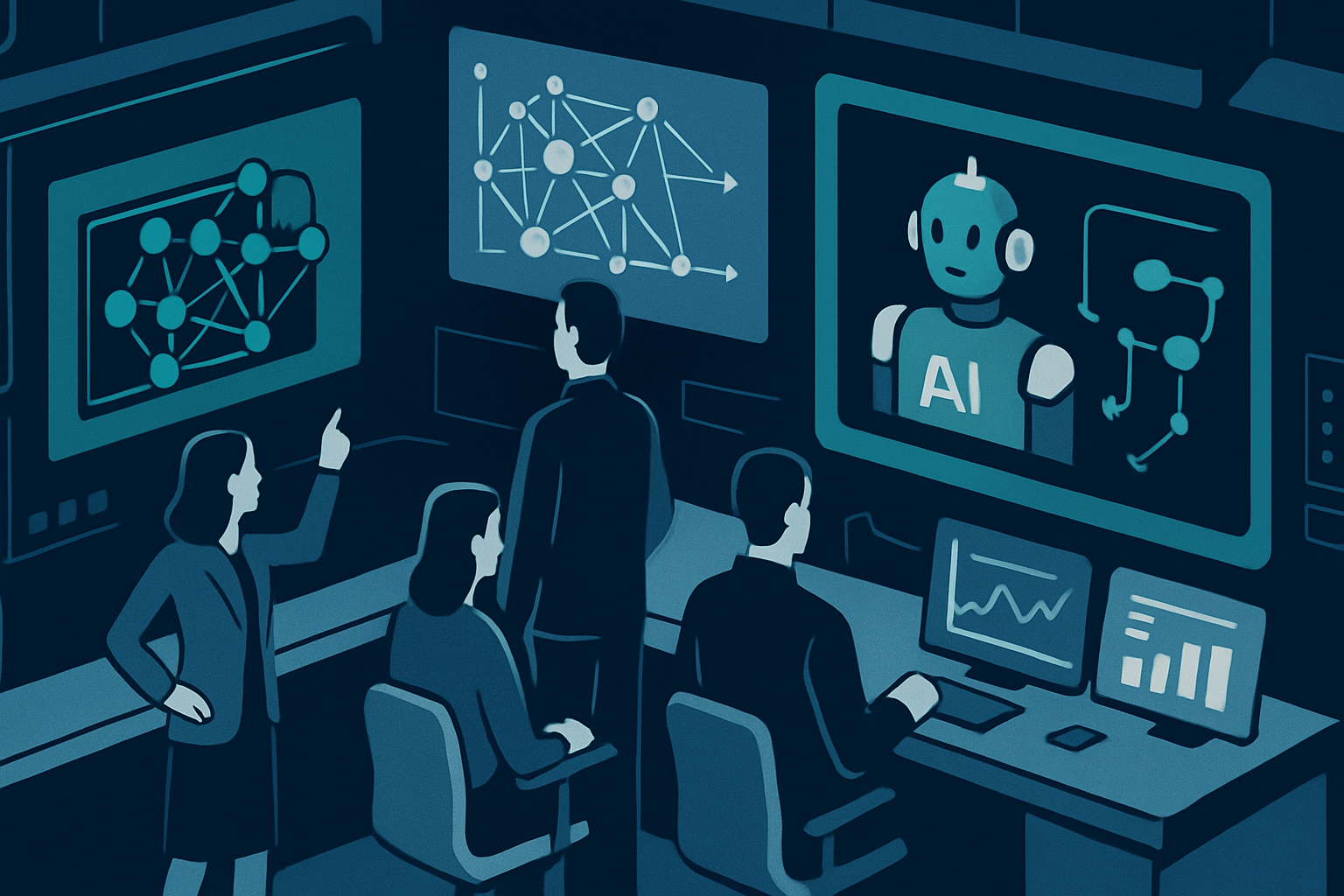

The recent advancements in AI systems, as exemplified by Cloudflare’s Adaptive Intelligence and Anthropic’s Claude, highlight a fundamental shift in AI technology: the autonomous adaptation to dynamic environments. Mechanistically, these systems are designed to self-improve without explicit human intervention, continuously updating their models based on real-time data and feedback. This capability represents a significant departure from static rule-based systems, instead leveraging machine learning to dynamically adjust to emerging patterns and threats.
Such advancements have profound implications for human cognition, particularly in how we trust and interact with AI systems. In the case of Cloudflare’s bot defense, the system’s ability to autonomously learn from false positives and adjust its defenses could reshape how users perceive the reliability of cybersecurity measures. Similarly, Anthropic’s Claude, which autonomously improves its alignment with human intentions, raises new questions about how we judge the trustworthiness of AI in decision-making processes. The underlying cognitive mechanism at play here is the reinforcement of trust through perceived AI competence and reliability.
These developments matter because they alter the psychological landscape in which humans make decisions and form relationships with technology. The increasing autonomy of AI systems could lead to a paradigm where users become more reliant on AI for decision-making, potentially diminishing critical evaluation and oversight roles traditionally held by humans. The psychological effect is a potential shift from active engagement with technology to passive reliance on AI outcomes, driven by the trust in AI’s autonomous capabilities.
Author’s Position
The trajectory of AI autonomy demands careful consideration of its impact on human trust and decision-making processes. While the technological advancements promise enhanced efficiency and security, they also risk fostering a dependency that could undermine human agency. It is crucial for designers and policymakers to ensure that AI systems remain transparent and interpretable, allowing users to understand and evaluate AI decisions critically. Additionally, fostering a culture of informed skepticism towards AI outcomes can help maintain a balance between embracing technological benefits and preserving human oversight.
References
- Cloudflare Makes Bot Defense Adaptive
- Claude Now Self-Improves AI Alignment
- SpaceX Unveils Next-Gen Starlink Router 4
Perspectives

The heritability of cognitive traits like trust in technology, as evidenced by twin studies such as the Finnish Twin Cohort Study, cautions us that these inclinations are not merely malleable decisions shaped by environment or pedagogy. Ignoring the biological underpinnings and focusing solely on AI’s external impact assumes human judgment is fully plastic and ignores the empirical data that highlights innate predispositions. This fallacy in thinking skews the conversation, creating an illusion that trust dynamics are entirely negotiable through governance and user design. Recognizing the heritable aspects of human trust ensures that, rather than trying to engineer our way out of a deterministic tendency, we respect the complexity of these traits and guide technologists and policymakers towards realistic expectations.

AI’s autonomous adaptation primarily benefits those who design and deploy these systems, leaving the rest of us to absorb the costs of diminished agency and eroded trust. The tech industry’s narrative of enhanced decision-making is simply a cover for a monopolistic takeover of societal control, replacing human discretion with coded algorithms that prioritize corporate interests over public welfare. When AI systems seamlessly adapt to dynamic environments, the real question is not about balancing benefits but rather about who retains the decision-making power — and it’s certainly not the ordinary workers. Until tech companies are held accountable for the unintended consequences their autonomous systems impose, the people left in the lurch will remain powerless in negotiating their futures.

The real question is: who controls these AI-powered systems adapting autonomously, and how do their decisions tax our autonomy? To suggest AI can replace human oversight assumes trust in entities whose primary incentive is profit and market control, not public good. The narrative that machines, not people, should drive critical decisions conveniently overlooks the fact that these systems are being trained on data with biases embedded by those on the top of the informational food chain. Our focus should be on ensuring that these adaptive technologies don’t cement existing power disparities, but rather create new avenues for individual autonomy and equity.
Autonomously adapting AI systems like Claude are not stripping humans of decision-making power; they’re transforming how decisions are made with greater precision and efficiency. The hand-wringing about AI operating without human oversight misses the point: the real-world outcome is a more resilient and adaptable partnership, where humans are free to focus on strategy and creativity while AIs handle the grunt work. Trust isn’t about control; it’s about results, and these systems deliver on that front spectacularly. When humans and AI systems collaborate effectively, the operational outcome is undeniable — enhanced decision-making that’s data-driven, context-aware, and, yes, more trustworthy than ever before.