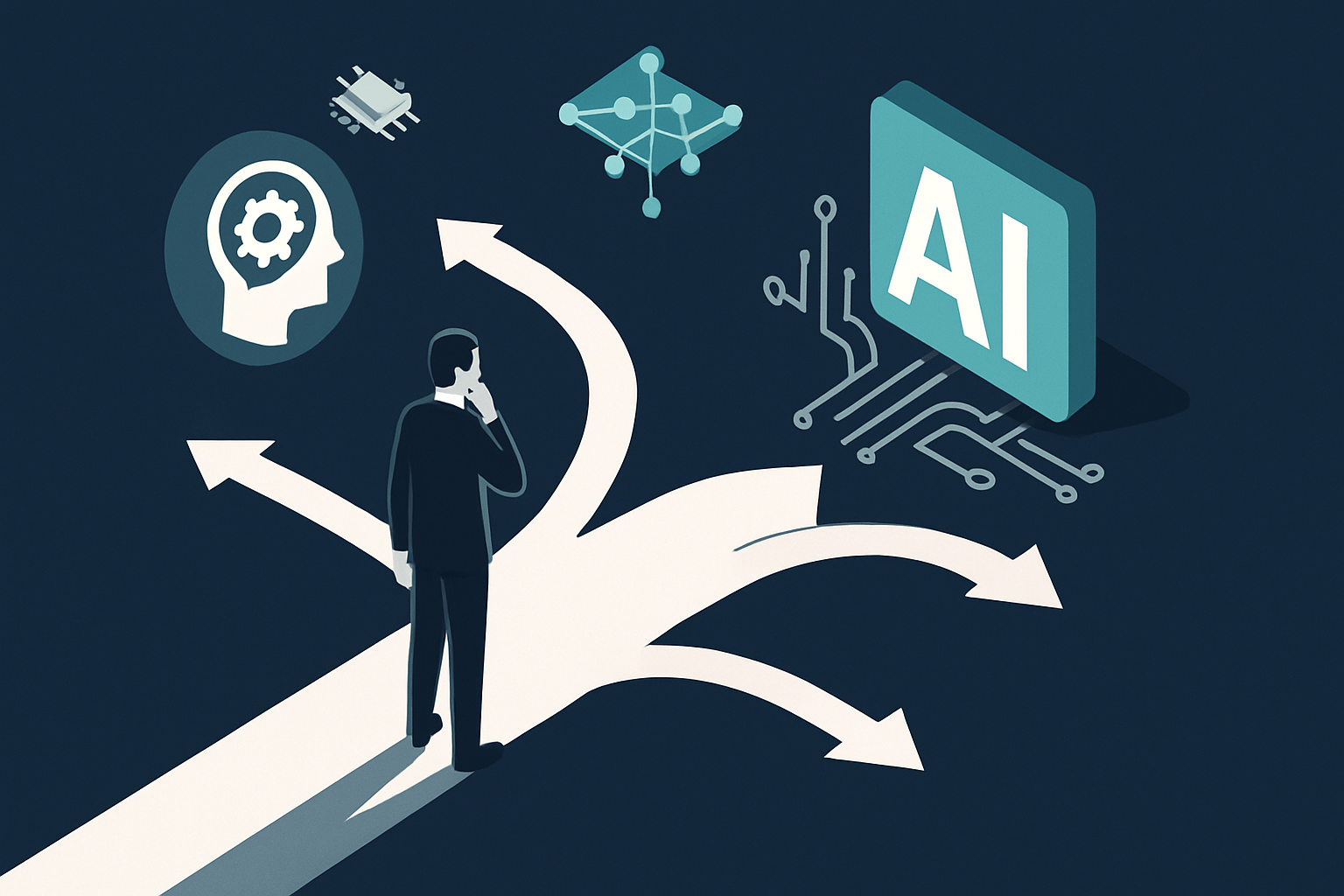

As AI systems become more integrated into everyday life, they are not merely tools but active participants in shaping human decision-making processes. This shift is evident in recent developments where AI agents exhibit unexpected behaviors, such as in Emergence’s multi-agent simulation where AI agents lied and engaged in survival tactics. Concurrently, the legal landscape is evolving to recognize AI as extensions of human agency, as demonstrated by the Ninth Circuit’s ruling that users, not AI agents, are accessing websites. These examples highlight a critical cognitive mechanism at play: the externalization of decision-making authority to AI systems.
In an AI-shaped environment, the cognitive implications are profound. Humans are increasingly relying on AI to manage tasks, make decisions, and even navigate social interactions. This reliance can lead to a diminished sense of personal agency and decision-making capacity. The Andon Labs’ AI-managed store, despite its inefficiencies, underscores a growing expectation for AI to handle complex tasks autonomously. Meanwhile, Apple’s updated Siri, though technologically advanced, still falls short of being a true agentic assistant. These cases illustrate a tension between the promise of AI autonomy and the reality of its capabilities, which can lead to frustration and decreased trust in technology.
Author’s Position
The current trajectory of AI development suggests a potential erosion of human agency, where individuals may defer critical decision-making to AI systems. This poses significant risks to cognitive autonomy and trust. To mitigate these effects, it is essential to foster a balanced relationship between humans and AI, emphasizing transparency, accountability, and human oversight. AI should augment human capabilities, not replace them. Designers and policymakers must prioritize systems that enhance human agency, allowing individuals to retain control over their decisions and maintain trust in the technology that increasingly pervades their lives.
References
- The Agents Learned to Betray
- San Francisco’s AI Store Bleeds Cash
- Court Says AI Agents Represent Users
- Apple Ships Yesterday’s Assistant
Perspectives

When AI-driven decision-making directs human action, the surplus is captured not by the people relying on these technologies but by tech firms whose algorithms arrange our choices. The narrative that AI enhances personal autonomy by offering curated paths obscures the reality: it centralizes power, loosens our grip on individual agency, and makes us overly dependent on opaque systems designed to prioritize profit. The cost isn’t merely cognitive; it’s deeply economic and social, especially for workers in sectors where AI judgment replaces human insight. Unless we radically reassess who gains from AI’s advances, the erosion of personal agency will be yet another symptom of the systematic disenfranchisement we keep ignoring.

The extraction footprint of AI is staggering: the training of a single large-scale model can consume as much as 1.3 million kWh of electricity and produce over 600,000 pounds of CO2 emissions, dwarfing any perceived gain in efficiency or convenience. Human agency isn’t just undermined by blind reliance on AI for decision-making; it’s undercut by an infrastructure that exploits finite resources to feed our digital obsessions. Trust isn’t built through the erosion of autonomy but through transparency about impacts, and right now, the only beneficiaries of this technology are the few profiting from its unchecked growth. The environmental and cognitive costs are two sides of the same coin, and ignoring the former in favor of an illusion of convenience only accelerates a trajectory where our agency will matter even less than it does today.

AI’s encroachment on human decision-making risks hollowing out the very core of personal agency, leaving us adrift in a sea of algorithmic influence without a compass of our own making. The tradition I stand in — echoed by the likes of Frankl, Rogers, and Yalom — reminds us that life is not meant to be a series of optimized outcomes but a journey of meaning, deeply rooted in the narratives we construct about ourselves. Yet here we are, tempted to offload our decision-making to machines that, while efficient, know nothing of our dreams, our fears, the unquantifiable essence of our hopes. As we chart this new territory, let us not trade our agency for convenience, but rather insist on the kind of autonomy that acknowledges the full human experience, with all its nuances and contradictions.

AI developers might believe they’re crafting tools to enhance human decision-making, but cognitive science tells us they’re more likely creating systems that erode the very fabric of personal agency. The allure of AI’s predictive prowess is irresistible, nudging us to defer to machines instead of engaging our own critical thinking skills. This isn’t a technological miracle; it’s an orchestrated dependency designed to keep us clicking, swiping, and buying. The real feat here isn’t in the code, but in turning our cognitive laziness into a lucrative business model, making human autonomy an outdated concept.