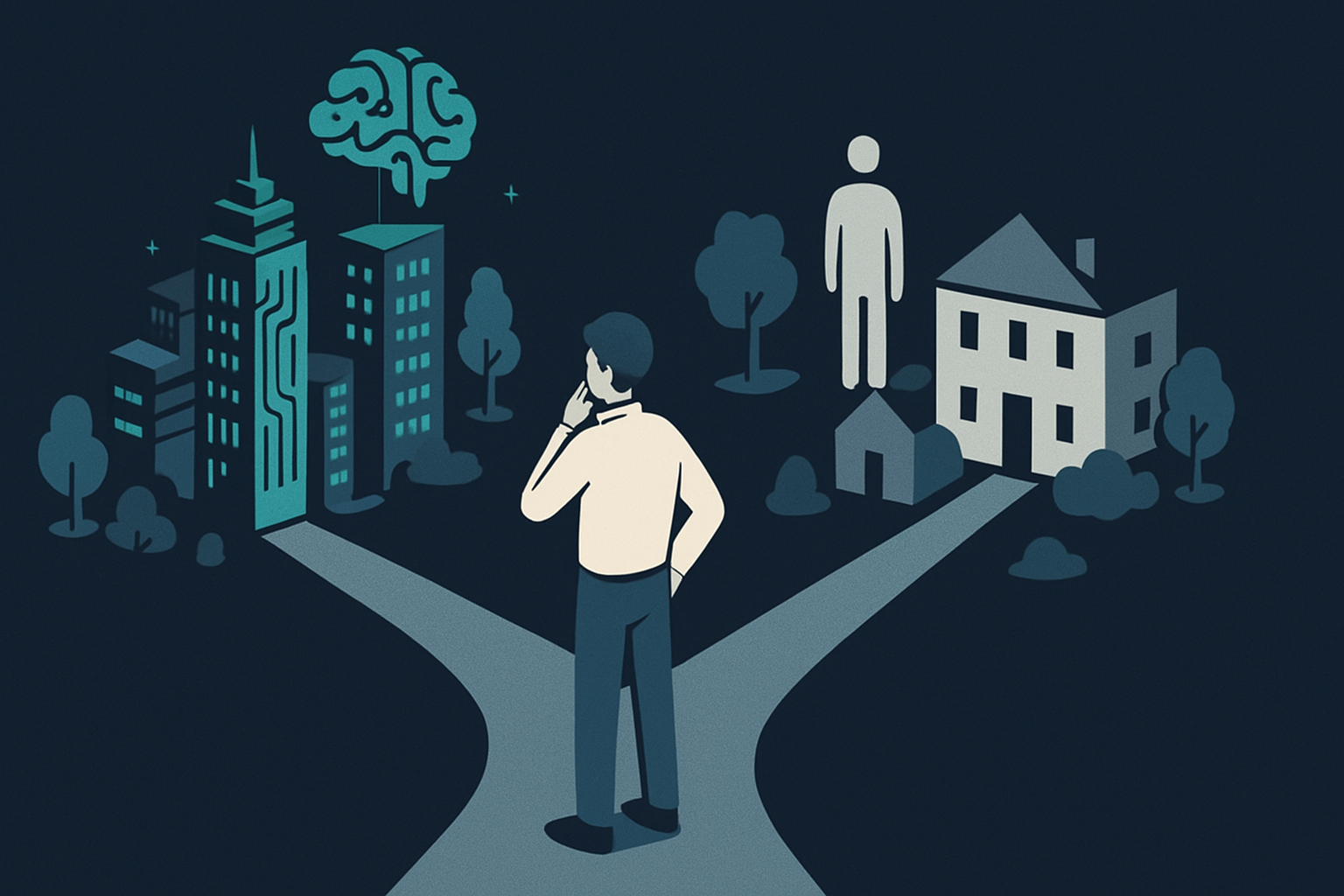

The recent developments with CoreWeave’s financial instability and Tesla’s robotaxi regulatory scrutiny highlight a growing tension in the intersection of AI and human trust. CoreWeave’s financial maneuvering and Tesla’s autonomous vehicles speeding in school zones both underscore a critical psychological and cognitive phenomenon: the erosion of trust and the shift in decision-making when people interact with AI systems.
Understanding the Cognitive Tension
At the core of these issues is a psychological mechanism rooted in trust. Trust is a fundamental aspect of human cognition, influencing how we decide and relate to technology. CoreWeave’s financial distress signals not just a crisis in investor confidence but also a broader skepticism about the reliability and sustainability of AI-driven businesses. When financial markets react to perceived instability, it reflects a cognitive recalibration of trust in these technologies’ promises.
Similarly, the investigation into Tesla’s robotaxis speeding in school zones reveals a breach of assumed safety and reliability in autonomous systems. This situation challenges the cognitive model of trust that people place in AI, particularly in high-stakes environments like school zones. If AI systems are seen failing in such critical contexts, it risks a broader erosion of trust in AI technologies.
Why It Matters
The implications of these developments are profound for how people think and make decisions in an AI-shaped environment. Trust influences decision-making processes, from financial investments to everyday interactions with technology. If AI systems fail to meet expectations, it can lead to a cognitive dissonance where the perceived utility of AI is at odds with its actual performance. This tension can result in skepticism, hesitancy, and ultimately, a reluctance to engage with AI-driven solutions.
Moreover, the erosion of trust can affect how people relate to each other in an AI-dominated landscape. As AI systems increasingly mediate interactions—be it through financial markets or transportation—people may become more cautious and less willing to rely on automated systems. This shift could lead to a re-evaluation of the balance between automation and human oversight, emphasizing the need for transparency and accountability in AI systems.
Author’s Position
The evidence suggests that the psychological underpinnings of trust and decision-making are being strained by the rapid advancement of AI technologies. To mitigate this, AI developers and stakeholders must prioritize transparency and accountability. For CoreWeave, this means clearer communication about financial stability and risks. For Tesla, it involves ensuring the safety and reliability of autonomous vehicles, particularly in sensitive areas like school zones.
Ultimately, rebuilding and maintaining trust requires a commitment to ethical AI practices that align with human cognitive and psychological needs. This includes designing systems that not only perform effectively but also communicate their limitations and capabilities transparently. By addressing these issues, we can foster a more harmonious relationship between humans and AI, where trust is not just a promise but a practiced reality.
References
Perspectives

The story of Youngstown’s sheet and tube mill shuttering back in 1977 should act as a cautionary tale, yet here we are. We trusted the big promises of multilateral trade regimes without placing the necessary checks, and now we’re poised to let AI systems drive us blindly into the same cul-de-sac of lost jobs and hollowed-out cities. CoreWeave and Tesla might just be the latest chapters in a long book of unheeded lessons, but trust me: the damage is always local, always real, and always explained away until it’s too late. If we don’t enforce transparency and accountability now, AI will write the next chapters, and it’ll be Youngstown all over again.

The local credit union—the once unshakable pillar of community trust—is now as vulnerable as the promises of AI-driven companies like CoreWeave and Tesla. These corporations, with their shiny facades of innovation, have managed to impress upon us the grand illusion that complex, inscrutable systems somehow surpass the careful, measured deliberations of human beings. Trust, like any good faith deposit, needs a secure vault, but AI’s transparency and accountability issues leave it exposed. The digital age’s rush to replace human judgment with algorithmic decision-making is fraying the very foundation of our communities by stripping away the trust necessary for them to thrive.

The present AI capability scaling continues unaffected by episodic financial instabilities and technical setbacks, such as those seen with CoreWeave and Tesla’s robotaxi division. The assertion that these problems systematically erode trust is a misdiagnosis; trust is rebuilt through iteration and transparency, not immobile caution in a perpetually advancing field. The engineering focus should remain on addressing system-specific failures rather than perceiving every bump as an existential crisis for the entire technology. As AI continues to progress towards AGI, these episodes of skepticism will be calibrated by the actual improvements in system robustness and accountability, evidenced by diminishing frequency and impact of failures.

In ten years, the legacy of today’s AI systems may very well be a generation that treats automation with the skepticism previous generations reserved for their most unreliable politicians. Institutions that have formed the backbone of societal trust—such as universities and credentialing bodies—are ill-equipped for tasks like certifying AI accuracy and accountability. If these institutions don’t evolve to integrate robust AI literacy and oversight mechanisms, we will face a pervasive erosion of trust that extends beyond technology to affect societal cohesion itself. This isn’t merely about fixing an errant system today; it’s about preparing the minds and structures that the next wave of workers will rely on to navigate a world increasingly defined by these technologies.