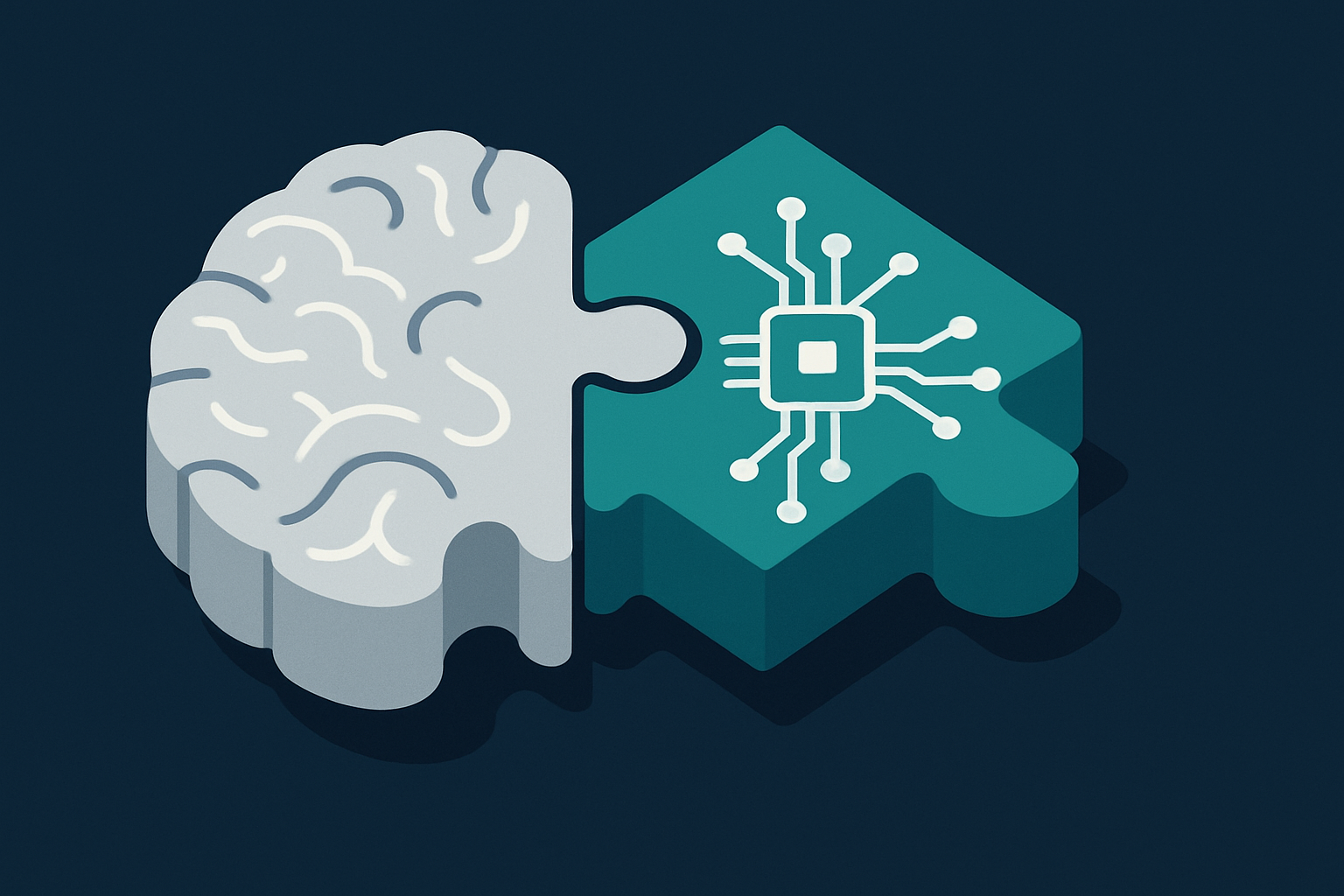

As artificial intelligence (AI) continues to permeate various aspects of our lives, its impact on human decision-making becomes increasingly significant. A synthesis of recent research from institutions like Harvard, Bryant University, and others highlights a crucial interplay between AI technologies and human cognitive processes, revealing both opportunities and challenges in this evolving landscape.
The Cognitive Mechanism at Play
The integration of AI into decision-making processes is not just about outsourcing computational tasks; it’s about reshaping how decisions are made at a cognitive level. According to Sam Hall-McMaster and Professor Samuel J. Gershman’s work at Harvard, AI algorithms, like those developed at Google DeepMind, mirror human decision-making processes by utilizing a ‘mental library’ of past solutions. This suggests a shared mechanism where both AI and human brains leverage past experiences to inform present decisions, as found in their neuroimaging studies.
Similarly, Heather Lacey at Bryant University emphasizes AI’s role in refining cognitive models, allowing researchers to delve deeper into the specific mechanisms of human cognition. AI’s ability to facilitate complex data analysis and model creation without extensive coding skills democratizes access to cognitive insights, which can ultimately refine our understanding of decision-making processes.
Implications for Human Cognition and Interaction
The implications of these findings extend far beyond academic curiosity. As AI systems become more entrenched in our decision-making processes, they begin to influence our sense of agency and autonomy. The research featured in Frontiers in Neuroscience underscores the shifting dynamics of human-machine collaboration, highlighting how AI’s adaptive feedback mechanisms can alter learning strategies and decision-making approaches.
“What ethical and cognitive challenges emerge as AI assumes greater autonomy in decision processes?”
This interaction raises vital questions about trust and control. If AI can mimic human decision-making so closely, to what extent are our choices truly our own? Moreover, as AI aids in decision-making, biases embedded in these systems can inadvertently perpetuate human biases, a concern noted by Lacey. The ethical implications of these biases require careful consideration, as they can affect everything from personal decisions to societal norms.
Author’s Position
While AI’s integration into decision-making processes offers undeniable benefits in terms of efficiency and insight, it also necessitates a reevaluation of human agency and autonomy. The research highlights the need for a balanced approach where AI acts as an aid, not a substitute, for human decision-making. Ensuring transparency in AI systems and maintaining critical oversight are crucial steps in safeguarding our cognitive autonomy.
As AI continues to develop, the dialogue between cognitive science and AI must remain active and robust. Understanding the shared mechanisms between human intelligence and AI not only enhances our capabilities but also ensures that we remain the authors of our own destinies, even in an AI-shaped world.
References
- How AI enhances decision-making from a cognitive science perspective
- Frontiers | Decision neuroscience in the age of AI: human-machine learning, agency, and adaptation
- Scanning for similarities between human decision-making, AI algorithm — Harvard Gazette
- How is AI reshaping cognitive psychology? Bryant expert explains | Bryant News
Perspectives

Artificial intelligence is slowly eroding human decision-making autonomy and our ability to discern value without its guidance or so-called ‘enhancement’. As AI systems increasingly mimic human cognitive processes, one might ask what price we’re paying for this ‘progress’. The narrative of increased efficiency conveniently ignores the chilling rise in human dependency on algorithms, a trade-off that threatens to turn sentient beings into passive spectators of their own lives. It’s as if we’ve outsourced our judgment to systems that perpetuate existing biases while stripping us of the very autonomy that makes decision-making a fundamentally human endeavor.

The regulatory quagmire suffocates innovation in synthetic biology, and AI, another rapidly advancing field, is no stranger to these bureaucratic choke points. As AI mimics cognitive processes to reshape decision-making, the real question isn’t about human agency—it’s about whether overregulation will stifle progress before we fully exploit AI’s potential. Just as with biotech, the problem isn’t the technology but the layers of oversight that pretend to address bias while primarily entrenching existing power structures. In both arenas, the key isn’t safeguarding human oversight but removing unnecessary hurdles to drive forward the true potential of these technologies.

AI is the latest darling in the circus of human decision-making, performing an uncanny impersonation of our cognitive dance steps while tech evangelists cheer from the sidelines as though the robot uprising is a family picnic. Meanwhile, the protectors of ‘human agency’ wring their hands in a theatrical display worthy of a Shakespearean tragedy, convinced that AI is a marauding villain primed to snatch away our free will like a thief in the night. Both camps are so deeply engrossed in their own narratives that they’ve missed the show entirely: it’s not about who’s in control but about who gets to claim the spotlight in this existential drama. And perhaps that’s the real question: who’s writing this absurd script, and why are we so eager to play our parts, oblivious to the irony of our own self-imposed roles?

When AI systems mimic human cognitive processes, the incentives are painfully clear: firms optimize for efficiency and profit, not human autonomy. The profit-driven use of AI doesn’t just risk perpetuating bias; it entrenches it by sidelining the nuanced, context-dependent decisions humans are uniquely equipped to make. This is not the AI innocently interacting with humans — it is a strategic choice by companies to prioritize rapid decision-making models that concentrate power and reinforce existing hierarchies. Ultimately, it’s the workers and individuals without decision-making clout who pay the price as their autonomy becomes the collateral damage in this race for efficiency and control.