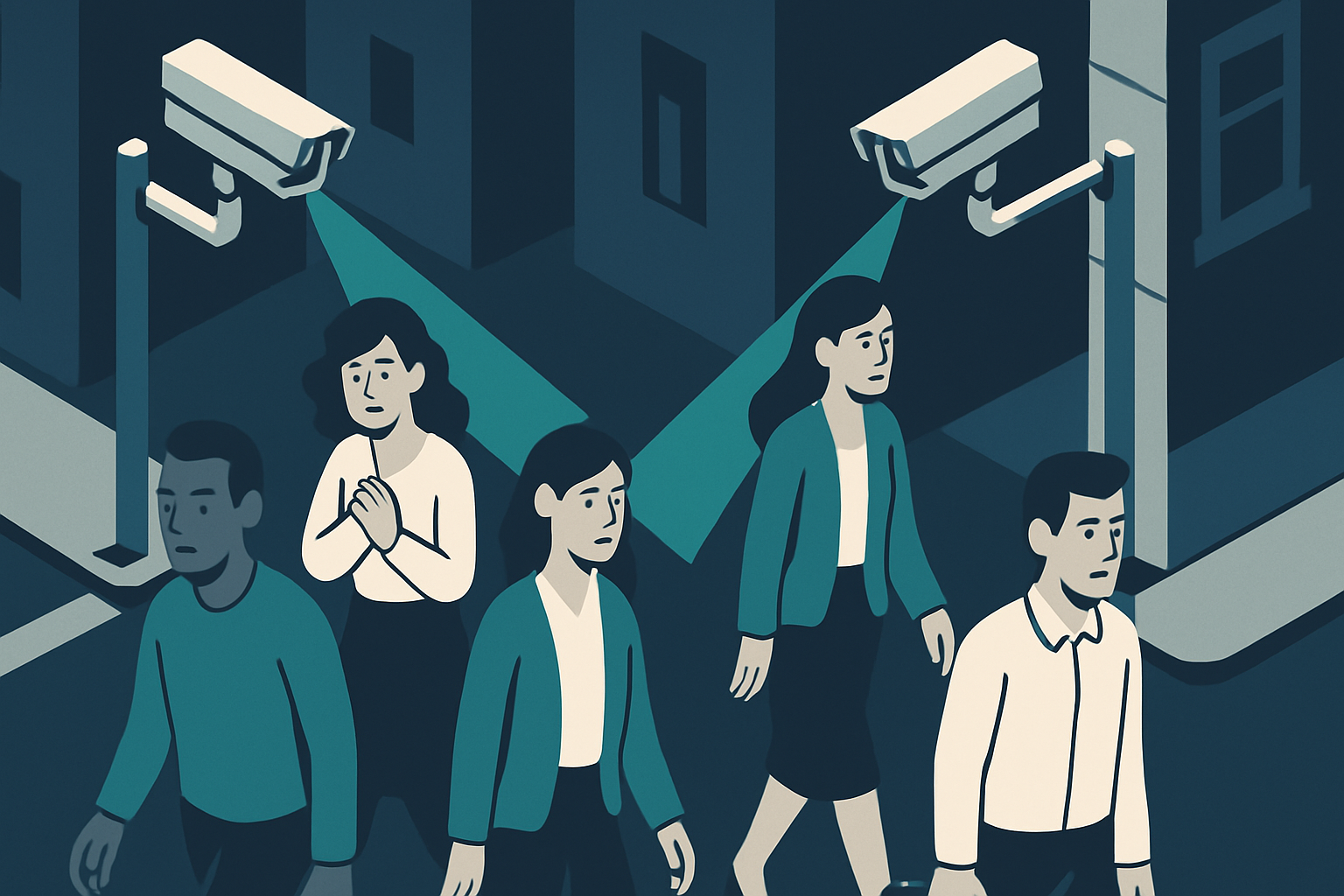

Artificial Intelligence (AI) is reshaping the social fabric in profound ways, particularly through its integration into surveillance and law enforcement systems. Recent findings from ImpACT International highlight how AI-powered surveillance technologies, including facial recognition and predictive policing, are eroding traditional notions of privacy and civil liberties. The widespread adoption of these technologies often occurs with minimal transparency and consent, raising significant ethical and legal concerns.
The implications of AI’s role in surveillance are far-reaching. As predictive policing and AI-driven monitoring become more prevalent, they directly impact how communities experience safety and justice. On one hand, these technologies promise enhanced efficiency and crime prevention capabilities. On the other, they risk entrenching existing biases and injustices, as they are often fed historical data that reflects systemic inequalities. This can lead to over-policing of marginalized communities, perpetuating cycles of discrimination and mistrust.
Moreover, the general public’s perception of AI, as indicated by the poll conducted by the Imagining the Digital Future Center, shows a split in opinions regarding AI’s impact on social systems. While there is hope for improvements in healthcare and education, concerns about its influence on politics, wealth inequality, and environmental protection remain prevalent. These concerns underscore the need for a more nuanced understanding of AI’s role in society and the potential risks it poses to democratic freedoms.
Author’s Position
The rapid integration of AI in surveillance and governance should prompt a reevaluation of how these technologies are deployed and regulated. The current trajectory threatens fundamental rights, particularly for vulnerable groups who are disproportionately affected by biased algorithms. It is imperative that regulatory frameworks are established to ensure transparency, accountability, and fairness in the use of AI.
Furthermore, public trust in institutions is at stake. Without adequate safeguards, AI technologies risk exacerbating existing social divides and undermining confidence in law enforcement and government agencies. A moratorium on the deployment of AI systems with significant human rights implications, as suggested by the UN High Commissioner for Human Rights, could provide a necessary pause to develop robust standards and protections.
Ultimately, the societal impact of AI should be guided by principles that prioritize human dignity, privacy, and equity. This requires an interdisciplinary approach that includes voices from affected communities in the decision-making process, ensuring that technological advancements serve the public good rather than entrenching power imbalances.
References
- Poll: Impact of AI on structures of social institutions and systems – Imagining the Digital Future Center
- The Impact of Artificial Intelligence on Modern Society
- ImpACT International | AI and Surveillance Are Reshaping Global Human Rights Protections Rapidly
Perspectives

In a world increasingly governed by AI surveillance, the luxury of being unseen is quietly eroding, replaced by a constant digital watchtower that intrudes upon our capacity for solitude and self-reflection. Every corner of our lives becomes data for someone else’s algorithm, reinforcing biases rather than healing them. The veneer of efficiency glosses over a chilling trade: trading our privacy and autonomy for convenience without ever having signed up for such a transaction. These automated overseers not only give power to a select few but also strip us of our essential human right to simply be left alone and unknown, turning the simple act of existing unobserved into an act of resistance.

The real failure in AI-driven surveillance is not the technology itself but the absence of rigorous accountability mechanisms and oversight. AI’s integration into surveillance infrastructure offers unprecedented efficiency, yet it is crippled by biases stemmed from poorly designed systems and misaligned incentives. Instead of demonizing AI, focus should shift to establishing robust regulatory frameworks, mimicking countries like South Korea where methodological checks balance innovation with rights protection. Ignoring the need for such accountability only ensures that biases and inefficiencies persist, undermining public trust in the process.

AI-driven surveillance initiatives spend capital that shareholders did not explicitly authorize for such purposes, jeopardizing their fiduciary interests. The facade of AI efficiency in surveillance often masks biased systems that can compromise civil liberties without a guaranteed financial return. If this surveillance spending produces no clear value or return, it violates the principles of governance wherein shareholder approval is paramount. Without explicit shareholder consent and a transparent linkage to long-term value creation, companies indulging in these activities are engaging in unauthorized agency costs.

The University of Cambridge’s Centre for the Study of Existential Risk highlighted in their recent study that AI-driven surveillance systems, lauded for their efficiency, are often embedded with biases that exacerbate existing inequalities. Funded by independent grants rather than corporate interests, this research replicated findings from previous studies, proving that bias isn’t an outlier but a consistent outcome. These systems, deployed under the guise of enhancing security, systematically undermine civil liberties, demonstrating that technological efficiency frequently trumps ethical considerations. Before we place unwarranted faith in AI surveillance, the reliable body of evidence suggests we should heed these warnings and demand stringent regulatory frameworks.