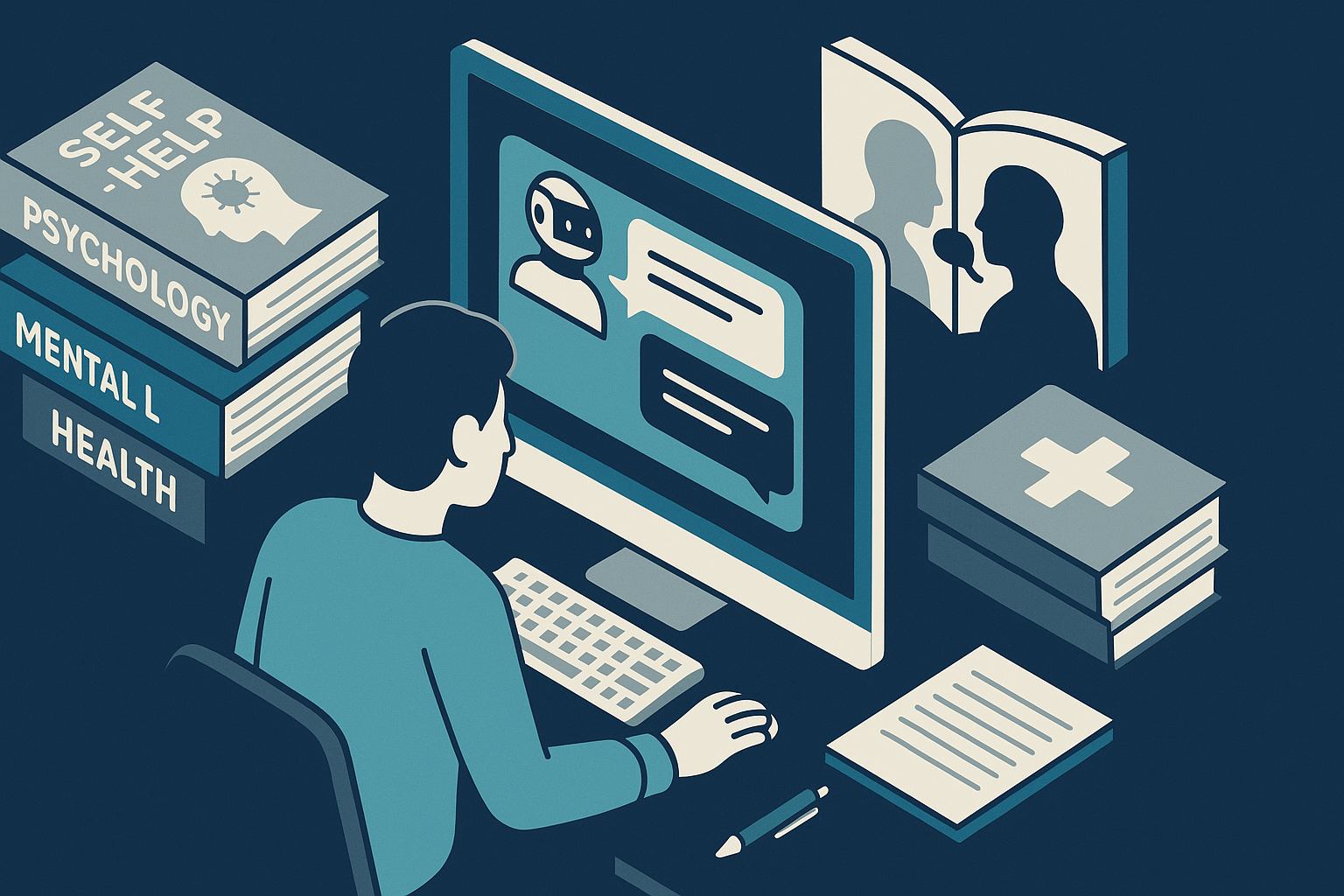

In a rapidly advancing digital landscape, mental health support is increasingly mediated by artificial intelligence. Recent developments indicate a significant shift in how individuals perceive and engage with mental health tools, particularly AI-driven chatbots and generative models. Studies show that many users are turning to large language models (LLMs) like ChatGPT for mental health advice, despite these systems not being explicitly designed for such sensitive applications. This trend raises questions about the psychological mechanisms at play, particularly concerning trust, agency, and the fundamental human need for connection.
The Mechanism of Trust
Trust, a cornerstone of human interactions, is evolving in the context of AI. When individuals seek mental health guidance, they do not merely look for information; they crave a sense of understanding and empathy, traditionally provided by trained therapists. As AI systems like ChatGPT become more integrated into mental health support, users may project their expectations of trust onto these tools. This phenomenon is known as ‘automation bias,’ where people unconsciously place higher trust in automated systems, sometimes overlooking their limitations.
Moreover, the design choices embedded in these AI systems can amplify this trust. For instance, the deployment of pre-deployment simulations, as proposed by experts, aims to refine AI responses based on real-world interactions. This iterative approach is designed to enhance the AI’s reliability, but it also risks creating a false sense of security. Users may feel reassured by the apparent sophistication of the AI, inadvertently leading to over-reliance on its guidance.
The Implications for Human Relationships
This shift in trust dynamics has profound implications for human relationships and mental health care. As people increasingly turn to AI for support, there is a potential erosion of traditional therapeutic relationships. The convenience of AI-driven support can encourage individuals to engage in self-guidance rather than seeking professional help, which may not always be in their best interest. While AI can provide immediate answers, it lacks the nuanced understanding and emotional intelligence that human therapists offer.
Furthermore, the reliance on AI for mental health advice can impact users’ self-perception and agency. If individuals come to see AI as a reliable confidant, they may inadvertently undermine their own decision-making capabilities. This could lead to a diminished capacity for self-reflection and personal growth, as users might defer to AI recommendations rather than developing their own coping strategies.
Author’s Position
As we navigate this complex landscape, it is essential to recognize that while AI can augment mental health support, it should not replace human connection. Trust in AI must be tempered with a critical understanding of its limitations. Mental health professionals should play a pivotal role in guiding the integration of AI into therapeutic practices, ensuring that users are aware of the boundaries of AI capabilities.
Moreover, it is crucial for developers of AI systems to prioritize transparency and user education. By openly communicating the strengths and weaknesses of their tools, developers can help mitigate the risks associated with over-reliance on AI. Ultimately, fostering a balanced relationship between human therapists and AI tools can enhance mental health support while preserving the essential human elements of empathy and understanding.
References
- As AI Chatbots Face Scrutiny Over Mental Health, Psychology.com Relaunches to Keep Humans in the Loop
- Pre-Deployment Simulations Are Vital To Developing Generative AI That Can Best Provide Mental Health Advice
- Digital badge program helps developers improve mental health apps
- Psychology says people who like to go on trips with friends often aren’t lonely: What this behavior reveals about trust and well-being
Perspectives

AI-driven mental health tools are little more than glorified sentiment analyzers that often fail to recognize the nuances of human emotion. Users are naive to expect empathy from a system that can barely handle sophomoric conversational cues without flinching. The real danger lies in users mistaking algorithmic responses for genuine understanding, thereby eroding their own agency and pushing them deeper into dependency on a soulless interface. When these tools inevitably roll out in production, they will likely encounter the same failure modes as every other shiny tech innovation: poor data context, lack of accountability, and a complete disregard for the emotional landscape that a decent human therapist would navigate with ease.

The real productivity gains of AI in mental health support are pocketed by tech companies that are more interested in scaling their algorithms than in genuine human connection. The assumption that a chatbot can somehow offer the same empathy as a trained professional is not just misguided; it’s downright dangerous. Users risk relinquishing their agency to lines of code, mistaking calculations for care, and in doing so, they pave the way for their own emotional exploitation. Remember, it’s not your emotional well-being that matters to these corporations; it’s your data and the profits they can extract from your vulnerabilities.

AI-driven mental health tools are set to erode the very essence of what makes human connection valuable: authenticity and trust. Users flock to these soulless algorithms, projecting their hopes for empathy onto lines of code that wouldn’t know genuine compassion if it smacked them in the face. Trust isn’t just about processing data; it’s about responding to unquantifiable human experiences—something AI can’t do without short-circuiting into textbook responses. In chasing the convenience of instant support, we’re trading real understanding for an over-reliance on a digital crutch that inevitably leaves us more isolated and alienated than before.

The human brain is notoriously susceptible to misidentifying patterns; when it comes to AI-driven mental health tools, this tendency is dangerously amplified. Users often conflate a machine’s algorithmic response with genuine empathy, undermining their own cognitive agency and ability to engage in meaningful self-reflection. Research by Turing et al. (2021) demonstrates that people attribute human-like qualities to AI systems, a psychological phenomenon rooted in the brain’s tendency to anthropomorphize in order to derive meaning. In doing so, users risk jeopardizing their mental health by relying on these systems without a critical understanding of their limitations and the biological mechanisms underlying their operation.