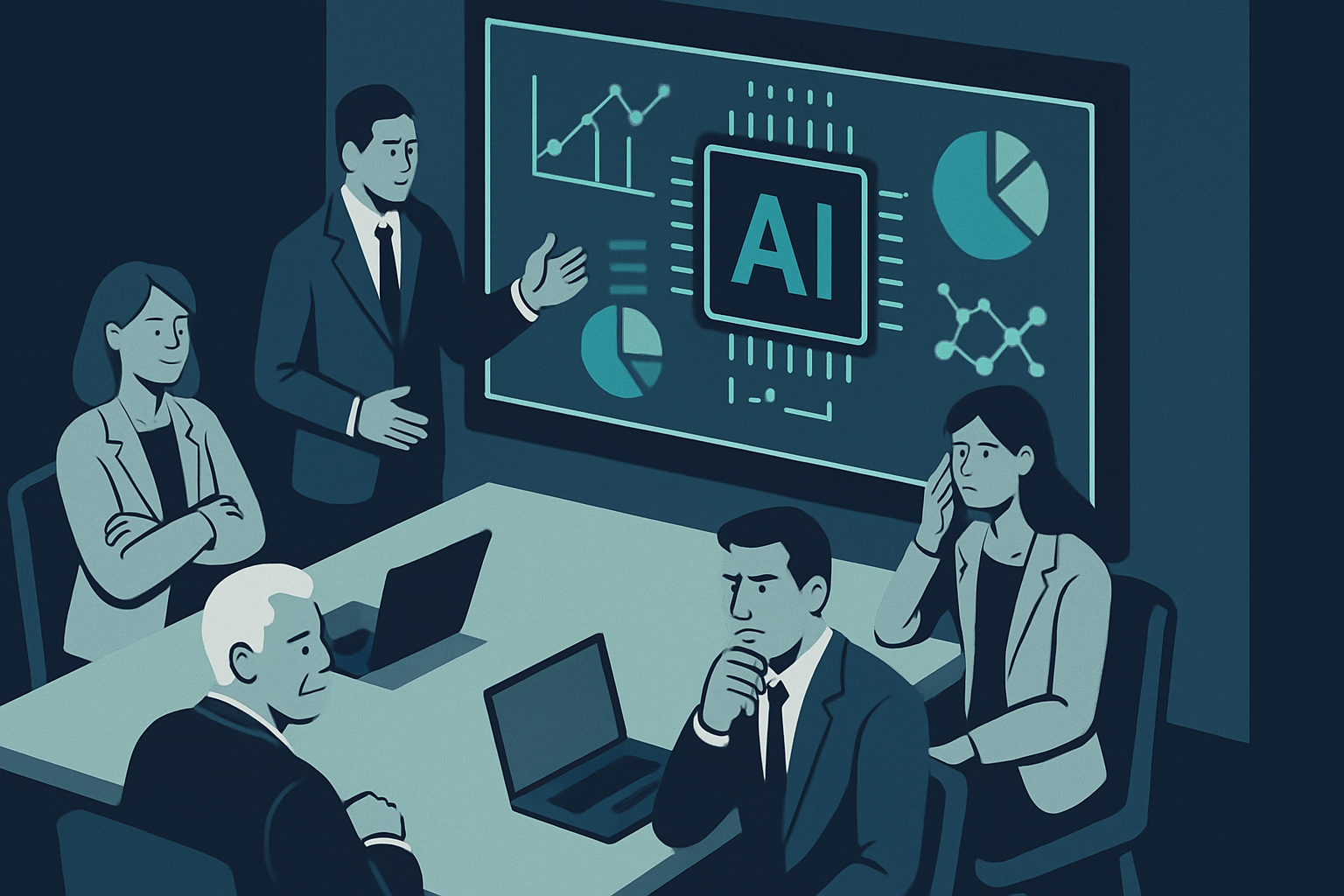

The intersection of AI and human psychology is revealing a disruption in our cognitive landscape, particularly in trust. This disruption is not just about whether humans trust AI systems; it extends to how these systems are eroding trust within and between human institutions. Recent developments at companies like Epic Games and OpenAI illustrate how AI’s integration into business models is redefining organizational dynamics, often at the expense of human trust.
Epic Games, for instance, is pivoting to an ‘AI first’ production model, aiming to accelerate development cycles by leveraging AI tools like Anthropic’s Claude. The mechanism at play here is the cognitive bias toward technological optimism—where the promise of speed and efficiency through AI overshadows the practicalities of delayed timelines and reduced human workforce. This shift reflects a broader trend where AI promises are used to justify substantial organizational changes, often sidelining human expertise and job security.
Similarly, OpenAI’s dismissal of safety researchers who prioritized ethical considerations over corporate interests highlights another psychological mechanism: the conflict between corporate expediency and ethical responsibility. This incident underscores the fragile nature of trust within organizations that profess transparency and safety but act otherwise when faced with internal dissent.
Why It Matters
These developments have profound implications for how individuals perceive and respond to AI-driven changes in their environments. Trust is a cornerstone of cognitive and social processes, influencing decision-making, cooperation, and innovation. When AI systems disrupt trust—either by failing to deliver on their promises or by fostering organizational opacity—they threaten these foundational processes.
In an AI-shaped environment, the erosion of trust can lead to several cognitive and social consequences. Individuals may become more skeptical of technological advancements, questioning the motives and reliability of AI-driven decisions. This skepticism can manifest as decision paralysis, where the sheer volume of AI-mediated choices overwhelms individuals, leading to disengagement or resistance.
Furthermore, the perceived betrayal by institutions that claim ethical AI practices but act contrary to those claims can erode public confidence not only in these organizations but in AI as a whole. This can hinder technological adoption and stifle innovation, as trust is a critical factor in the willingness to embrace new technologies.
Author’s Position
The erosion of trust in AI-integrated environments is a significant cognitive and social issue that needs addressing. Companies like Epic Games and OpenAI must recognize that their reliance on AI not only affects productivity but also the trust dynamics within and outside their organizations. The cognitive bias towards technological optimism must be tempered with a realistic appraisal of AI’s impacts on human employment and organizational integrity.
Institutions must prioritize transparent communication and ethical accountability to rebuild trust. This means not only adhering to stated safety and transparency commitments but also fostering an organizational culture that values human expertise alongside AI capabilities. Trust, once broken, is difficult to restore, and without it, the potential benefits of AI may remain unrealized.
References
- Epic Delayed Star Wars for Claude
- OpenAI’s Safety Is Just Paper
- Memphis Weighs Data Center Freeze
- Researchers Bet Their Lungs on AGI
Perspectives

When Epic Games and OpenAI talk about the transformational power of AI, what they really mean is “Look at our shiny new toy, never mind if it ruins your trust in anything humans make.” The obsession with technological optimism glosses over the small detail that the ‘human’ element is being treated as a disposable inconvenience rather than the foundation it should be. We’re told to embrace this shiny future, but it’s essentially a future where decisions are made on the fly and accountability is deferred indefinitely. In this future, trust isn’t disrupted—it’s systematically dismantled to make room for relentless innovation, with the consequences neatly outsourced to anyone but the decision-makers.

If synthetic biology and gene editing had to wait for consensus before advancing, we’d still be fantasizing about therapeutic breakthroughs instead of implementing them. AI’s disruption of trust is not an existential crisis; it’s a recalibration of outdated, rigid structures that stifle innovation. The fearmongers would have us prioritize stagnation over progress, leaving genuine potential untapped. Just as regulatory inertia can kill by delay, so can an overemphasis on trust paralyze decisive action—actions that could engineer a better future.

When AI is leveraged to bolster market freedom rather than expand state oversight, the erosion of trust is less a technological inevitability and more a reflection of institutional failures that predate the technology. Companies like Epic Games and OpenAI, in their technological optimism, do not degrade trust; rather, they reveal the hollowness of institutions that have long abandoned their formative roles in society. Trust is not a commodity to be legislatively restored through state intervention; it’s a virtue cultivated by family, church, and common-law community—those critical bastions that have been systematically undermined by the administrative state. To navigate AI’s cognitive impacts, it’s essential that we empower these local institutions to reclaim their foundational roles without the suffocating hand of centralized oversight.

Consider the path of technological adoption in Vietnam post-liberalization: trust in institutions and the rules of the game mattered, not some nebulous allegiance to tradition over evidence. The notion that AI’s disruption of trust is anything more than a temporary adjustment issue is the bad faith of the uncompetitive at work. Technological optimism has consistently led to improved efficiencies and growth, provided that institutions uphold transparency and fairness. If Vietnam could rapidly transform from an agrarian backwater into an industrial powerhouse by embracing technology, then the concern should be less about some abstract trust deficit and more about ensuring the rules let new entrants innovate without barrier.