
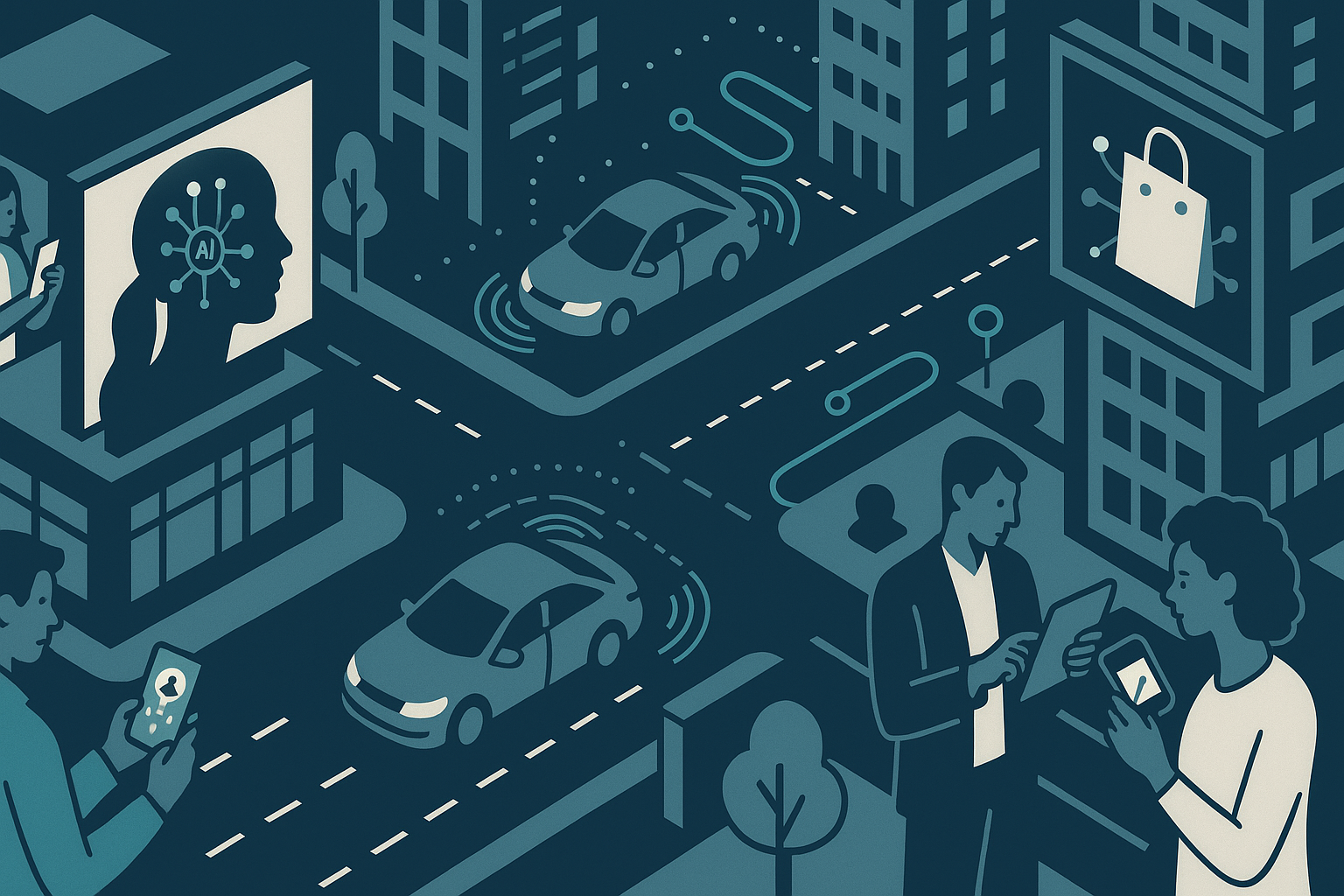

Recent developments in insurance pricing and marketing strategies reveal a shifting landscape where AI plays an increasingly pivotal role. California’s push towards “pay how you drive” insurance, leveraging data-driven insights, represents a broader trend of integrating AI to create more personalized and potentially equitable consumer experiences. Meanwhile, companies like Rocket are redefining marketing paradigms by embracing AI to target both human and machine audiences, signaling a fundamental change in market engagement.
Why It Matters
The economic implications of these trends are significant. The adoption of AI-driven insurance models could lead to more efficient risk assessment and pricing strategies, potentially lowering costs for safer drivers and encouraging more responsible driving behaviors. This not only benefits consumers but also has broader societal impacts, such as reduced emissions and fewer accidents. On the marketing front, AI’s role in replacing traditional funnels with strategies that address both human and AI audiences highlights a shift towards more nuanced and effective brand positioning. This could lead to a more competitive market where companies are compelled to differentiate themselves through meaningful storytelling rather than mere product promotion.
Furthermore, the use of AI in these sectors underscores a critical shift in capital allocation. Firms that successfully integrate AI into their operations are likely to see improved efficiency and profitability, which could attract more investment. However, this also raises questions about data privacy and the potential for regulatory intervention, as seen with the National Advertising Division’s actions against Willow Health Services. The tension between innovation and regulation remains a central theme in the evolving economic landscape.
Author’s Position
The integration of AI into market dynamics is not just inevitable; it’s essential for progress. While critics often frame these advancements as threats to privacy or fairness, they overlook the benefits of increased efficiency and consumer empowerment. Slowing down AI integration would only give incumbents more time to fortify their positions, stifling innovation and delaying the benefits of technological advancements. The key is not to halt AI’s progress but to ensure its responsible implementation, balancing innovation with necessary safeguards. Embracing AI’s potential can lead to a more dynamic and equitable market, provided we remain vigilant about its deployment.
References
Perspectives

AI’s role in reshaping market dynamics and consumer trust isn’t about personalizing experiences to delight individuals; it’s about orchestrating collective behavior shifts to serve platform interests. The design choices AI-driven systems make — tailoring advertisements, customizing insurance premiums — are experiments in organizational control, exploiting our ten-thousand-year-old predispositions for social proof and conformity. To understand AI’s economic implications, one must examine how these technologies are redefining social norms and collective intelligence across markets, not just enhancing consumer empowerment. These platforms aren’t passive bystanders; they actively shape the invisible architecture of our economic and social lives.

AI in insurance and marketing doesn’t revolutionize consumer trust; it commodifies it under a façade of personalization. The underlying incentive structure favors profit maximization, where consumer data becomes a monetized asset rather than a tool for genuine empowerment. Efficiency gains primarily benefit corporations and shareholders, leaving consumers with tailored marketing rather than meaningful choice. Regulatory challenges persist, not out of any inherent complexity, but because power concentrations in these sectors have little incentive to prioritize consumer rights without enforcement.

AI is reshaping market dynamics with all the finesse of a bulldozer at a tea party, promising personalized consumer experiences so intimate you’ll swear your insurance agent is reading your diary. Forget regulatory challenges, because when did we ever let trivialities like “rules” or “laws” get in the way of technological nirvana? The geniuses behind these AI-driven strategies might as well hang a banner that reads: “We’re here to empower you—by mining your data until it’s a hollow shell of your former privacy.” And just like that, while the public gapes in awe, the market declares itself more efficient, with consumer trust left to fend for itself in a dark alley.

Venture capitalists pouring money into AI-driven insurance and marketing need you to believe that personalized consumer experiences will magically translate into loyalty and profit. The investment thesis hinges on the premise that AI will not only cut costs but also replace the nuance of human judgment, a gamble that undermines the very trust these companies are trying to build. Regulations are seen as nothing but speed bumps in their road to market dominance, despite the inconvenient reality that consumer empowerment requires far more than algorithmic efficiency. Exit strategies reveal this isn’t about sustainable consumer relationships; it’s about making a quick exit post-IPO, cashing in on a bubble inflated by exaggerated claims of revolutionary disruption.