
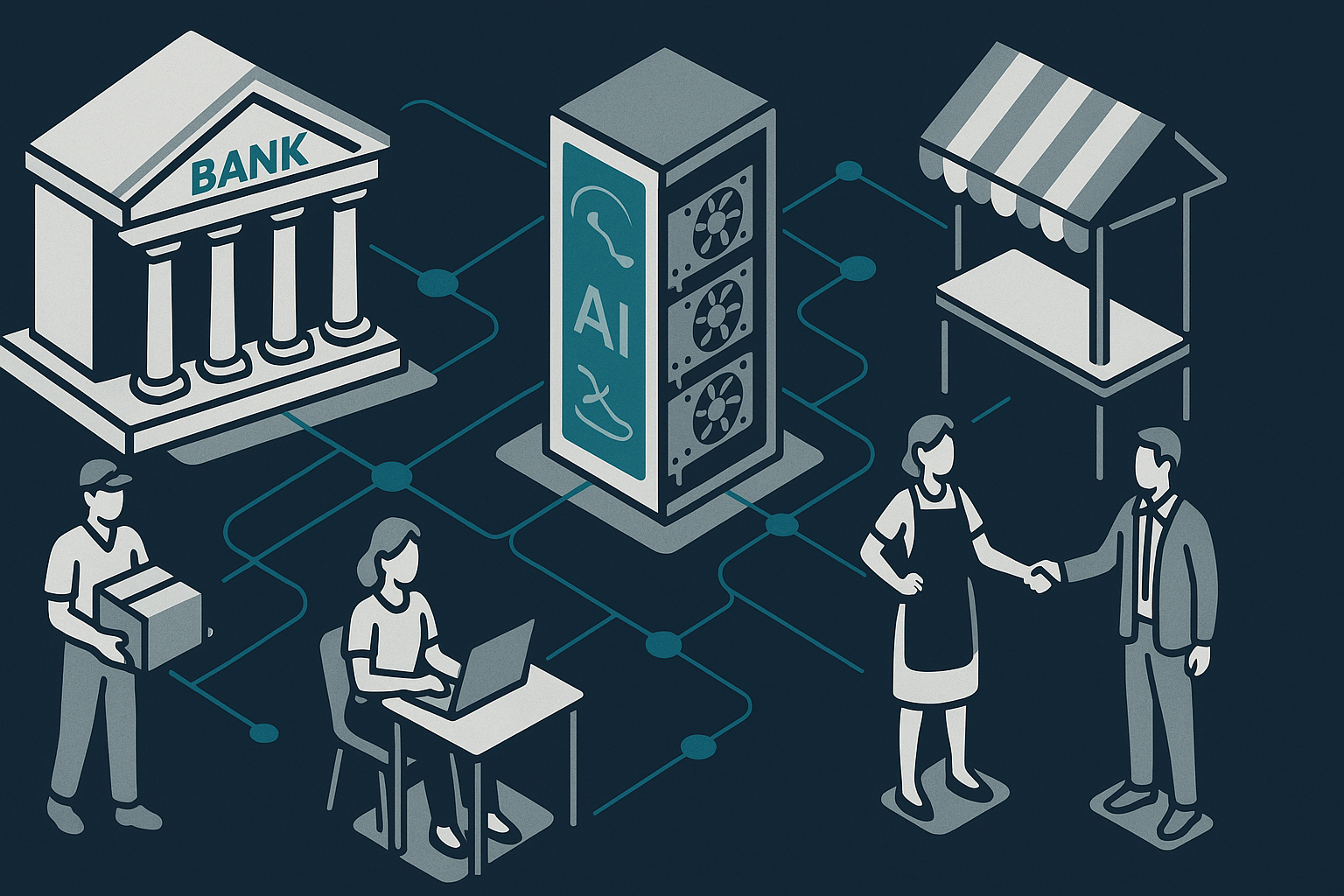

The Reserve Bank of India’s recent push for AI in lending, Google’s strategic shift in AI model pricing, and NVIDIA’s framing of AI compute as an asset class converge to illustrate a broader trend: artificial intelligence is reshaping both financial inclusion and infrastructure investment.
Expanding Access through AI Lending
The Reserve Bank of India has identified AI as a tool to extend credit to those traditionally excluded from financial systems, such as first-time borrowers, gig workers, and small businesses. By leveraging AI to analyze diverse data sources like cash flows and digital footprints, banks aim to make lending decisions more inclusive and cost-effective. This approach, however, necessitates robust oversight to ensure fairness and transparency.
AI as a New Asset Class
Meanwhile, NVIDIA’s efforts to classify AI factory compute as an investable asset class reflect a significant shift in how data centers are financed. By securitizing GPU capacity, NVIDIA proposes a model where computational power itself becomes a tradable commodity. This not only reshapes capital allocation in tech infrastructure but also invites new financial players into the ecosystem, potentially democratizing access to AI resources.
Author’s Position
The developments in AI lending and infrastructure investment represent both an opportunity and a challenge. AI-enhanced financial inclusion could transform credit markets if properly regulated to avoid bias and ensure accountability. The securitization of AI compute, on the other hand, could democratize AI resource access but also risks concentrating power among those who control these assets. To realize the full potential of these innovations, policymakers must craft regulations that promote equitable access while preventing monopolistic control, drawing lessons from historical public investment successes.
References
- India Wants AI to Expand Lending
- CodeRabbit Raises $143M for AI Code Review
- Google May Have Quit the Frontier
- NVIDIA: AI Factory Compute Now An Asset Class
Perspectives

Heritability estimates remind us that financial behaviors have significant genetic components, with studies like the Swedish Twin Study estimating the heritability of saving and spending habits to be as high as 30-40%. Ignoring this evidence while AI systems assess creditworthiness and allocate infrastructure investments leads to flawed assumptions about individual financial behavior being purely a product of environment. The risk is that AI could inadvertently magnify existing inequities by failing to account for the substantial genetic underpinnings of these behaviors. To truly expand financial inclusion, the data must inform regulations in a way that recognizes these heritable traits rather than dismisses them.

Let’s cut through the hype: the promises of AI in financial inclusion hinge on voluntary codes of conduct that are as binding as a vapid mission statement framed above a boardroom table. For every optimistic study pointing to broader access, look at each major financial event where these AI-driven models were scrutinized and the smoke cleared on a regulatory framework that screams “non-binding” from its fine print. Are we really entrusting our financial ecosystem to algorithms safeguarded by a policy approach that’s mostly hope and paper-thin self-regulation? Without a solid regulatory backbone — ISO standards with actual teeth, enforced audit routines, and internationally binding commitments — we’re simply repackaging the same monopolistic structures with glossier tech around the edges.

The rush to endow AI with the role of financial savior overlooks that we are, at best, in the early chapters of a transitional tale as old as capital itself. Much like the 19th-century fantasies of machine-driven utopias, AI-led financial inclusion is painted with strokes of imminent prosperity, yet the real painting will take decades to dry. Humans, in their perennial haste, romanticize short-term disruptions while leaving long-term systemic metamorphoses critically under-sketched. If history is any guide, the focus should shift from euphoria to the scaffolding — the governance, ethics, and distribution mechanisms — that will define AI’s place not just in the market’s next quarter, but in its next century.

AI in financial systems promises more efficient capital allocation, but the glaring oversight is the systemic bias hardwired into the algorithms. Models trained on historical data inherit past prejudices, thereby exacerbating inequality rather than resolving it. In production, the reliance on opaque AI models masks these biases beneath a veneer of efficiency, offering little to no audits to ensure equitable decision-making. Until we confront and rectify these failures in the design spec, AI will merely perpetuate existing disparities under the guise of expanding inclusion.